Manchester United Beat Roma, But Bruno Fernandes and the Glazers Tell Two Very Different Stories
A comeback against Roma cannot erase 21 years of frustration. As Bruno Fernandes challenges media speculation, Manchester United supporters continue to demand answers from the Glazers.
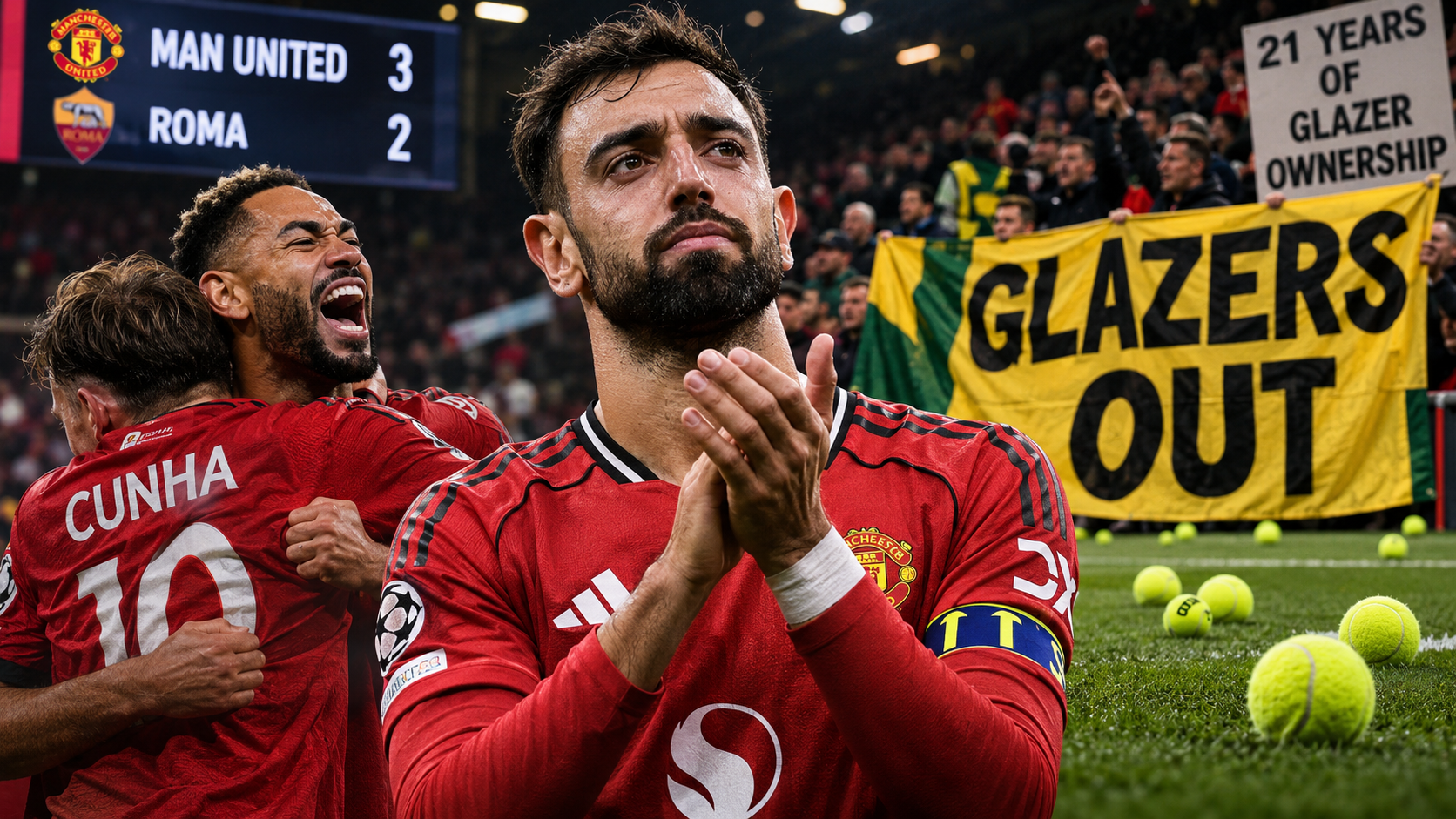
Manchester United's remarkable comeback against Roma offered a glimpse of the club's fighting spirit. But while Bruno Fernandes was busy confronting media speculation, supporters were making a much bigger statement about the people running their club.
Manchester United needed a night like this. Their supporters needed it. Michael Carrick certainly needed it. And after nine games without a victory, the relief that swept through Old Trafford when Matheus Cunha completed a stunning comeback against Roma was entirely understandable.
United had been two goals down, staring at another damaging result, when Bruno Fernandes converted a retaken penalty to give them hope. Cunha then struck twice late in the second half to complete a 3-2 victory that appeared almost unthinkable at half-time.
It was a night of emotion, drama and genuine resilience.
But there was another story unfolding at Old Trafford, one that deserves considerably more attention than the latest round of speculation about dressing-room relationships and managerial survival.
Before the comeback, Manchester United supporters had thrown tennis balls onto the pitch in a planned protest against the Glazer family. The demonstration was timed around the 21st anniversary of the family's leveraged takeover of the club in 2005.
And that, perhaps, is the most important detail from the evening.
Manchester United may have won the football match, but the battle over the club's direction remains unresolved. Bruno Fernandes has had enough of the speculation Fernandes' post-match comments were revealing, not because they exposed some dramatic dressing-room rebellion, but because they challenged a narrative that had gathered momentum around him and Carrick.
Following United's humiliating 4-1 defeat to Como, Fernandes had publicly questioned the team's tactics. He was subsequently left on the bench for the Premier League defeat against Bournemouth, prompting widespread speculation that his omission was punishment for speaking out.
Reports also suggested that relations between the captain and his manager had deteriorated, with claims of tension and efforts to clear the air dominating sections of the football conversation.
Fernandes was clearly unhappy with how the situation had been portrayed.
Asked whether the victory had saved Carrick's job, he responded: "We don't need to save anyone's job."
He then made his position clear, saying there had been considerable speculation and "a lot of lies" surrounding what had happened between him and the manager.
Crucially, Fernandes did not accuse Carrick of mistreating him. In fact, he accepted the manager's decision to drop him.
"The manager took a decision of putting me on the bench because I wasn't performing, and that's fair," he explained.
That is an important distinction.
A player can disagree with a tactical approach, be dropped by his manager and still respect the authority of the person making the decisions. Professional football is not supposed to be a soap opera in which every disagreement becomes evidence of a dressing-room civil war.
Fernandes acknowledged the manager's authority, accepted his own responsibility and reaffirmed his belief in Carrick and the coaching staff.
So why was so much energy being spent trying to turn this into another Manchester United personality contest?
The captain had a straightforward message: the club and the players needed the victory. They were working together to get out of a difficult situation.
Perhaps the football conversation should take him at his word. The Glazers were still the target, even during the crisis While the cameras were preparing to capture another Manchester United crisis, supporters inside Old Trafford had a different message.
The tennis-ball protest was not about Carrick's team selection. It was not a demonstration against Fernandes. It was not even primarily about the result against Roma.
It was about ownership.
The protest marked 21 years since the Glazer family's leveraged buyout of Manchester United. The green and gold demonstrations, the chants and the tennis balls were reminders that a significant section of the fanbase has never accepted the direction in which the club has travelled under the American ownership.
The frustration did not begin with one poor season or one managerial appointment.
It is rooted in a much longer argument about the club's finances, leadership, investment, ambition and accountability.
The Glazer takeover fundamentally changed Manchester United's ownership structure, introducing debt into a club whose supporters had long regarded its identity as something far bigger than a conventional commercial asset.
Since then, United have experienced managerial instability, inconsistent recruitment, expensive mistakes and years of sporting decline relative to the standards expected of a club of their stature.
There are different layers of responsibility in that decline. Managers have made mistakes. Players have underperformed. Recruitment decisions have failed. Football executives have been accountable for decisions that did not deliver.
But that does not make the ownership question irrelevant.
If anything, it makes it more important.
Manchester United are one of the most commercially powerful football institutions in the world. Yet the distance between the club's global stature and its repeated inability to build a consistently successful football operation remains difficult to explain away.
The supporters protesting at Old Trafford were not asking for another dramatic comeback. They were demanding a club worthy of its history and ambition.
And a 3-2 victory, however thrilling, cannot answer that demand. The media's obsession with the wrong Manchester United story This is where the wider football conversation needs to examine itself.
There is nothing wrong with reporting on disagreements between players and managers. Bruno Fernandes' comments were newsworthy. Carrick's future is a legitimate subject of discussion, particularly given United's difficult results and position in the league.
But there is a difference between reporting a story and allowing it to consume the entire conversation.
Every disagreement becomes a crisis. Every benching becomes a punishment. Every defeat triggers another round of questions about the manager's authority. Every player who speaks publicly becomes a potential source of dressing-room drama.
Meanwhile, the deeper questions about Manchester United's institutional failures often receive far less sustained attention.
Who is ultimately responsible for the footballing direction of this club?
Why has a club with Manchester United's resources and global reach repeatedly struggled to build a coherent, sustainable sporting project?
Why have supporters spent so many years demanding greater accountability from the people at the top?
And why does the conversation so often return to the manager's survival rather than the structures that repeatedly leave managers facing impossible expectations?
It is convenient to make the manager the central character in every Manchester United crisis. Managers are visible. They speak to the media. They make team selections. They are dismissed when results become unacceptable.
Ownership is a much bigger and more complicated subject.
But complicated does not mean untouchable.
Carrick should be judged on his decisions and results. Fernandes should be judged on his performances and leadership. The players should be expected to deliver on the pitch.
The Glazers and the club's wider leadership should face scrutiny for the environment in which those players and managers are expected to operate.
Accountability cannot be reserved exclusively for the people wearing tracksuits on the touchline. One victory does not erase 21 years of frustration There is no need to diminish what United achieved against Roma.
Coming from two goals down to win 3-2 was a significant achievement, particularly after such a difficult run. Fernandes' contribution was important, Cunha delivered when it mattered, and the supporters who stayed behind the team were rewarded with a memorable European night.
Carrick deserves credit for a second-half response that changed the game.
But celebrations and accountability can exist at the same time.
United supporters can sing, celebrate Cunha's goals and appreciate the character shown by their team without abandoning their concerns about the ownership.
They can back Carrick while questioning the people responsible for appointing, supporting and ultimately dismissing managers.
They can defend Fernandes against misleading narratives without pretending he or the rest of the squad are beyond criticism.
That is what a mature football conversation should look like.
The danger is allowing one unforgettable evening to become another convenient distraction from the bigger issues.
Manchester United have spent too many years treating symptoms while the underlying problems remain.
A new manager arrives. Expectations rise. Results disappoint. The manager becomes the headline. Another managerial change follows, and the cycle continues.
At some point, the club must confront the question of whether the problem is bigger than the person occupying the dugout.
The Glazers cannot be absolved because Manchester United scored three goals against Roma. Nor should Bruno Fernandes have to spend his time answering questions about imagined dressing-room conspiracies when the club's actual problems demand far more serious discussion.
Old Trafford witnessed two battles on Tuesday night.
One was won on the pitch, with Fernandes and Cunha leading a remarkable comeback.
The other remains unfinished.
And until Manchester United's ownership and leadership are held to the level of accountability their supporters demand, another comeback, another managerial appointment or another emotional European night will not be enough.
Manchester United beat Roma. But the Glazers are still facing questions — and rightly so.
Read next
Stories you should not miss
Breaking
Lisandro Martínez Is Becoming Manchester United’s Convenient Scapegoat — And the Real Culprits Are Still in the Boardroom
Breaking
A Man Up, a Goal Ahead, Yet No Victory: Has Michael Carrick Run Out of Answers at Manchester United?
Opinion
The Glazers Keep Winning Because Manchester United Fans Are Part of the Problem
Related stories
More on Manchester United

More on Champions League
Champions League
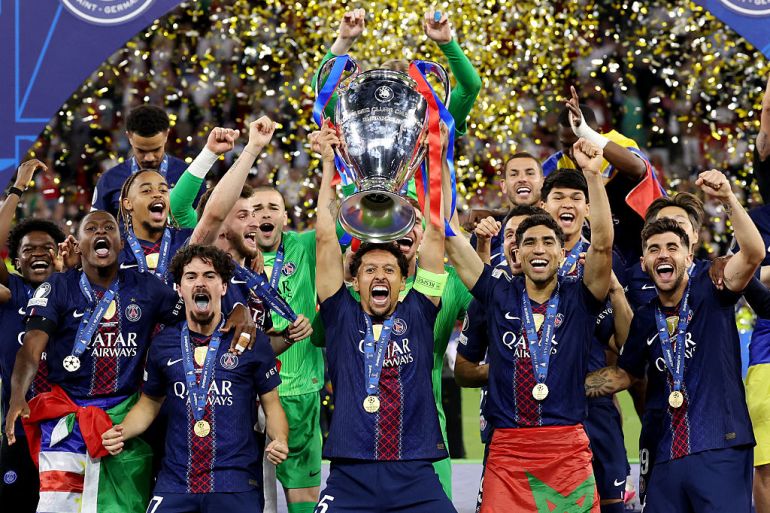
Unstoppable Dynasty? Why PSG Is Positioned to Claim an Unprecedented Champions League Three-Peat
Thu 22 Oct
Champions League
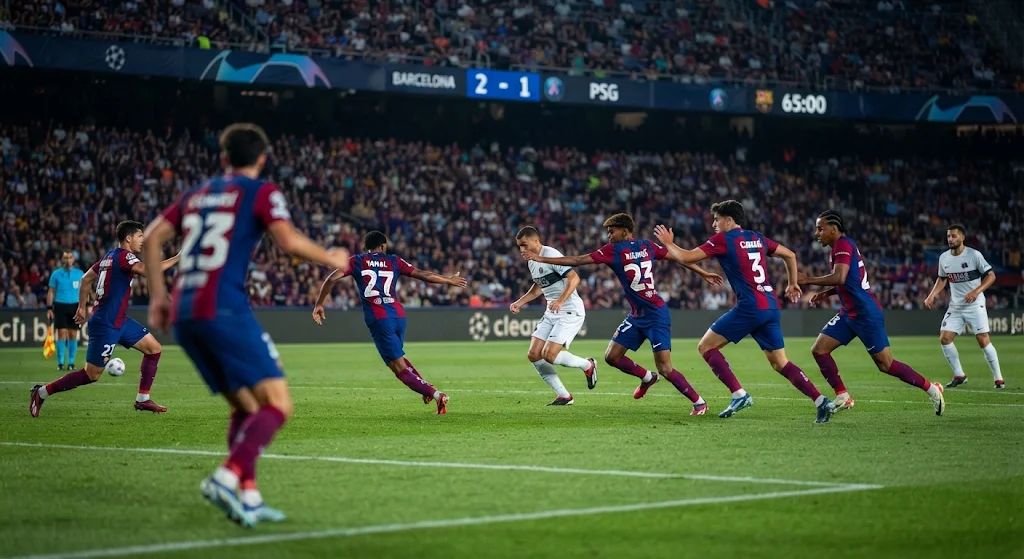
Hansi Flick’s High-Wire Act: How Barcelona’s Aggressive Press Dominates La Liga—And Risks the Champions League
Tue 17 Nov

Analysis
Ronaldo’s Record in Sight: Can Harry Kane Turn Champions League Goals Into Ballon d’Or Glory?
Sat 17 Oct
Published Wednesday, 4 November 2026. Published through the Nisty Football newsroom.
Enjoyed it? Tell us — and pass it on
The discussion
What do you think? (0)
Leave a comment
No account needed · 0 approved
0/1500 characters · comments are reviewed before publication
The Daily Kick-off
Football in your inbox, every morning at 7am
One email: the overnight transfer moves, the tactical story of the night, and every fixture that matters today. No noise, no clickbait.
More from Nisty Football
Related stories
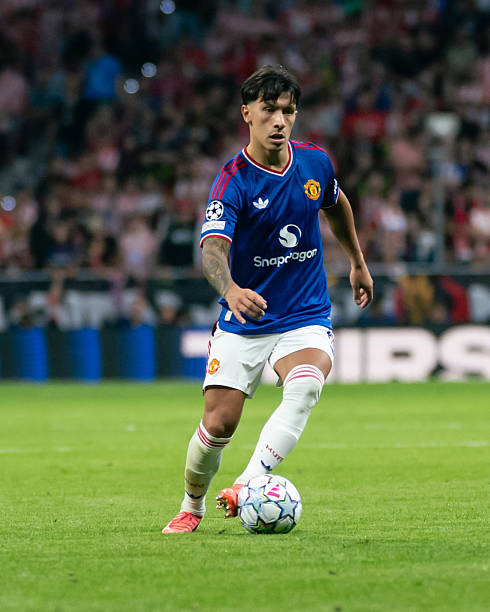
Silenced? Martínez's Apology Smells Like a Club in Damage Control, and INEOS Has Questions to Answer
Players do not walk back the most honest interview of their season by accident. The club got to him.
Licha Drops the Mask: Martínez Exposes United's Rotten Core, But the Dressing Room Isn't Innocent
"You keep changing managers but what about other areas?" That is not a throwaway remark. It is a defender looking past the touchline and pointing at the people upstairs.
Carrick on the Brink! Manchester United Turn to Pochettino as Crisis Deepens
Manchester United’s managerial crisis is deepening, and Michael Carrick’s future is hanging in the balance. With Mauricio Pochettino reportedly emerging as a leading candidate, could Old Trafford be preparing for another major shake-up?
Ten Hag’s Broken Promises, Amorim’s Exit and Carrick’s Struggle: Has Manchester United Learned Anything?
two years after Erik ten Hag’s dismissal, his account of his time at Old Trafford has reopened questions about a club still struggling to turn its ambitions into consistent results.