Ten Hag’s Broken Promises, Amorim’s Exit and Carrick’s Struggle: Has Manchester United Learned Anything?
two years after Erik ten Hag’s dismissal, his account of his time at Old Trafford has reopened questions about a club still struggling to turn its ambitions into consistent results.
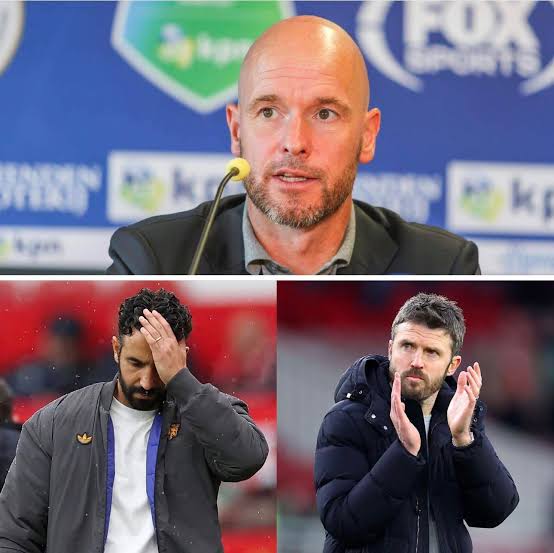
Ten Hag’s Broken Promises, Amorim’s Exit and Carrick’s Struggle: Has Manchester United Learned Anything?
Erik ten Hag says Manchester United’s leadership failed to honour promises, align recruitment with his plans and provide the structure needed for success. Ruben Amorim’s turbulent departure and Michael Carrick’s current struggles raise a wider question: is the club changing managers without resolving the problems that undermine them?
Manchester United have changed managers, reshaped their football leadership and continued searching for a sustainable identity. Yet, two years after Erik ten Hag’s dismissal, the Dutchman’s account of his time at Old Trafford has reopened questions about a club still struggling to turn its ambitions into consistent results.
In an interview with The Athletic’s Laurie Whitwell published on October 20, Ten Hag alleged that United’s leadership failed to honour assurances made during discussions over his contract extension in 2024. He also questioned the club’s recruitment decisions and accused senior figures of failing to support him in disciplinary disputes with players.
His comments are significant not simply because they offer his long-awaited account of his departure, but because some of the issues he raises echo the tensions that emerged during Ruben Amorim’s subsequent tenure.
Now, with Carrick under pressure following a difficult start to the 2026-27 campaign, United face an uncomfortable question: have they addressed the structural problems behind their managerial instability, or are they continuing to treat symptoms rather than causes?
Promises Made, Trust Lost
Ten Hag’s central complaint concerns the assurances he says he received before agreeing to continue as United manager in 2024.
Following his FA Cup triumph over Manchester City, the Dutchman says discussions with the club’s leadership resulted in promises of loyalty, backing, better communication and a shared direction.
“They promised me loyalty, they promised me backing, they promised communication, that we get aligned,” Ten Hag told The Athletic. “But the promises, they didn’t keep.”
One example was the sale of Scott McTominay to Napoli in August 2024. Ten Hag claims he had explicitly opposed the midfielder’s departure, believing his goalscoring contribution and mentality remained important to the squad.
McTominay was subsequently sold for approximately £25.7 million, with the proceeds helping fund the arrival of Manuel Ugarte.
Ten Hag said he felt embarrassed and disappointed by the decision.
The disagreement raises a fundamental question about United’s football structure: how much authority does a head coach have over the construction of his squad, and what happens when his priorities conflict with the club’s financial or recruitment strategy?
There is a legitimate argument for a club maintaining control of its long-term recruitment policy rather than allowing every manager to dictate transfers. However, that model requires clear responsibilities, consistent communication and agreement over the type of football the club intends to play.
Without those foundations, a supposedly collaborative structure can become a source of friction.
Ten Hag’s account does not establish that every recruitment decision was wrong. It does, however, expose the consequences of a reported disconnect between the manager’s expectations and the club’s decisions.
Amorim’s Departure: A Familiar Question About Authority
Ruben Amorim’s time at United brought the issue of managerial authority back into public view.
Appointed in November 2024, the Portuguese coach departed on January 5, 2026, after approximately 14 months in charge. His exit followed growing tensions with senior club figures over his role, tactical approach and the direction of the team.
In the days before his departure, Amorim publicly insisted that he had come to United to be the manager, not merely the coach.
His comments reflected a wider disagreement about responsibilities within the club’s football structure. Amorim wanted the authority to implement his methods; United’s leadership expected the head coach to operate within a broader strategy and demonstrate sufficient tactical flexibility.
The distinction matters.
United were entitled to question whether Amorim’s preferred system was producing the required results. His tactical decisions and resistance to changing his approach were legitimate subjects for scrutiny. The club could not reasonably be expected to ignore poor performances or disagreements indefinitely.
However, his departure also raises a question that connects directly with Ten Hag’s allegations: had United established a sufficiently clear agreement about the head coach’s authority, the club’s footballing identity and the limits of intervention from above?
The two cases were not identical. Ten Hag’s account centres on assurances, recruitment and player management, while Amorim’s final weeks featured an increasingly public confrontation over his responsibilities and methods.
Nevertheless, both episodes highlight the importance of defining the relationship between the coaching staff and the executives responsible for football operations.
When that relationship breaks down, the consequences extend beyond the manager. Recruitment plans become harder to implement, players face changing tactical demands, and a club’s long-term project risks being reshaped with every appointment.
The Player-Power Debate
Ten Hag’s criticism extends beyond recruitment. He also alleges that United’s leadership failed to support him adequately in disciplinary disagreements involving senior players.
Discussing Cristiano Ronaldo, Jadon Sancho and Marcus Rashford, Ten Hag argued that the club’s response to internal disputes undermined the authority required to manage the squad.
His most direct criticism was that the leadership was continuing what he described as a “toxic culture” by giving players too much power.
These are Ten Hag’s assessments, and they should not automatically be treated as the definitive explanation for United’s difficulties. Players may have their own accounts of disagreements, and a manager’s authority must be balanced with fair treatment, accountability and appropriate club procedures.
Still, the broader issue is relevant.
A successful football organisation needs a consistent approach to standards and discipline. Players must understand what is expected of them, while coaches and executives must apply agreed principles fairly.
If managers believe their decisions are being undermined, their ability to maintain a coherent dressing-room culture can suffer. Conversely, if a manager’s methods or treatment of players become counterproductive, club leadership must be able to intervene through an established process.
The answer is not unchecked managerial power or unchecked executive interference. It is a clear framework that allows both sides to be held accountable.
Carrick’s Challenge: Results and Stability
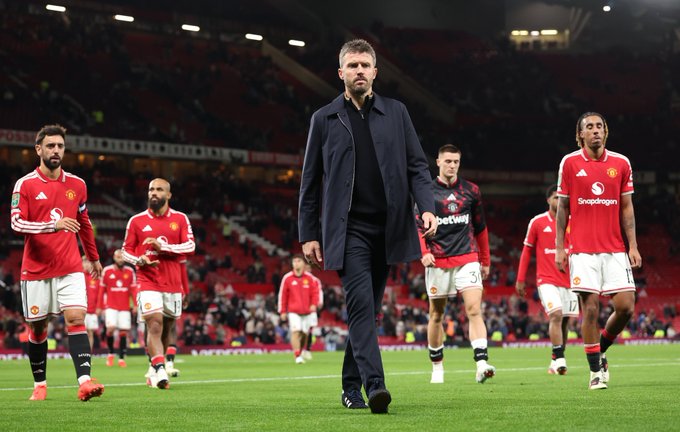
Michael Carrick’s situation brings the debate into the present.
After Amorim’s departure, Carrick took charge in January 2026 and was subsequently appointed permanent head coach following a successful interim spell. United’s official announcement confirmed a contract running until 2028.
That appointment initially offered an opportunity to establish continuity. However, United’s poor start to the 2026-27 season has again placed the head coach under scrutiny.
By October 20, the club had gone six matches without a win in all competitions, according to contemporary reporting. The results have intensified pressure at a club where patience with managers has repeatedly proved difficult to sustain.
Ten Hag has offered a clear position on the question of Carrick’s future.
“It is not the solution to dismiss him. 100 per cent not,” he told The Athletic.
He argued that supporters and club officials must make rational decisions rather than react solely to the emotion surrounding disappointing results. He also stressed the importance of competent leadership, a coherent strategy, appropriate structures and sufficient time.
His defence of Carrick deserves consideration, but it is not proof that Carrick should be exempt from scrutiny. United must evaluate the current coach on performances, tactical decisions, player development and progress against clearly established objectives.
The more important question is whether those objectives are agreed upon by the head coach and the executives responsible for the club’s football operations.
Carrick cannot be expected to deliver a stable project if the club’s priorities change without a coherent plan. Equally, a clear strategy cannot become an excuse for poor results indefinitely.
Stability is valuable when it serves a defined purpose. Stability without accountability is simply stagnation.
The Leadership Question United Must Answer
Across Ten Hag’s allegations, Amorim’s departure and Carrick’s current difficulties, a common issue emerges: the relationship between the manager’s responsibility for results and the leadership’s responsibility for building the conditions in which those results can be achieved.
United need not give every manager unrestricted control over transfers, tactics or the wider football operation. Modern clubs increasingly rely on sporting directors, recruitment departments, data analysts and long-term squad planning.
But the model must work in practice.
That means agreeing on a footballing identity before appointing a head coach, recruiting players who fit the intended approach, establishing clear decision-making responsibilities and communicating disagreements before they become public confrontations.
It also means evaluating managers against realistic objectives rather than repeatedly changing direction whenever results deteriorate.
United’s leadership has made structural changes and publicly committed to a longer-term approach. The appointment of Carrick on a permanent contract was one such commitment. Whether that approach can survive a difficult run of results will be an important test of the club’s progress.
Ten Hag’s interview cannot settle the debate on its own. His account reflects his experience and perspective, while Amorim’s departure involved its own tactical and interpersonal disputes. Carrick’s current position must be judged on its own evidence.
Taken together, however, these episodes make one issue difficult to ignore: changing the person in the dugout does not automatically resolve disagreements about recruitment, authority or footballing identity.
Conclusion: A Club Cannot Rebuild on Unclear Foundations
Ten Hag won the League Cup in 2023 and the FA Cup in 2024, but those achievements did not prevent his dismissal in October 2024. Amorim’s subsequent tenure ended amid disagreements with the hierarchy, and Carrick now faces the challenge of delivering results while restoring confidence in the club’s direction.
Each manager has had different strengths, weaknesses and responsibilities. None should be beyond criticism, and the club must retain the right to make difficult decisions when performances demand them.
But leadership must be judged by more than its ability to appoint and dismiss coaches.
It must demonstrate that recruitment, tactical expectations, executive authority and performance targets form part of a coherent plan that can survive setbacks.
Ten Hag has presented his version of why that relationship failed during his time at Old Trafford. Amorim’s exit has supplied another episode for scrutiny. Carrick’s challenge is the latest test.
For Manchester United, the real measure of progress will not be whether the next manager lasts longer than the previous one. It will be whether the club can establish a footballing structure strong enough to make managerial change the exception rather than the recurring answer to deeper problems.
Editorial note: Ten Hag’s allegations have been attributed to him throughout. The article distinguishes his account from documented events and does not claim that the circumstances of his dismissal, Amorim’s departure and Carrick’s current difficulties were identical.
Read next
Stories you should not miss
Breaking
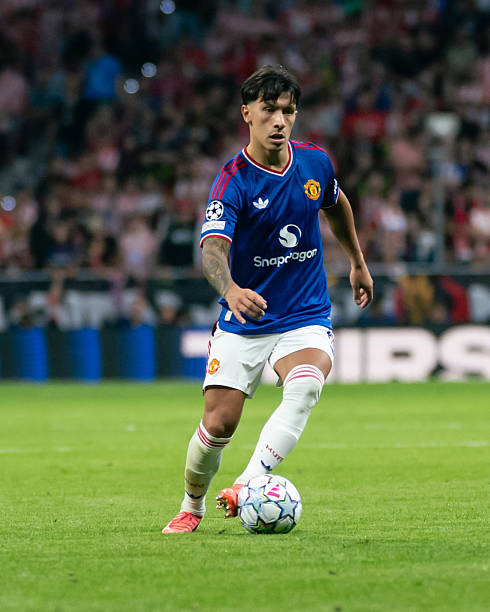
Silenced? Martínez's Apology Smells Like a Club in Damage Control, and INEOS Has Questions to Answer
Breaking
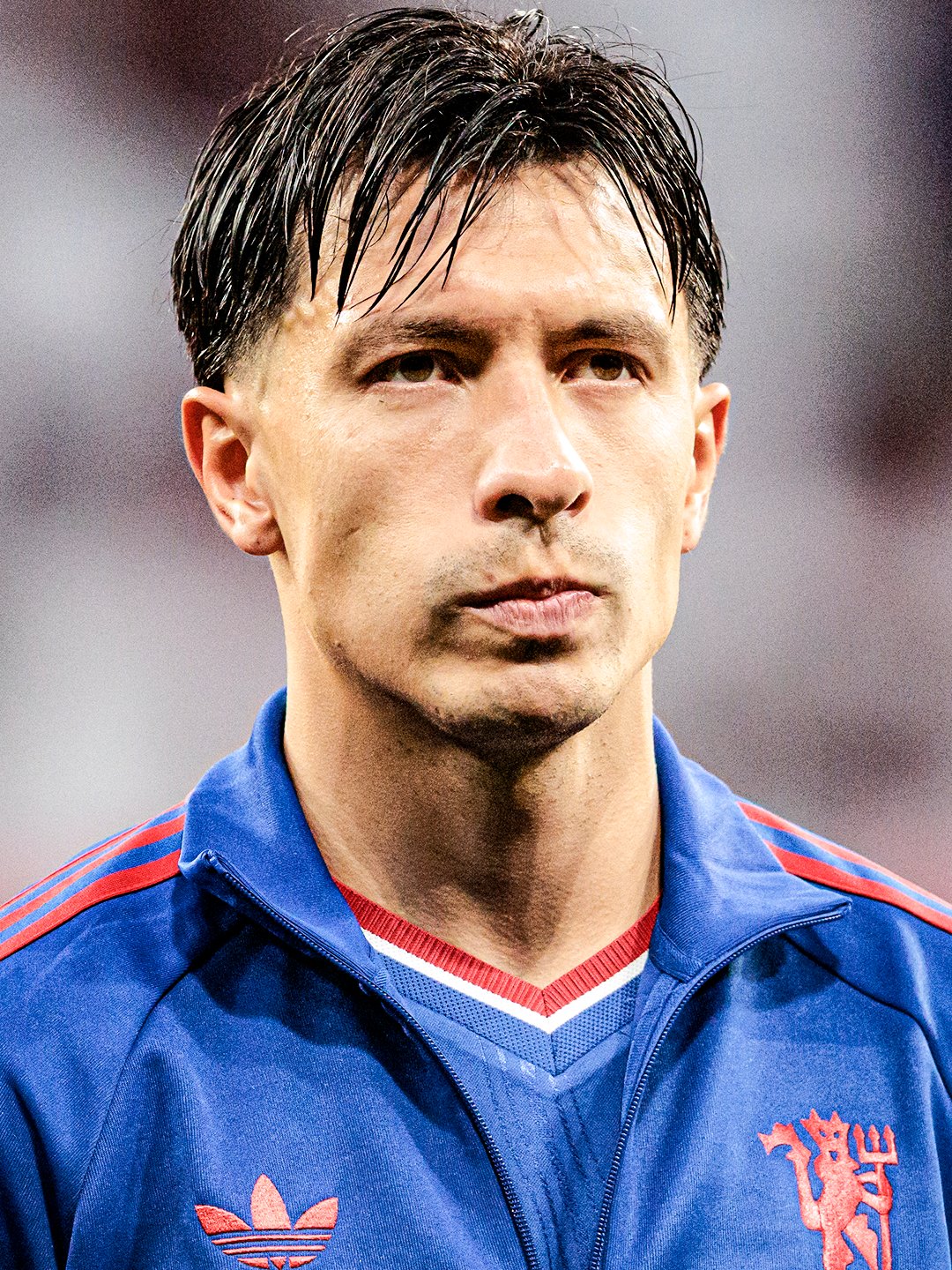
Licha Drops the Mask: Martínez Exposes United's Rotten Core, But the Dressing Room Isn't Innocent
Breaking
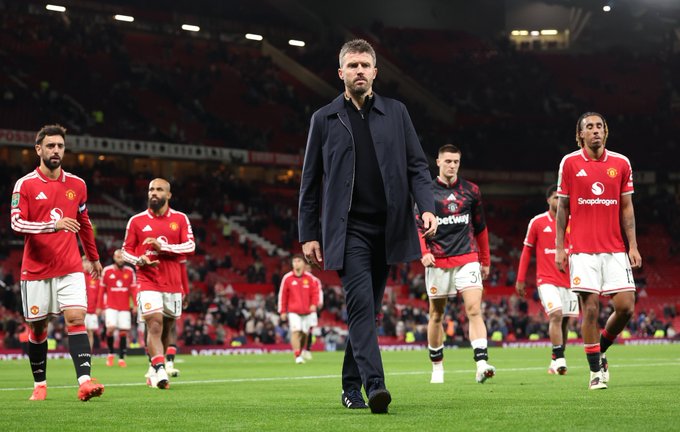
A Man Up, a Goal Ahead, Yet No Victory: Has Michael Carrick Run Out of Answers at Manchester United?
Related stories
More on Manchester United
Published Wednesday, 21 October 2026. Published through the Nisty Football newsroom.
Fan reaction
Comments (0)
Leave a comment
No account needed · 0 approved
0/1500 characters · comments are reviewed before publication
More from Nisty Football
Related stories
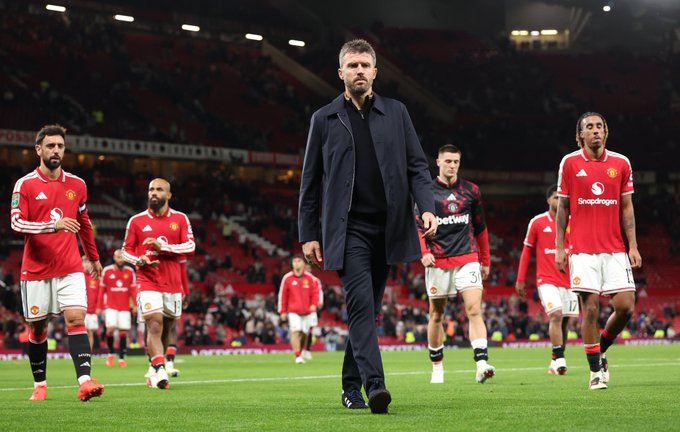
EXCLUSIVE: THE CARRICK FORMULA — WHY MANCHESTER UNITED’S NEXT CHAPTER MAY DEMAND A LITTLE MORE ‘FERGUSON’
There is a difference between managing Manchester United and managing Manchester United successfully.
Manchester United Commercial Focus Under Scrutiny Following Sponsorship Deal
Manchester United's off-pitch priorities have come under the spotlight once again after securing a fresh sleeve sponsorship deal in the wake of the transfer window.
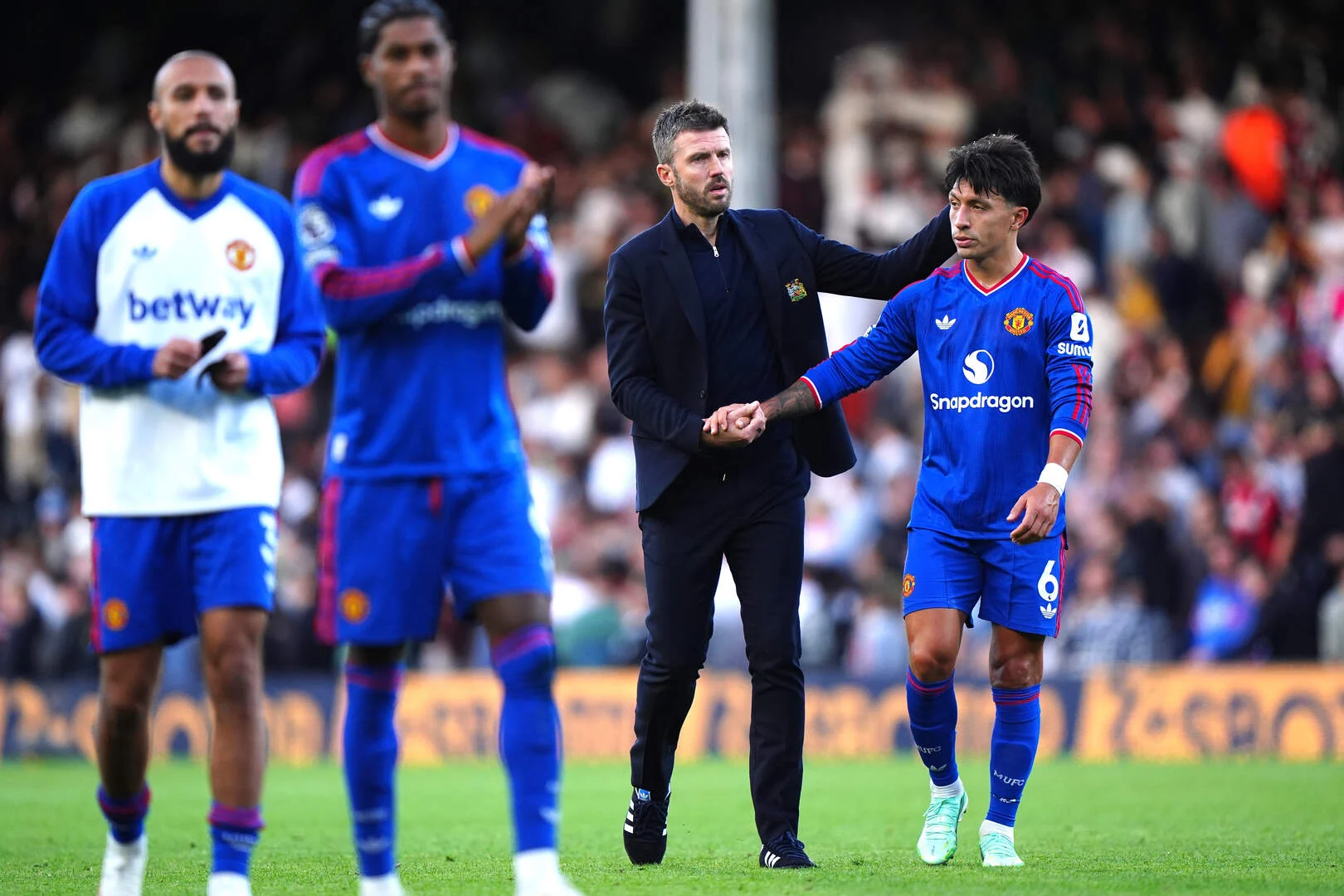
UNITED DON’T RUN. THEY DON’T WIN. SO WHAT EXACTLY IS CARRICK’S PLAN?
Manchester United rank near the bottom of the Premier League for sprints and high-speed running. But is that a deliberate tactical choice or evidence that Carrick’s system is failing to demand enough from his players?
THE INEOS PATTERN: Nine years. Three clubs. One broken method.
INEOS came to Old Trafford promising the end of Manchester United's chaos era but INEOS hasn't ended anyone's chaos. It is the chaos — just with better PR and a bigger budget.