THE EVOLUTION OF FOOTBALL: HAVE TACTICS MADE THE BEAUTIFUL GAME LESS BEAUTIFUL?
Has football become too intelligent for its own good?
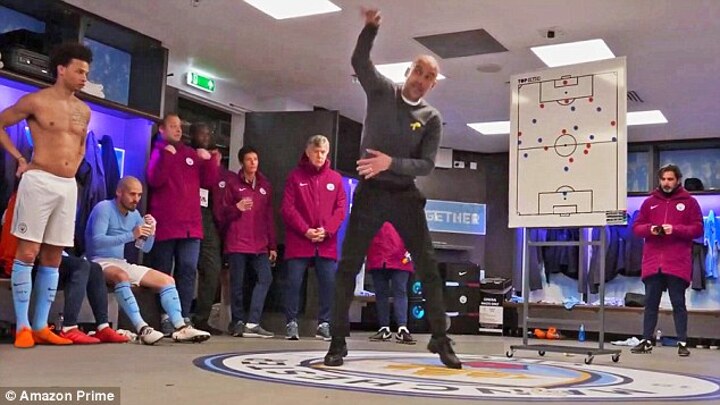
THE EVOLUTION OF FOOTBALL: HAVE TACTICS MADE THE BEAUTIFUL GAME LESS BEAUTIFUL?
From the freedom of the 4-4-2 to the precision of positional play, inverted full-backs and the modern 3-2-5 — football has never been more tactically sophisticated. But somewhere between controlling space and controlling the game, have we lost some of the magic that made us fall in love with football in the first place?
There was a time when a football match could make an entire street go silent.
Not because someone had scored.
Because a winger had received the ball.
The crowd knew what was coming.
The full-back knew what was coming.
The opposing bench knew what was coming.
And yet, somehow, nobody could stop it.
The winger would stand there, almost inviting his opponent to come closer. One touch. A drop of the shoulder. A sudden change of direction. The defender would plant his feet for a fraction of a second and that was enough.
Gone.
The crowd would rise before the player had even reached the penalty area.
For a few seconds, football wasn’t about structure, rest defence, positional occupation or maintaining a five-man attacking line.
It was simply:
Man versus man.
Skill versus skill.
Courage versus courage.
And when the winger eventually delivered that cross, cut inside or smashed the ball into the far corner, thousands of people experienced the same emotion simultaneously.
That is football.
That is why the game became the most followed sport on the planet.
But football has changed.
Of course it has.
The 4-4-2 has given way to the 4-3-3. The 4-3-3 has evolved into countless variations. The 4-2-3-1 became almost universal. The back four became a back three. The back three becomes a back five without the ball. Full-backs became midfielders. Centre-backs became playmakers. Wingers became wing-backs. Strikers became the first line of defence.
And today, a team that starts in a nominal 4-3-3 can become a 3-2-5 in possession, with one full-back inverting into midfield, the other pushing high, the wingers stretching the pitch and the No. 9 occupying the centre-backs.
It is extraordinary.
It is intelligent.
It is sophisticated.
It is, in many ways, beautiful.
But there is a question that football lovers increasingly find themselves asking:
Has football become too intelligent for its own good
WHEN FOOTBALL WAS A GAME OF CHARACTERS
Ask an older football fan what they remember most vividly about the game and they probably won’t start by explaining a team’s rest-defence structure.
They will tell you about players.
The winger who could beat three men.
The midfielder who could see a pass before everyone else.
The No. 10 who disappeared for 20 minutes and then produced one piece of magic that decided the match.
The striker who lived on the shoulder of the last defender.
The full-back who seemed incapable of crossing the halfway line without starting an attack.
Football once had enormous room for personality.
And personalities made football unforgettable.
Think about the great wingers.
Ryan Giggs tearing down the left.
Luis Figo gliding past defenders.
Ronaldo Nazário carrying the ball at terrifying speed.
Ronaldinho playing as though someone had removed every restriction from the game.
Arjen Robben receiving the ball on the right even though everybody in the stadium knew he wanted to cut inside and still doing it.
Franck Ribéry attacking defenders with that wonderfully aggressive combination of acceleration, balance and close control.
Cristiano Ronaldo exploding into space before transforming himself into one of the most devastating goalscorers football has ever seen.
And then there was Lionel Messi.
A player who seemed to exist outside tactical instructions.
You could construct an entire defensive game plan around stopping him.
He could still make the plan irrelevant.
That was the magic.
Football had systems.
But systems didn’t completely imprison the players inside them.
THE BEAUTY OF THE OLD 4-4-2
The old 4-4-2 is sometimes spoken about today as though it belonged to a primitive age of football.
It didn’t.
It was simple.
But simple does not mean stupid.
Four defenders.
Four midfielders.
Two forwards.
Two banks of four could defend compactly. Wingers could provide width. Central midfielders could compete for territory. Two strikers could occupy centre-backs and create combinations.
And crucially, the formation created space for individual interpretation.
A winger could stay wide and isolate his full-back.
A midfielder could make a late run.
One striker could drop deep while the other attacked the channel.
A full-back could overlap.
The game breathed.
There were fewer layers of tactical choreography.
There was more improvisation.
And perhaps that is what older generations miss most.
Not necessarily the formation.
The freedom.
THEN FOOTBALL DISCOVERED THE POWER OF SPACE
The tactical evolution of football is not something we should mock.
Quite the opposite.
The modern game is an extraordinary intellectual achievement.
Coaches began to understand that football wasn’t simply about where players stood.
It was about space.
Who controls it?
Who creates it?
Who attacks it?
Who closes it?
Who manipulates the opponent into leaving it?
The rise of pressing football transformed the sport.
Teams no longer waited passively for the opposition to attack.
They hunted the ball.
The idea of winning possession immediately after losing it became central to elite football.
Then came increasingly sophisticated positional structures.
The pitch became a chessboard.
Players were coached to create numerical, positional and qualitative advantages.
A winger might pin a full-back.
A midfielder might occupy the half-space.
A striker might drag a centre-back away.
A full-back might invert.
A centre-back might step into midfield.
A goalkeeper might become an extra passing option.
Suddenly, football wasn’t simply about where you received the ball.
It was about why you received it there.
And this tactical revolution has produced some magnificent football.
It would be unfair to pretend otherwise.
But it has also produced something else.
Predictability.
THE INVERTED FULL-BACK: WHEN THE FULL-BACK BECAME A MIDFIELDER
Few tactical developments better represent modern football than the inverted full-back.
Once upon a time, the full-back’s job was relatively straightforward:
Defend.
Win the ball.
Pass it to the winger.
Overlap when appropriate.
Cross.
Today?
Good luck explaining the position in one sentence.
A full-back can begin the match as a defender and spend large portions of possession operating alongside the defensive midfielder.
The structure may become:
3-2-5.
Three players behind the ball.
Two controlling the central zone.
Five attacking across the width and depth of the pitch.
It is tactically brilliant.
But watch closely and you sometimes notice something strange.
The winger receives the ball.
The full-back is inside.
The midfielder is behind him.
The centre-back is maintaining rest defence.
The opposition has formed its defensive block.
And instead of the winger attacking his man immediately, the ball goes backward.
Then sideways.
Then back again.
Centre-back.
Midfielder.
Full-back.
Centre-back.
Midfielder.
Switch.
Back.
Reset.
Repeat.
The commentators call it control.
The coach calls it patience.
The analysts call it manipulation of the block.
But the fan sitting in the stadium may simply be thinking:
“For God’s sake, somebody attack.”
POSSESSION IS NOT THE SAME AS ENTERTAINMENT
This is where the conversation becomes uncomfortable.
Because possession football is not inherently boring.
A perfectly executed positional attack can be breathtaking.
Watching a team manipulate an opponent’s defensive structure with one-touch combinations, third-man runs, rotations and perfectly timed movements can be every bit as beautiful as a 40-yard screamer.
The problem isn’t possession.
The problem is possession without purpose.
There is a difference between controlling a match and suffocating it.
There is a difference between patience and hesitation.
There is a difference between building an attack and endlessly rebuilding the attack because nobody wants to take the risk of losing the ball.
And that distinction matters.
Because football is ultimately a game of risk.
The greatest moments in football often begin with somebody deciding:
I’m going to try it.
THE WINGER WHO REFUSES TO PLAY THE SAFE PASS
Imagine the old-fashioned winger.
He receives the ball.
There are two defenders ahead.
The safe option is behind him.
The coach could scream:
Recycle!
But the winger looks at the defender.
And goes.
He beats the first.
The second defender comes across.
He knocks the ball beyond him.
The stadium erupts.
That single moment can change the emotional temperature of an entire match.
Today’s winger is often asked to do something different.
Hold the width.
Maintain the structure.
Don’t vacate the zone too early.
Wait for the overlap.
Attack the half-space.
Don’t lose possession.
Press immediately after losing it.
Track the full-back.
Make the correct decision.
Understand the rest-defence structure.
And suddenly the winger who once existed to terrify defenders is also carrying a tactical instruction manual in his head.
The player is still talented.
But sometimes you can almost feel the handbrake.
HAVE WE COACHED THE CHAOS OUT OF FOOTBALL?
This may be the most important question.
Football was never beautiful because it was perfectly organised.
It was beautiful because it was unpredictable.
A goalkeeper could make a mistake.
A centre-back could slip.
A midfielder could attempt a ridiculous pass.
A winger could dribble when he shouldn’t.
A striker could shoot from 35 yards.
The ball could take a deflection.
The referee could make a controversial decision.
A teenager could come off the bench and destroy an experienced defender.
Chaos was not a flaw in football.
Chaos was football.
Modern tactical football has tried to reduce chaos.
Coaches want control.
Control reduces transitions.
Control reduces turnovers.
Control reduces the opponent’s opportunities.
Control reduces risk.
And, logically, control should increase the probability of winning.
But here’s the paradox:
The more perfectly football controls chaos, the less room there is for the unexpected moments that made football emotionally irresistible.
FROM 4-4-2 TO 4-2-3-1
The 4-2-3-1 became one of the defining formations of modern football because it offered balance.
Two holding midfielders could protect the defence.
A No.10 could operate between the lines.
Wingers could provide width.
The striker could lead the line.
It was flexible.
It could become a 4-3-3.
A 4-4-2.
A 4-5-1.
A 4-2-4.
The evolution continued.
Then came the explosion of three-at-the-back systems.
The 3-4-3.
The 3-5-2.
The 3-4-2-1.
And, without the ball, many of these systems became a 5-4-1.
Again, tactically fascinating.
Five defenders.
Four midfielders.
One striker.
Compact lines.
Narrow distances.
Limited space between the lines.
Force the opponent wide.
Protect the box.
Counterattack when possession is regained.
From a coaching perspective, it makes perfect sense.
From the perspective of a supporter who has paid to watch his team play?
That can depend on what happens next.
THE 5-4-1 AND THE ART OF SURVIVAL
There is an extraordinary beauty in a well-organised defensive block.
Let’s be clear about that.
Watching eleven players move as one unit, close passing lanes, shift laterally, protect the half-spaces and deny central penetration requires discipline and intelligence.
A great defensive performance is art.
But when two teams spend 90 minutes terrified of making the first mistake, football can become a war of attrition.
The ball moves.
The defensive block moves.
The ball moves again.
The block moves again.
The game becomes less about creating something and more about preventing something.
And suddenly the most exciting moment becomes a misplaced pass.
Not a dribble.
Not a through ball.
Not a piece of individual brilliance.
A mistake.
That should make us think.
WHAT HAPPENED TO THE NUMBER 10?
Perhaps no position tells the story of football’s evolution better than the classic No.10.
The traditional No.10 was a romantic football character.
He lived between the midfield and defence.
He could drift.
He could wander.
He could receive the ball in pockets.
He could turn.
He could create.
He wasn’t always easy to define.
And that was precisely the point.
Modern football doesn’t always tolerate players who are difficult to define.
Everyone must have a function.
Everyone must contribute to the press.
Everyone must understand the structure.
Everyone must occupy the correct zone.
The modern playmaker still exists.
But increasingly, he is a system player.
And perhaps football’s greatest artists have always been dangerous precisely because they were difficult to put inside a system.
BUT HERE IS WHERE THE YOUNGER GENERATION IS RIGHT
There is another side to this argument.
A younger football fan watching modern elite football might read all of this and say:
“What are you talking about? Today’s football is incredible.”
And they would have a point.
They have witnessed pressing at levels previous generations never imagined.
They have seen defenders become playmakers.
They have seen goalkeepers become auxiliary outfield players.
They have seen tactical systems change five times during a single match.
They have seen forwards defend like midfielders and midfielders arrive in the box like strikers.
Today’s players are physically extraordinary.
They run more.
They sprint more intelligently.
They understand space better.
They are tactically educated from childhood.
The modern footballer is not less intelligent than his predecessor.
In many ways, he is more complete.
And that matters.
Because nostalgia can distort history.
The old game wasn’t perfect.
There were terrible matches.
There were defensive teams.
There were long balls with no purpose.
There were boring 0-0s.
There were players who couldn’t pass under pressure.
There were tactical dinosaurs.
Football has improved dramatically.
So perhaps the real question isn’t:
“Was football better before?”
Perhaps it is:
“What did we gain and what did we lose?”
WE GAINED PRECISION. WE LOST SOME FREEDOM.
That might be the fairest answer.
We gained tactical intelligence.
We gained physical excellence.
We gained pressing.
We gained positional play.
We gained sophisticated build-up structures.
We gained coaches capable of transforming teams through tactical detail.
But somewhere along the journey, perhaps we lost a little of the footballer’s permission to simply play.
To take the man on.
To attempt the outrageous.
To make the wrong decision for the right reason.
To improvise.
To gamble.
To entertain.
Because the beautiful game has always contained an important contradiction:
The best football often comes from players doing something the system did not predict.
FOOTBALL DOESN’T NEED LESS TACTICS. IT NEEDS MORE FREEDOM WITHIN THEM.
This is where the debate should ultimately land.
The answer isn’t to abandon tactics.
We cannot turn the clock back to the 4-4-2 and pretend modern football doesn’t exist.
Nor should we.
Football evolves because footballers evolve.
Coaches evolve.
Technology evolves.
Analysis evolves.
The demands of the game evolve.
But perhaps the best coaches understand something deeper:
A tactical system should be a framework, not a prison.
Give your players structure.
Then give them permission to break it when they see something.
Tell your full-back when to invert.
But let him overlap when the opportunity is there.
Tell your winger where to position himself.
But let him attack the defender.
Give your midfielder responsibilities.
But don’t remove his imagination.
Teach your striker how to press.
But don’t stop him from trying the impossible finish.
Because the greatest tactical system in the world cannot manufacture genius.
It can only create an environment in which genius has room to breathe.
THE NEXT REVOLUTION MAY BE THE RETURN OF FREEDOM
Perhaps football’s next evolution won’t be another formation.
Perhaps it will be a philosophy.
A recognition that the perfect footballer isn’t a robot capable of executing instructions flawlessly.
The perfect footballer is an intelligent player who understands the system so deeply that he knows when to obey it and when to destroy it.
That is the future worth watching.
Imagine a team capable of playing positional football with the discipline of a machine but possessing players who can suddenly abandon the structure when opportunity appears.
A winger receives the ball.
Instead of recycling it, he attacks.
A midfielder sees a passing lane nobody else sees.
He plays it.
A full-back notices the opposition has become narrow.
He ignores the instruction to invert.
He overlaps.
The winger follows him.
The striker drops.
The No.10 spins.
Three defenders panic.
Suddenly the carefully constructed tactical chessboard collapses.
And football becomes football again.
BECAUSE WE DIDN’T FALL IN LOVE WITH FOOTBALL BECAUSE IT WAS PERFECT
We fell in love with it because it was human.
We fell in love with the noise.
The anticipation.
The argument.
The heartbreak.
The last-minute winner.
The ridiculous miss.
The goalkeeper’s impossible save.
The centre-back flying into a tackle.
The midfielder attempting a pass that nobody else could see.
The winger standing over a defender.
The entire stadium knowing exactly what was coming.
And still screaming when it happened.
We fell in love with players who made us believe something impossible might happen every time they touched the ball.
That feeling cannot be measured by possession statistics.
It cannot be captured by expected goals.
It cannot be explained by a tactical board.
It cannot be reduced to progressive passes, field tilt or packing rates.
Because football is not merely played on grass.
It is played in the imagination of the person watching it.
SO, HAVE TACTICS MADE THE BEAUTIFUL GAME LESS BEAUTIFUL?
Yes and no.
They have made football smarter.
They have made it faster.
They have made it more physically demanding.
They have made it more sophisticated.
They have made coaches more influential and players more tactically intelligent.
But in the pursuit of control, some teams have perhaps become too cautious.
In the pursuit of positional perfection, some players have become too predictable.
In the pursuit of possession, some attacks have lost urgency.
And in the pursuit of tactical obedience, some of football’s natural chaos has disappeared.
But perhaps that doesn’t mean the beautiful game is dying.
Perhaps it means the game is asking another generation of footballers to rediscover something that can never be coached completely:
freedom.
Because formations will change.
The 4-4-2 will become history.
The 4-2-3-1 will evolve.
The 3-4-3 will become something else.
The inverted full-back will eventually become yesterday’s innovation.
Tomorrow’s coaches will invent another way to occupy space.
Another way to press.
Another way to build.
Another way to control.
But somewhere, on some pitch, there will always be a young player who receives the ball, looks at a defender and thinks:
“I’m taking him on.”
And for that moment, the tactics disappear.
The numbers disappear.
The shape disappears.
The positional map disappears.
There is only the player, the defender, the ball and thousands of people waiting to see what happens next.
Maybe that is the football we must never lose.
Because football became the world’s game not because it was the most tactically perfect sport.
It became the world’s game because anyone could understand the emotion of a goal, the joy of a dribble, the agony of a miss and the madness of a last-minute winner.
From the dusty street to the biggest stadium on Earth, football has always promised us the same thing:
Something might happen.
And perhaps the most beautiful thing a modern coach can do is make sure that, despite all the tactics, all the data, all the systems and all the instructions…
Something still does.
NISTYFOOTBALL EDITORIAL
Football will continue to evolve. It should. But perhaps the greatest challenge for the modern game is not finding a better formation. It is finding the balance between structure and spontaneity between the coach’s plan and the player’s instinct.
Because when everything is perfectly organised, football can become predictable.
And when football becomes predictable, it stops feeling like magic.
The beautiful game doesn’t need to go backwards.
It simply needs to leave a little room for magic.
Gallery
More from this story
Read next
Stories you should not miss


Published Wednesday, 9 September 2026. Published through the Nisty Football newsroom.
Fan reaction
Comments (1)
Leave a comment
No account needed · 0 approved
0/1500 characters · comments are reviewed before publication
More from Nisty Football
Related stories

Man City Found Guilty. Two Weeks Later: "94% of Clubs Are Losing Money." Coincidence?
Ask yourself who gains from the headline "the whole game is broken." It isn't Burnley or Wrexham. It's the club that needs the public to see its guilty verdict as one more symptom of a rotten system.
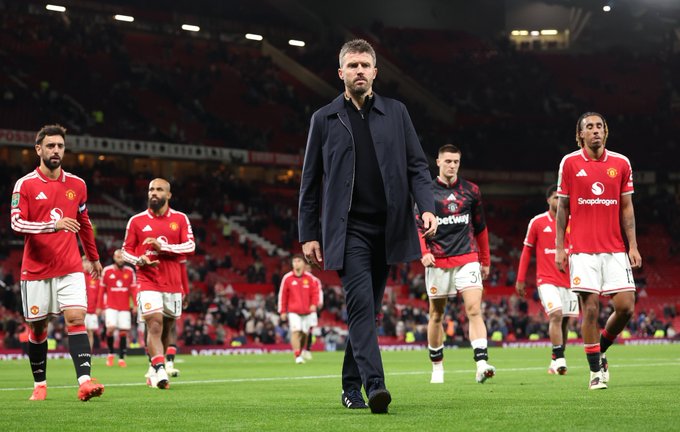
A Man Up, a Goal Ahead, Yet No Victory: Has Michael Carrick Run Out of Answers at Manchester United?
is Carrick struggling to find the answers, or are Manchester United’s problems deeper than their manager?
Are Premier League Rules Only for the Clubs Without Billionaire Owners?
Manchester City’s 115 charges and the prolonged wait for resolution raise serious questions about financial fairness, accountability, and the Premier League’s credibility.
WHAT FIFA KNEW BEFORE NIGERIA LOST TO DR CONGO
The Super Eagles’ defeat to DR Congo was painful enough. The revelations surrounding Lionel Mpasi’s eligibility have turned that heartbreak into a much bigger question about football’s governing system.