Are Premier League Rules Only for the Clubs Without Billionaire Owners?
Manchester City’s 115 charges and the prolonged wait for resolution raise serious questions about financial fairness, accountability, and the Premier League’s credibility.

Are Premier League Rules Only for the Clubs Without Billionaire Owners?
Manchester City’s 115 charges and the prolonged wait for resolution raise serious questions about financial fairness, accountability, and the Premier League’s credibility.
By Sarah Whitcombe
THE CITY THREAT: HAS MANCHESTER CITY BECOME TOO POWERFUL FOR FOOTBALL?
When a financial charges case drags on for years, the message sent to the rest of English football may be more damaging than any punishment eventually imposed.
There is something deeply troubling about watching Manchester City celebrate defiance while the Premier League struggles to bring one of the most consequential financial cases in its history to a definitive conclusion.
It is not simply about Manchester City winning football matches. Clubs win matches, players celebrate victories, and supporters are entitled to defend their teams. The problem begins when that defiance takes on a different meaning: when a prolonged disciplinary process becomes ammunition for mockery, when accusations of financial wrongdoing are turned into a badge of honour, and when the authority of the competition itself becomes the punchline.
At that point, the question is no longer just about Manchester City.
It is about the Premier League.
HOW DID ACCOUNTABILITY BECOME A JOKE?
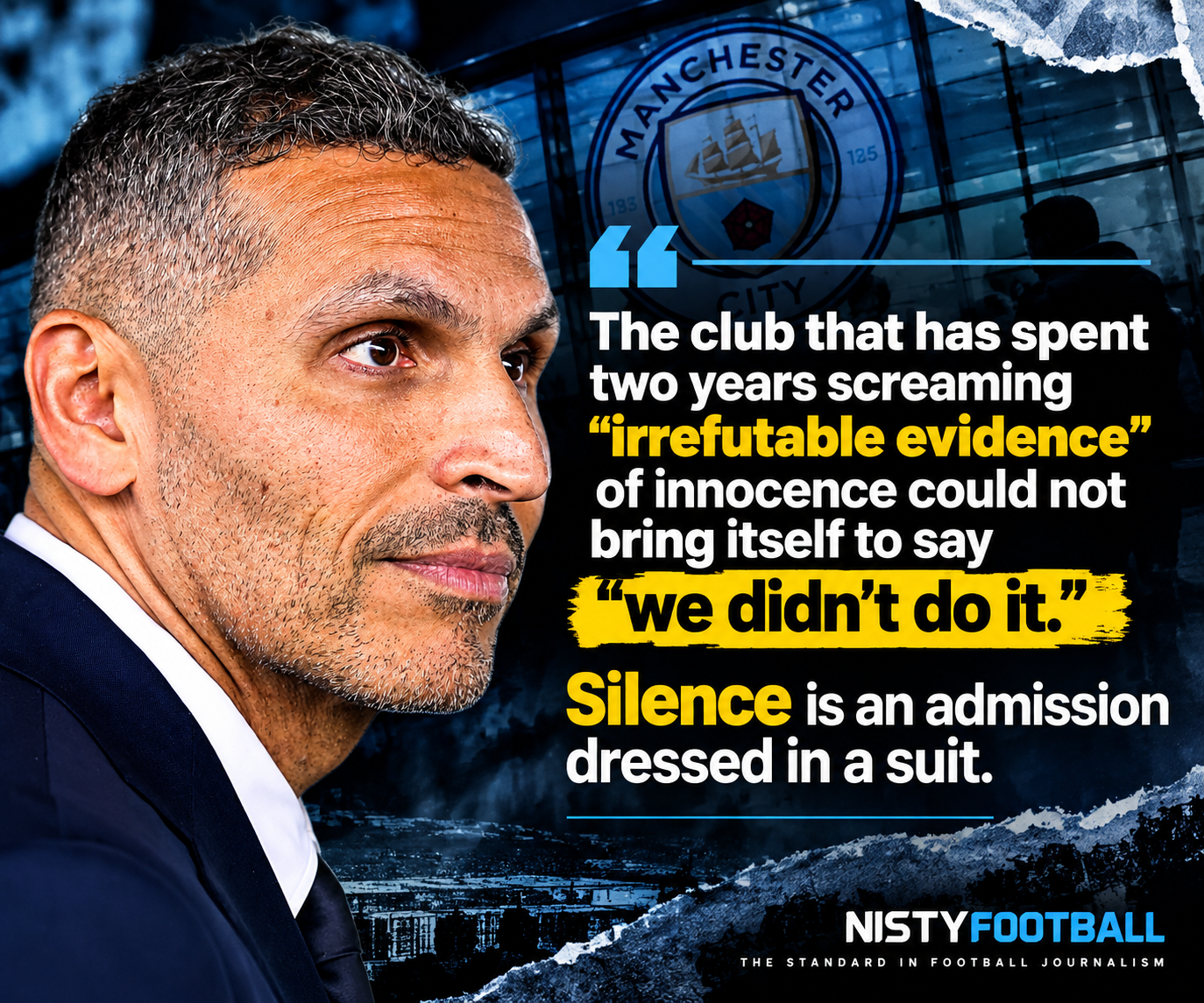
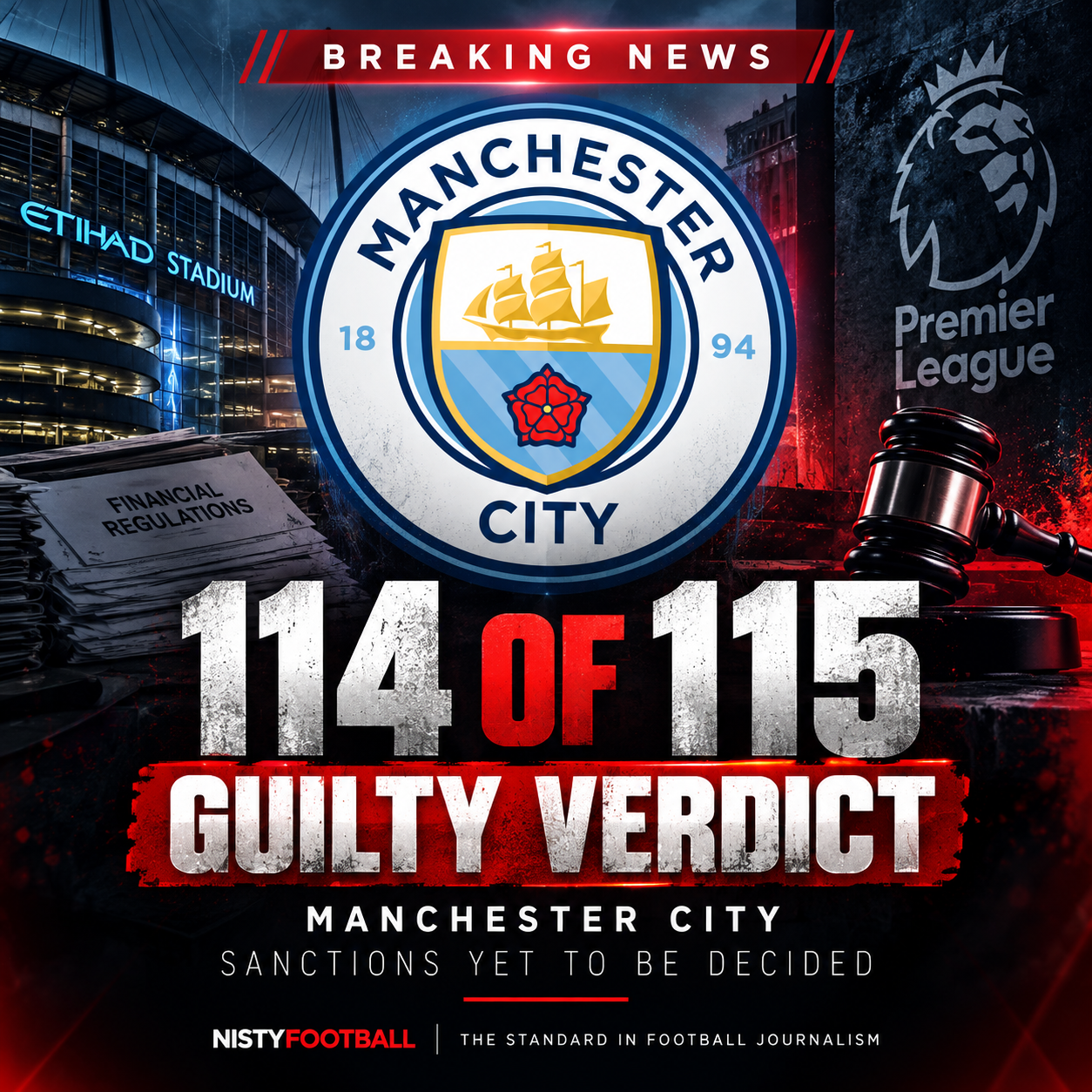
Manchester City were charged by the Premier League in February 2023 with 115 alleged breaches of its financial rules, following an investigation into the club’s financial dealings over several years. City have consistently denied wrongdoing.
An independent commission subsequently heard the case, with proceedings beginning in September 2024. The scale and complexity of the allegations made a thorough process necessary. But the longer football waits for a conclusive outcome, the greater the danger that the public will begin to question whether the rules mean what the Premier League claims they mean.
This is the central problem.
A competition cannot demand that its clubs comply with financial regulations while allowing a case of this magnitude to become an enduring symbol of uncertainty.
The Premier League has a responsibility not only to investigate alleged breaches but also to demonstrate that its regulatory system can deliver timely, credible and comprehensible outcomes.
Justice must be thorough. It must also be effective.
When a case takes years to reach a decisive stage, the governing body must recognise the damage that prolonged uncertainty can inflict on the credibility of its own competition.
Because football does not exist in a vacuum while lawyers argue and proceedings continue. Clubs keep spending. Players keep signing contracts. Managers keep getting sacked. Supporters keep paying for tickets and subscriptions.
And the argument over whether the rules are being applied fairly refuses to disappear.
WHEN WEALTH BECOMES A SYMBOL OF IMPUNITY
One of the most disturbing developments in the Manchester City debate is the perception that extraordinary financial power can insulate a club from the consequences that ordinary football institutions would fear.
Whether that perception accurately reflects the legal position is a separate question. Its existence, however, is a problem the Premier League cannot afford to ignore.
City supporters are entitled to defend their club. They are entitled to celebrate trophies, mock rival supporters and believe their team has been unfairly criticised. None of those things is inherently wrong.
But consider the message when financial allegations become a source of public defiance.
Imagine supporters chanting that their club can cheat whenever it wants, as alleged in the material supplied for this article. Imagine banners celebrating the men who run the club while the rest of the football community waits for regulatory clarity.
Such displays may be intended as provocation. They may also reflect a belief among some supporters that their club’s wealth, success and institutional power make criticism irrelevant.
That is where the Premier League’s handling of this saga becomes central to the argument.
If supporters begin to believe that a club can emerge from a prolonged disciplinary process with its competitive standing intact and its rivals powerless to do anything about it, the authority of the rules is weakened in the public imagination.
A regulator cannot control every chant in a stadium. It can, however, control the clarity, consistency and credibility of its own enforcement process.
The question is whether the Premier League has done enough to prevent a case involving serious allegations from becoming a running joke at the expense of its own authority.
WHY SHOULD NEWCASTLE, ASTON VILLA AND EVERY OTHER CLUB PLAY BY THE RULES?
This is the question that should trouble every Premier League executive.
Why should Newcastle United, Aston Villa and other ambitious clubs accept the financial restrictions imposed by the competition if their supporters come to believe that the rules are ineffective when tested by the most powerful institutions?
Why should club executives carefully calculate their spending, negotiate around financial limits and make difficult decisions about their squads if the wider perception is that the consequences of breaching the rules are uncertain, distant or negotiable?
There is an important distinction here: Manchester City’s financial case must be determined on its own evidence, and the existence of allegations does not establish that every alleged breach occurred. Nor does another club’s desire to spend more money provide a justification for ignoring regulations.
But the principle is universal.
Rules are only as credible as the institution responsible for enforcing them.
If Newcastle believe their ambitions are being restricted by financial regulations, they must operate within those regulations or challenge them through the appropriate channels. The same applies to Aston Villa and every other club.
Yet those clubs must also be able to trust that the system applies consistently, regardless of ownership wealth, commercial influence or sporting success.
Otherwise, financial regulation risks becoming a source of resentment rather than a framework for competitive fairness.
The Premier League cannot expect universal respect for its rules if its enforcement process leaves such profound questions unanswered for so long.
THE DAMAGE EXTENDS BEYOND MANCHESTER
The consequences of this saga reach far beyond the Etihad Stadium.
They affect clubs competing for European qualification, teams fighting relegation, owners deciding whether to invest, players choosing where to build their careers and supporters trying to understand what financial fairness actually means.
Football’s competitive integrity depends on more than what happens during 90 minutes.
It depends on confidence that the conditions under which clubs compete are governed by credible rules and that alleged breaches are investigated and resolved through a process that commands public confidence.
When that confidence deteriorates, every result becomes vulnerable to an argument about what happens away from the pitch.
Did one club build its competitive advantage within the rules? Were the regulations applied consistently? Are financial restrictions genuinely binding, or do they merely create an obstacle that the wealthiest institutions can afford to challenge indefinitely?
These questions should not be allowed to become the defining conversation around the Premier League.
The competition has spent years building its reputation as one of the most commercially successful and widely followed football leagues in the world. Its broadcasting reach, global audience and financial strength are considerable assets.
But commercial power cannot substitute for regulatory credibility.
Indeed, the more valuable the competition becomes, the greater its responsibility to protect the principles that make it worth watching.
THE PREMIER LEAGUE MUST ANSWER FOR THE DELAY
It is important to distinguish between the time required to conduct a complex legal proceeding and an attempt to shield a club from accountability. The former is a legitimate necessity; the latter would be a serious accusation requiring evidence.
There is no basis for automatically concluding that the length of the Manchester City proceedings proves that the Premier League deliberately protected the club.
Nevertheless, the league cannot escape scrutiny simply because a case is legally complicated.
It must explain what it can about the process, respect the independence of the decision-makers and ensure that the system has clear procedures for handling cases of exceptional scale.
Confidentiality and legal constraints may limit what can be disclosed while proceedings are ongoing. But those limitations make transparent communication about procedure and timelines more important, not less.
The Premier League must also consider whether its disciplinary framework is equipped to prevent future cases from becoming prolonged tests of institutional credibility.
How can similar cases be handled more efficiently without compromising due process? Can procedural stages be made clearer? Can the league provide meaningful updates without prejudicing a hearing? Are its rules and enforcement mechanisms sufficiently clear to inspire confidence across the competition?
These are not unreasonable questions. They are essential questions for a regulator whose authority depends on the confidence of the clubs it governs and the supporters who follow them.
The Premier League must not allow the debate to become a choice between rushing justice and tolerating endless uncertainty.
It must demonstrate that both fairness and efficiency are achievable.
NO CLUB SHOULD BE BIGGER THAN THE RULES
Manchester City have earned their place among the most successful teams of the modern era through their performances on the pitch. Their players deserve to have their football assessed on its merits, and their supporters are entitled to celebrate their achievements.
But sporting success does not place any institution beyond legitimate scrutiny.
The same standard must apply to every club, whether backed by a billionaire, a wealthy investment group or owners working with comparatively limited resources.
The issue is not whether Manchester City should be hated, nor whether their rivals should be permitted to spend without restrictions.
It is whether the Premier League can maintain a credible system of financial regulation in which every club understands that the rules are meaningful and that alleged breaches will be addressed through a fair, independent and effective process.
That responsibility belongs to the league.
And the longer a case of this magnitude remains unresolved, the greater the burden on the institution responsible for ensuring that its eventual outcome is credible.
THE FINAL WHISTLE
The Premier League cannot afford to treat this as a dispute that will disappear once the headlines move elsewhere.
Every season that passes under a cloud of uncertainty risks deepening the perception that financial power and regulatory accountability do not operate on equal terms.
That perception may be unfair to individuals involved in the proceedings. It may overlook the legal complexity of the case. But it cannot simply be dismissed when it becomes part of the wider football conversation.
The league must protect the distinction between allegations, findings and final legal outcomes. It must respect due process. And it must ensure that the public can understand how its rules are enforced.
Most importantly, it must recognise that its credibility is at stake.
Because when supporters begin to mock the very idea of financial accountability, when rival clubs question why they should accept restrictions, and when the debate over a club’s finances threatens to overshadow the football itself, the damage is no longer confined to one institution.
It becomes a problem for the entire competition.
Manchester City are entitled to due process. Their rivals are entitled to fair competition. Supporters are entitled to trust that the rules mean something.
The Premier League owes all of them a system capable of delivering those principles.
No owner should be bigger than the rules. No club should be exempt from scrutiny. And no regulator should assume that its authority will survive indefinitely on reputation alone.
The question is no longer simply how Manchester City’s case will end.
It is whether the Premier League will emerge having demonstrated that its rules are worth the paper on which they are written.
This article is an opinion piece. Allegations, independent findings and final legal outcomes must be distinguished carefully; the views expressed concern the Premier League’s regulatory process and the wider perception of competitive fairness.
Gallery
More from this story
Read next
Stories you should not miss



Related stories
More on Manchester City

More on Premier League
Breaking
THE PREMIER LEAGUE’S ‘BERMUDA TRIANGLE’: WHAT BRIGHTON, BRENTFORD AND BOURNEMOUTH KNOW THAT BIG CLUBS DON’T
Wed 23 Sept

Breaking
Pressure Mounts on Manchester United After Sluggish Premier League Start
Mon 7 Sept
Breaking
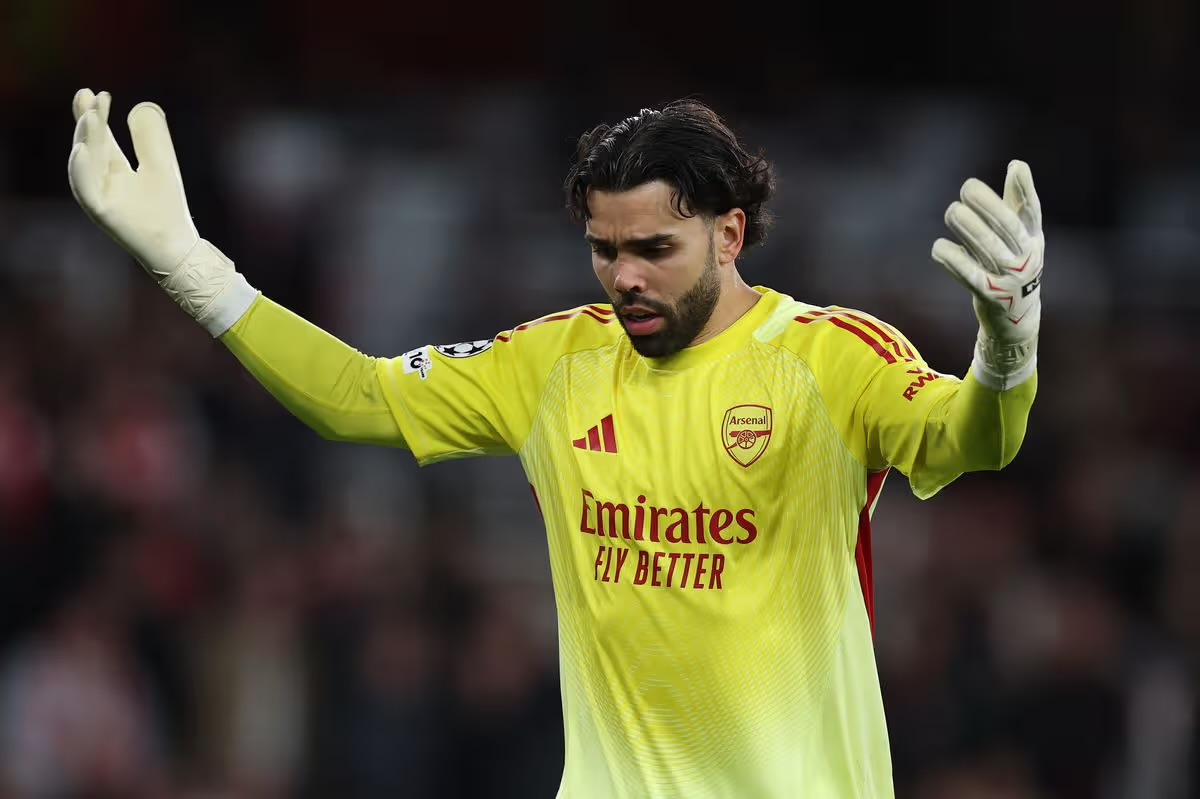
David Raya Explains What Sets Arsenal Apart in Premier League Title Battle
Mon 7 Sept
Published Sunday, 11 October 2026. Published through the Nisty Football newsroom.
Fan reaction
Comments (0)
Leave a comment
No account needed · 0 approved
0/1500 characters · comments are reviewed before publication
More from Nisty Football
Related stories

Man City Tried to BLOCK the Verdict From Leaking. Here's Why.
This isn't just about a trophy asterisk anymore. This is a football institution that could be staring down expulsion from the competition it has dominated for over a decade a competition many now believe it never should have been dominating in the first place.

Silenced? Martínez's Apology Smells Like a Club in Damage Control, and INEOS Has Questions to Answer
Players do not walk back the most honest interview of their season by accident. The club got to him.

A Man Up, a Goal Ahead, Yet No Victory: Has Michael Carrick Run Out of Answers at Manchester United?
is Carrick struggling to find the answers, or are Manchester United’s problems deeper than their manager?

EXCLUSIVE: THE CARRICK FORMULA — WHY MANCHESTER UNITED’S NEXT CHAPTER MAY DEMAND A LITTLE MORE ‘FERGUSON’
There is a difference between managing Manchester United and managing Manchester United successfully.