THE CITY THREAT: HAS MANCHESTER CITY BECOME TOO POWERFUL FOR FOOTBALL?
A football regulation is not a suggestion. A financial rule is not a rule only for clubs without powerful friend or do football’s rules apply equally when the club involved has enormously powerful owners and extraordinary political and economic connections?
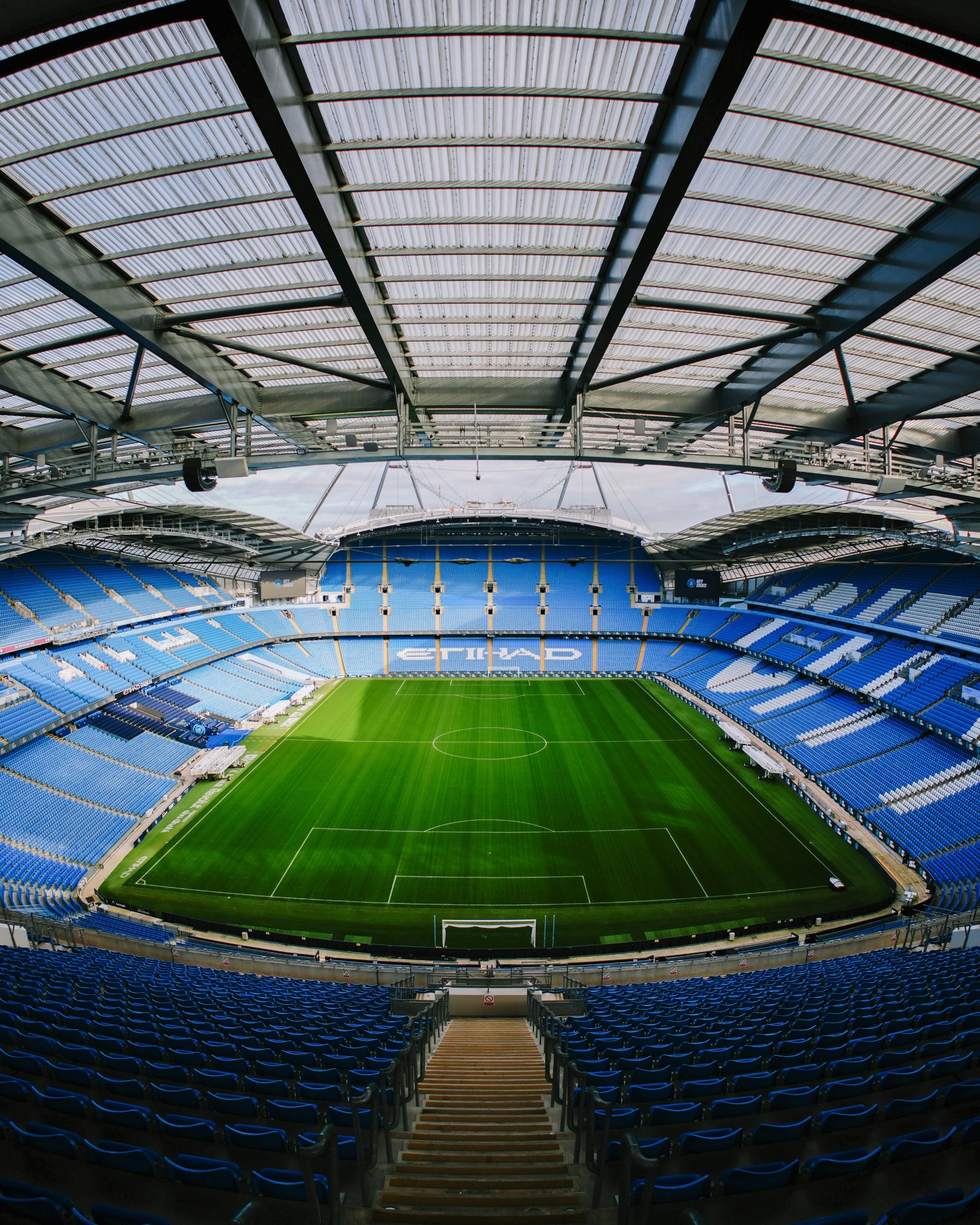
WHEN FOOTBALL’S POWER PLAY COLLIDES WITH THE RULES: THE MANCHESTER CITY TEST
By Rhys Noah
There are moments when football stops being merely about 22 players, a ball and 90 minutes.
This is one of them.
Manchester City have now been found guilty by an independent Premier League commission of serious financial-rule breaches spanning nine seasons. The commission found that the club used “sham” commercial arrangements, misstated accounts and concealed the true state of its finances, with the schemes artificially inflating revenue and reducing costs by more than £900 million. It also found that City significantly breached both Premier League and UEFA spending limits and breached its duty to cooperate with the Premier League investigation.
But the football scandal has now moved into another territory.
Reports this week say Emirati officials have warned that the Premier League verdict could affect the UK-UAE relationship and potentially put billions of pounds of investment at risk.
And that is where football must draw a very clear line.
FOOTBALL RULES CANNOT HAVE A PRICE TAG
Manchester City have every right to appeal the commission’s findings. They have done so, arguing that the judgment contains errors of law, principle and fact.
That appeal must be respected.
But if the findings ultimately survive the appeal process, the central question becomes painfully simple:
Do football’s rules apply equally when the club involved has enormously powerful owners and extraordinary political and economic connections?
They must.
The Premier League itself says the purpose of its rules is to protect a competitive and fair competition for clubs and supporters.
That principle cannot suddenly become negotiable because billions of pounds of investment are involved.
A football regulation is not a suggestion.
A financial rule is not a rule only for clubs without powerful friends.
And an independent disciplinary process cannot be treated as legitimate only when the outcome is convenient.
A SLAP IN THE FACE TO EVERYONE WHO PLAYS BY THE RULES
Think about the professional footballer trying to earn a contract.
Think about the coach building a team within a budget.
Think about the sporting director deciding which player the club can afford.
Think about the smaller club forced to sell its best player because its finances cannot compete with the biggest institutions in the game.
Think about the supporters who buy season tickets believing that the competition they watch is governed by rules that mean something.
And think about every administrator, official and employee who spends years trying to keep a football club compliant.
If financial rules can be manipulated to create an advantage — and if the consequences for doing so are ultimately insignificant — what message does that send to them?
That is the issue bigger than Manchester City.
It is about the credibility of the competition itself.
AND NOW THE UAE QUESTION
The reported UAE reaction makes the situation even more uncomfortable.
If a sovereign state or powerful investment network were genuinely prepared to reconsider major UK investment because a football club is facing the consequences of an independent sporting judgment, that would raise an extraordinary question about the relationship between football, wealth and political influence.
That does not mean the reported threat should be treated as proof of wrongdoing by the UAE or by Manchester City.
It means the allegation deserves scrutiny.
The Guardian has also reported that City’s chairman, Khaldoon Al Mubarak, met a senior UK government minister shortly before the verdict while discussing UAE investment in Britain.
Those circumstances naturally invite questions about transparency and the separation between football governance and wider political or economic interests.
But those questions should be answered through evidence — not assumptions.
THE FA AND UEFA CANNOT LOOK AWAY
The English FA has already acknowledged that the independent commission’s decision has “significant implications for the integrity of the game” and confirmed that it is considering whether disciplinary action is appropriate.
That makes this bigger than the Premier League.
And UEFA cannot simply pretend this is somebody else’s problem.
The Premier League’s published findings state that City’s conduct meant the club was significantly in breach of UEFA spending limits during the relevant period.
UEFA already has a financial-sustainability regime with sporting and financial sanctions available for breaches, including restrictions on player registration and, in appropriate circumstances, exclusion from competitions.
There is also important legal history here: UEFA previously sanctioned City in 2020, but the Court of Arbitration for Sport later reduced that sanction, with CAS finding insufficient conclusive evidence for some conclusions and determining that many alleged breaches were time-barred under UEFA’s rules.
So any UEFA action now would have to follow UEFA’s own jurisdiction, evidence and procedural rules.
But if those rules provide a lawful basis for action, the identity and wealth of the club cannot be the deciding factor.
THIS IS NOT ABOUT HATING MANCHESTER CITY
Manchester City have produced extraordinary football.
Their players, coaches and supporters deserve recognition for what has happened on the pitch.
But sporting excellence cannot become a shield against accountability off it.
This is not an argument against Abu Dhabi.
It is not an argument against investment.
It is not an argument against Manchester City winning trophies.
It is an argument for one simple principle:
Football must remain bigger than money.
If City ultimately emerge from the appeal process guilty of the offences established by the commission, the sanctions must be determined according to the rules, the scale and seriousness of the proven conduct, and the need to protect the integrity of future competitions.
Not according to the size of the owner’s cheque book.
Not according to the value of a country’s investment.
Not according to political pressure.
And certainly not according to fear of what might happen outside football.
Because if football’s governing bodies allow financial power to influence sporting accountability, the damage will extend far beyond Manchester.
It will reach every dressing room, every dugout, every boardroom and every terrace in the game.
Manchester City should not become a scapegoat.
But neither should they become untouchable.
The same rules must govern the richest club and the poorest club.
And if the evidence ultimately survives every appeal, football’s institutions must demonstrate that no club — no owner, no government and no amount of money — is bigger than the game itself.
That is the real test facing football now.
Gallery
More from this story
Read next
Stories you should not miss

Related stories
More on Premier League

Published Saturday, 3 October 2026. Published through the Nisty Football newsroom.
Fan reaction
Comments (0)
Leave a comment
No account needed · 0 approved
0/1500 characters · comments are reviewed before publication
More from Nisty Football
Related stories

Man City Tried to BLOCK the Verdict From Leaking. Here's Why.
This isn't just about a trophy asterisk anymore. This is a football institution that could be staring down expulsion from the competition it has dominated for over a decade a competition many now believe it never should have been dominating in the first place.

Silenced? Martínez's Apology Smells Like a Club in Damage Control, and INEOS Has Questions to Answer
Players do not walk back the most honest interview of their season by accident. The club got to him.
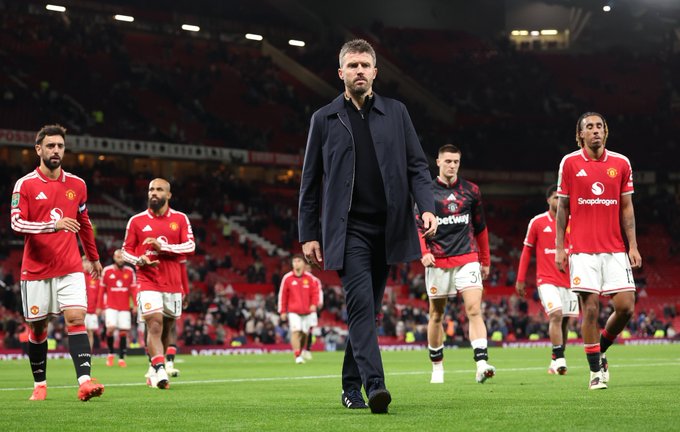
A Man Up, a Goal Ahead, Yet No Victory: Has Michael Carrick Run Out of Answers at Manchester United?
is Carrick struggling to find the answers, or are Manchester United’s problems deeper than their manager?
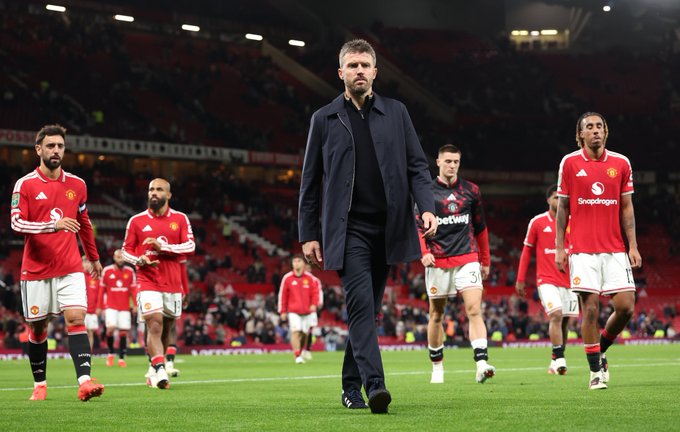
EXCLUSIVE: THE CARRICK FORMULA — WHY MANCHESTER UNITED’S NEXT CHAPTER MAY DEMAND A LITTLE MORE ‘FERGUSON’
There is a difference between managing Manchester United and managing Manchester United successfully.