THE PREMIER LEAGUE’S ‘BERMUDA TRIANGLE’: WHAT BRIGHTON, BRENTFORD AND BOURNEMOUTH KNOW THAT BIG CLUBS DON’T
Build a recruitment machine instead of constantly rebuilding a squad. Brighton, Brentford and Bournemouth are not surviving because they have discovered a secret formula hidden from the rest of football. They are succeeding because ………

There is a strange stretch of English football where expensive players disappear, managers walk away and big clubs come hunting yet the football keeps getting better.
Brighton, Brentford and Bournemouth have turned that part of the Premier League into what has been described as a “Bermuda Triangle.”
The joke is that big clubs enter looking for talent.
The more serious point is what happens after they leave.
Brighton lose Moisés Caicedo and João Pedro. Brentford lose Bryan Mbeumo and Yoane Wissa. Bournemouth lose Antoine Semenyo and Dean Huijsen.
And yet, somehow, the machine keeps moving.
That is not luck.
It is a football model.
And for some big clubs there may be an uncomfortable lesson hiding in plain sight.
THEY DON’T TRY TO BUY THE FINISHED PRODUCT
The most important difference is philosophical.
Brighton, Brentford and Bournemouth generally cannot compete with the financial power of England’s biggest clubs for established stars.
So they don’t try.
Instead, they search for players before the market fully understands what those players could become.
The principle is simple:
Don’t pay for reputation. Pay for potential.
That strategy has produced extraordinary returns.
Brighton’s Moisés Caicedo eventually moved to Chelsea for around €116 million. Brentford’s Bryan Mbeumo became the club’s record sale when he moved to Manchester United, while Bournemouth’s Antoine Semenyo subsequently moved to Manchester City for a reported £62.5 million before add-ons.
But the transfer fees are only the visible part of the story.
The real achievement is what happened after the stars left.
THE SECRET IS NOT SELLING. IT IS REPLACING
Selling a £50m, £60m or £100m player is easy to understand.
Replacing him is the difficult part.
That is where these three clubs have separated themselves.
They don’t appear to treat a major sale as an unexpected disaster. They treat it as something the club’s structure should already be prepared to absorb.
Sky Sports reported that Brighton, Brentford and Bournemouth generated a combined £485 million from player sales ahead of the 2025/26 season, before going on to finish sixth, eighth and ninth respectively.
That statistic tells us something important.
Their model isn’t:
Buy → develop → sell → start again from zero.
It is:
Scout → develop → sell → replace → develop again.
The conveyor belt doesn’t stop.
And that requires something money alone cannot buy:
planning.
BRIGHTON: TURNING RECRUITMENT INTO A COMPETITIVE WEAPON
Brighton’s approach is perhaps the clearest example of recruitment becoming part of the club’s identity.
The club has built a reputation for combining scouting with analytics to identify players whose future value may be significantly greater than their current price.
Caicedo is the obvious example.
The Ecuadorian arrived from Independiente del Valle as a relatively unknown young midfielder. Brighton developed him, gave him a Premier League platform and eventually sold him to Chelsea for a fee that placed him among the most expensive midfielders in football.
But Brighton didn’t suddenly become incapable of functioning because Caicedo left.
That is the point.
Their competitive advantage isn’t Caicedo.
It is the system that found Caicedo.
That distinction is enormous.
BRENTFORD: CULTURE BEFORE STAR POWER
Brentford have taken a similar principle and built an identity around it.
The club doesn’t need to convince players that it can outspend Manchester City, Chelsea or Manchester United.
Instead, it offers something different:
development, responsibility, opportunity and a clearly defined football culture.
Bryan Mbeumo is a perfect example.
Brentford signed him from Troyes in 2019. Six years later, he left as the club’s record sale after scoring 70 league goals in 242 appearances.
The remarkable part isn’t that Brentford sold him.
It’s that Brentford had already built an environment in which his value could grow dramatically.
And when Thomas Frank eventually left, the club didn’t simply tear everything down.
It promoted from within and continued its succession planning.
That is a fundamentally different way of running a football club.
BOURNEMOUTH: THE SAME PRINCIPLE, A DIFFERENT IDENTITY
Bournemouth’s version is built around identifying players who can grow into Premier League-level assets and then reinvesting when the market comes calling.
Antoine Semenyo is an excellent illustration.
Bournemouth signed him from Bristol City in 2023. Three years later, Manchester City paid a reported £62.5 million for him, with potential additional payments.
Dean Huijsen provides another example of the club’s ability to develop and sell talent at a significant profit.
The important thing isn’t that Bournemouth eventually lose players.
The important thing is that they expect to lose them — and prepare for it.
That changes everything.
AND THIS IS WHERE MANCHESTER UNITED AND CHELSEA SHOULD PAY ATTENTION
The lesson for Manchester United and Chelsea isn’t:
“Start behaving like Brighton.”
Their circumstances are completely different.
United and Chelsea operate under vastly different expectations, financial pressures and competitive demands.
They cannot simply fill their squads with teenagers and wait five years.
But there is something they can learn.
Build a recruitment machine instead of constantly rebuilding a squad.
Manchester United have repeatedly spent enormous sums trying to solve immediate problems.
Chelsea have invested heavily in young talent and have increasingly pursued players with future value.
The question for both clubs isn’t simply how much they spend.
It is whether every major signing fits into a coherent football architecture.
Because spending £60m on a player is not necessarily the problem.
The problem comes when the next manager wants a different player.
Then another manager arrives.
Then the squad changes again.
Then another transfer window begins.
Suddenly, the club is spending enormous amounts of money without necessarily building an increasingly valuable football structure.
THE BIG CLUBS CAN BUY THE PLAYERS. THEY CAN’T BUY THE PROCESS.
This is perhaps the biggest lesson of the Bermuda Triangle.
Manchester United can buy Mbeumo.
Chelsea can buy Caicedo.
Manchester City can buy Semenyo.
But buying the finished product doesn’t automatically give you the process that produced him.
That process consists of:
Recruitment.
Data.
Scouting.
Coaching.
Player development.
Succession planning.
Club culture.
And, perhaps most importantly:
patience.
Brighton, Brentford and Bournemouth have created environments where losing a star does not necessarily mean losing the team’s direction.
That is extraordinarily difficult to achieve.
THE REAL ADVANTAGE IS WHAT HAPPENS AFTER THE SALE
This is why the £485m figure matters.
It isn’t simply evidence that three clubs are good at selling footballers.
It is evidence that they have created repeatable value.
They discover.
They develop.
They compete.
They sell.
They reinvest.
And then they do it again.
The big clubs have the financial muscle to buy the players produced by this system.
But perhaps the smarter question is:
Why not build a system capable of producing those players in the first place?
Because the Premier League’s so-called Bermuda Triangle isn’t mysterious anymore.
Brighton, Brentford and Bournemouth are not surviving because they have discovered a secret formula hidden from the rest of football.
They are succeeding because they have made the structure bigger than the individual.
And that may be the lesson the Premier League’s giants should be studying most closely.
The future of elite football may not belong exclusively to the clubs that can spend the most.
It may belong to the clubs that know exactly why they are spending.
Read next
Stories you should not miss

Breaking
Silenced? Martínez's Apology Smells Like a Club in Damage Control, and INEOS Has Questions to Answer

Breaking
Man City Found Guilty. Two Weeks Later: "94% of Clubs Are Losing Money." Coincidence?
Breaking
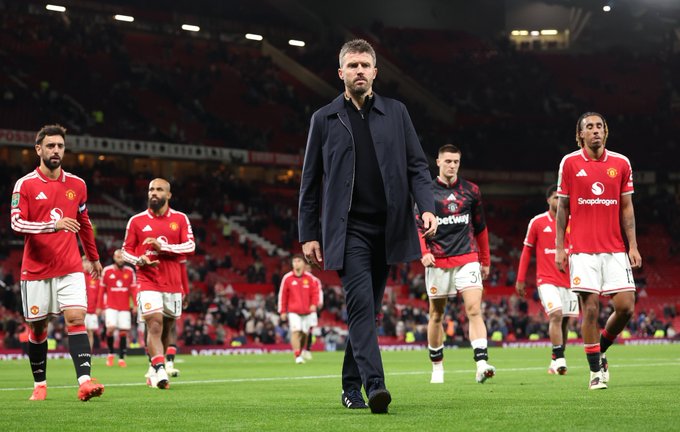
A Man Up, a Goal Ahead, Yet No Victory: Has Michael Carrick Run Out of Answers at Manchester United?
Related stories

Published Wednesday, 23 September 2026. Published through the Nisty Football newsroom.
Fan reaction
Comments (0)
Leave a comment
No account needed · 0 approved
0/1500 characters · comments are reviewed before publication
More from Nisty Football
Related stories

Are Premier League Rules Only for the Clubs Without Billionaire Owners?
Manchester City’s 115 charges and the prolonged wait for resolution raise serious questions about financial fairness, accountability, and the Premier League’s credibility.

THE CITY THREAT: HAS MANCHESTER CITY BECOME TOO POWERFUL FOR FOOTBALL?
A football regulation is not a suggestion. A financial rule is not a rule only for clubs without powerful friend or do football’s rules apply equally when the club involved has enormously powerful owners and extraordinary political and economic connections?

PEP GUARDIOLA: THE GENIUS, THE SCANDALS & THE QUESTIONS
The trophies are undeniable. So are the questions surrounding Barcelona, Manchester City and the man who stood at the centre of both eras.
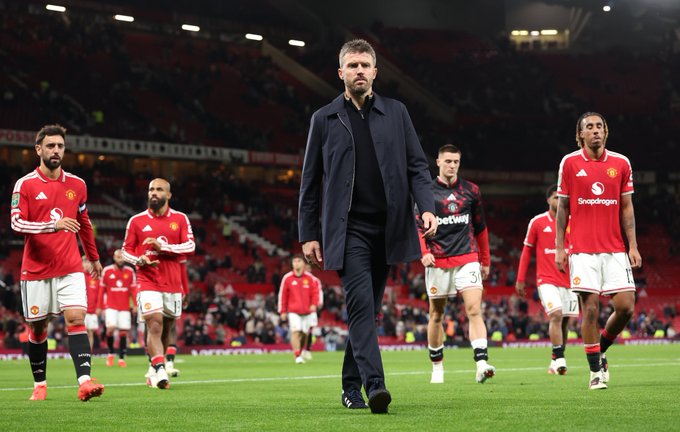
EXCLUSIVE: THE CARRICK FORMULA — WHY MANCHESTER UNITED’S NEXT CHAPTER MAY DEMAND A LITTLE MORE ‘FERGUSON’
There is a difference between managing Manchester United and managing Manchester United successfully.