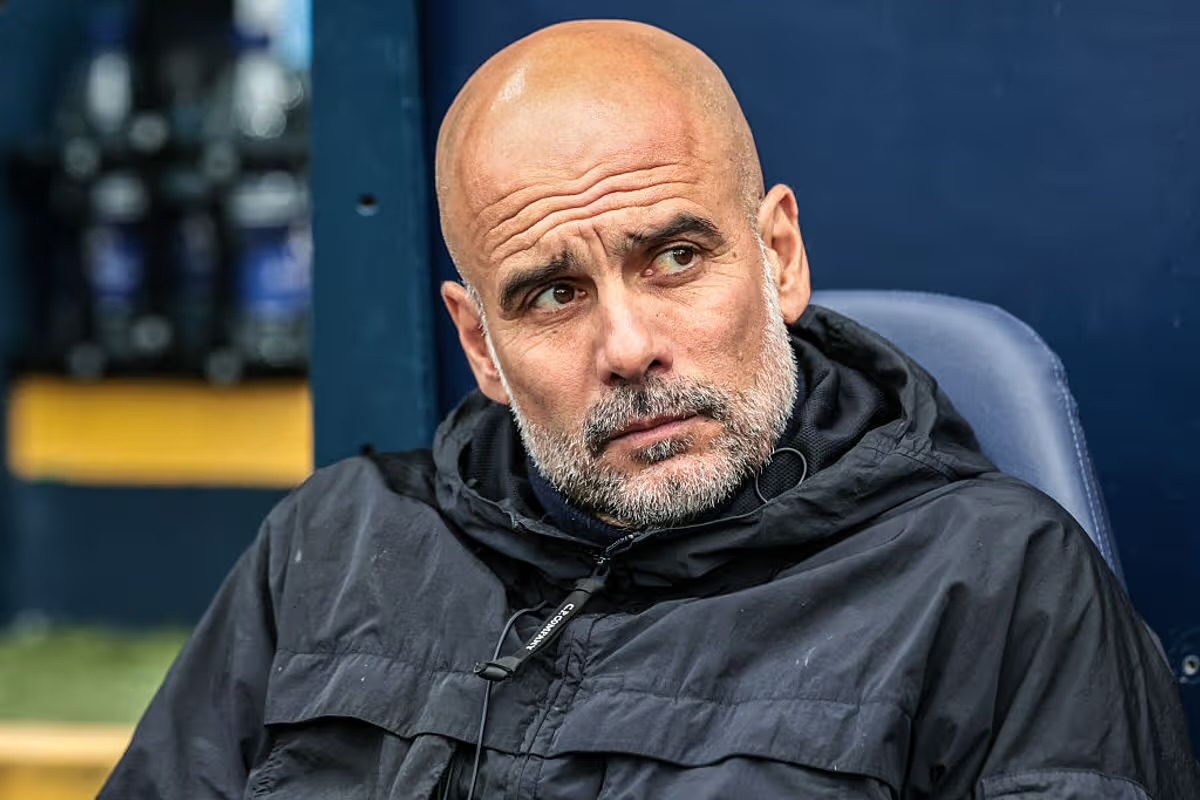
PEP GUARDIOLA: THE GENIUS, THE SCANDALS & THE QUESTIONS
The trophies are undeniable. So are the questions surrounding Barcelona, Manchester City and the man who stood at the centre of both eras.
PEP GUARDIOLA: THE GENIUS, THE SCANDALS & THE QUESTIONS
Football’s great moral lecturer now sits at the centre of two of its biggest scandals. Silence won’t make either go away.
By Sarah Whitcombe
For fifteen years, we were told Pep Guardiola was different.
Cleaner.
Smarter.
More principled.
A football professor who turned winning into philosophy and possession into an ideology.
Barcelona gave him the laboratory.
Manchester City gave him the modern superpower.
Guardiola gave them trophies.
But the Guardiola mythology now has a problem.
Actually, it has two.
One is Manchester City.
The other is Barcelona.
And suddenly, For fifteen years, Pep Guardiola was presented as football’s professor — the genius who seemed to have an answer for everything. But now, two of the institutions that shaped his extraordinary legacy are engulfed in scandals. And suddenly, the professor has some explaining to do.
⸻
SCANDAL ONE: MANCHESTER CITY
Manchester City are no longer merely accused of financial wrongdoing.
On September 29, an independent Premier League commission found the club guilty of serious financial-rule breaches covering nine seasons. The commission found that City used “sham” commercial arrangements to artificially inflate revenue and reduce costs, misstated accounts and concealed the true state of its finances. It said the schemes affected more than £900 million.
City has appealed, maintaining that the commission’s findings contain errors of law, principle and fact. The appeal is now formally lodged.
That legal process matters.
But so does the finding that produced it.
And this is where Guardiola enters the uncomfortable part of the story.
He arrived at Manchester City in 2016.
He became the face of the club’s greatest era.
He won title after title. He won the Champions League. He became synonymous with the extraordinary transformation of Manchester City into English football’s dominant force.
And throughout the controversy, Guardiola repeatedly placed his faith in the people running the club.
He trusted them.
He defended them.
He effectively told the football world that if City had lied to him, he would walk away.
Now an independent commission has found that Manchester City systematically breached Premier League rules during the period under investigation.
And Guardiola’s response?
He has stayed with the club.
He has publicly reaffirmed his support for its owner, chairman and executives, saying he would go through the ordeal with them.
That is Guardiola’s right.
But it creates a question he cannot simply dribble around.
What exactly was he defending?
⸻
SCANDAL TWO: BARCELONA
Then there is Barcelona.
The club where Guardiola’s mythology was born.
The club where his football became religion.
The club where he produced one of the most influential teams in modern football.
And now the Negreira case has returned to the headlines with fresh force.
Barcelona paid approximately €8.4 million between 2001 and 2018 to companies linked to José María Enríquez Negreira, who was vice-president of Spain’s Technical Committee of Referees.
Guardiola was Barcelona manager from 2008 to 2012.
UEFA has confirmed that it received a substantial new body of documentation from Real Madrid concerning the ongoing Negreira investigation and that its ethics and disciplinary investigators are assessing the material. Barcelona says the UEFA proceedings were never closed and insists that the latest developments do not constitute a reopening of the case.
Again, the distinction matters:
There is no established finding that Guardiola personally participated in the Negreira payments or that Barcelona’s matches were fixed, yet.
But that does not make the underlying relationship insignificant.
A football club paying millions to a senior figure within the refereeing establishment is an extraordinary fact.
And those payments overlapped with Guardiola’s Barcelona years.
So the question isn’t whether Pep personally signed the cheques.
The question is:
What did he know about the world in which his football empire was operating?
⸻
THE COINCIDENCE PROBLEM
Then comes another uncomfortable name.
Ferran Soriano.
Soriano held senior positions at Barcelona before joining Manchester City in 2012, where he eventually became chief executive. He was part of the City structure that Guardiola walked into in 2016.
That, by itself, proves absolutely nothing about Guardiola.
But it adds another layer to a story that already contains extraordinary institutional connections.
Barcelona.
Manchester City.
Guardiola.
Soriano.
Two clubs.
Two controversies.
One manager.
We should not manufacture a conspiracy where the evidence does not establish one.
But neither should journalism pretend that institutional connections cease to matter simply because they are uncomfortable.
The public deserves to ask questions.
And Guardiola deserves the opportunity to answer them.
⸻
FRAUD OR MYOPIC?
Matthew Syed, writing in The Times, has gone considerably further.
Following the Manchester City verdict, Syed questioned how Guardiola could have spent years at the club without recognising what he regarded as obvious problems surrounding its financial arrangements.
His argument was brutal: either Guardiola knew, or he failed to see what was happening around him.
Other commentators have similarly questioned whether his continued defence of City is compatible with the moral authority he has cultivated throughout his career.
It is a devastating question.
Because Guardiola’s entire public image has been built around control.
He sees everything.
He notices everything.
He demands perfection from everyone.
Every movement has a purpose.
Every passing angle matters.
Every detail is analysed.
So how does a man obsessed with details spend years inside two of football’s most powerful institutions while controversies of this magnitude develop around them?
There are only uncomfortable possibilities.
If he knew, then the image of the detached football philosopher becomes much harder to sustain.
If he didn’t know, then how much could the man famous for seeing everything actually see?
And there is another possibility:
Perhaps he genuinely believed the explanations given to him.
If so, he should say so.
Clearly.
Publicly.
Without the football philosophy.
Without the slogans.
Without hiding behind trophies.
⸻
THE TROPHIES
Nobody serious is arguing that Guardiola cannot coach football.
His tactical influence is undeniable.
His teams have transformed the sport.
His Barcelona side changed the way an entire generation understood possession.
His Manchester City side redefined domestic dominance.
That is not the question.
The question is whether the environment surrounding those achievements can now be examined without treating Guardiola’s genius as a protective shield.
Because brilliance does not answer financial questions.
Trophies do not answer governance questions.
Possession statistics do not answer refereeing questions.
And a Champions League medal cannot testify on behalf of a club’s accounts.
The football can be brilliant.
The manager can be brilliant.
And the institutions around him can still be subjected to scrutiny.
Those things can exist simultaneously.
⸻
AND THIS IS WHERE THE GUARDIOLA MYTH COLLIDES WITH REALITY
For years, Guardiola was more than a manager.
He became a moral voice in football.
He spoke about politics.
He spoke about social justice.
He spoke about responsibility.
He spoke about principles.
He challenged journalists.
He challenged football authorities.
He challenged the establishment.
There was nothing wrong with that.
But moral authority creates expectations.
If you spend years telling the football world that principles matter, eventually people are entitled to ask what happens when those principles collide with your own club.
Manchester City has now received an independent commission’s guilty findings.
Barcelona remains embroiled in the Negreira investigation.
Guardiola remains publicly loyal to Manchester City.
And on the Barcelona developments, there has been no comparable public reckoning from him.
That silence does not prove guilt.
But silence does not make questions disappear either.
⸻
WHAT DID HE KNOW — AND WHEN?
That is the question Guardiola cannot escape simply by pointing at his trophy cabinet.
Nobody is arguing that Pep Guardiola cannot coach football.
Nobody is pretending his tactical influence never existed.
The question is much more uncomfortable.
What did he know?
What did he know about the institutional practices surrounding him at Barcelona?
What did he know about the financial machinery surrounding Manchester City?
When did he know it?
And when he defended those institutions publicly, what exactly was he defending?
Manchester City has been found guilty of serious financial breaches by an independent commission, although the club has appealed that decision.
Barcelona’s relationship with Negreira remains under investigation.
Guardiola himself has not been found guilty of either matter.
But that is precisely why the questions matter.
If he knew, football deserves to know what he knew.
If he didn’t know, football deserves to understand how a manager famous for obsessive control could remain so distant from matters surrounding two of the most consequential football institutions of his career.
Either way, the mythology has changed.
The professor spent years teaching football about control.
Now football wants him to explain what was happening outside the touchline.
What did you know, Pep?
And when did you know it?
NistyFootball will wait for the answer.
Gallery
More from this story
Read next
Stories you should not miss
Related stories
More on Manchester City
Published Saturday, 3 October 2026. Published through the Nisty Football newsroom.
Fan reaction
Comments (0)
Leave a comment
No account needed · 0 approved
0/1500 characters · comments are reviewed before publication
More from Nisty Football
Related stories
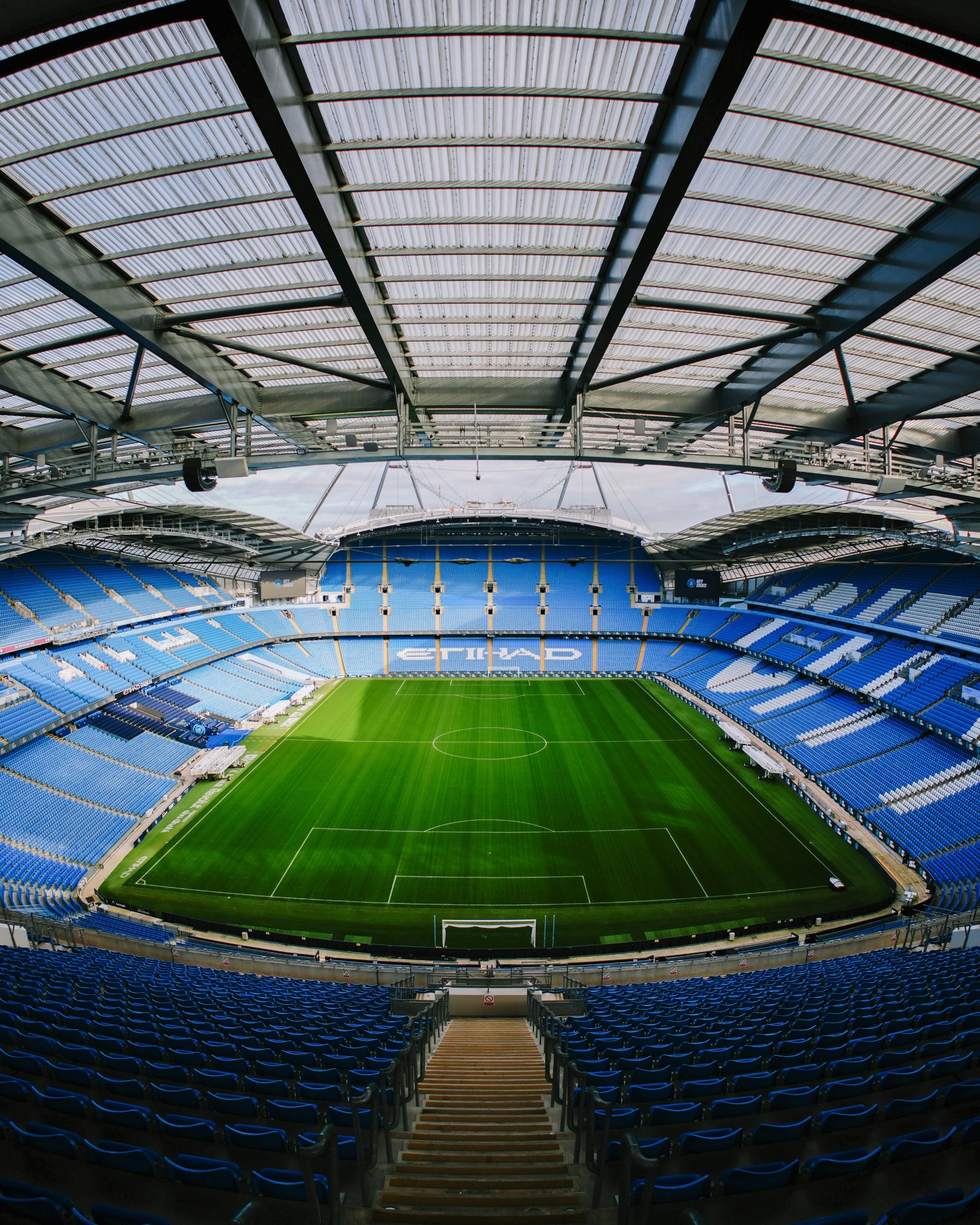
THE CITY THREAT: HAS MANCHESTER CITY BECOME TOO POWERFUL FOR FOOTBALL?
A football regulation is not a suggestion. A financial rule is not a rule only for clubs without powerful friend or do football’s rules apply equally when the club involved has enormously powerful owners and extraordinary political and economic connections?
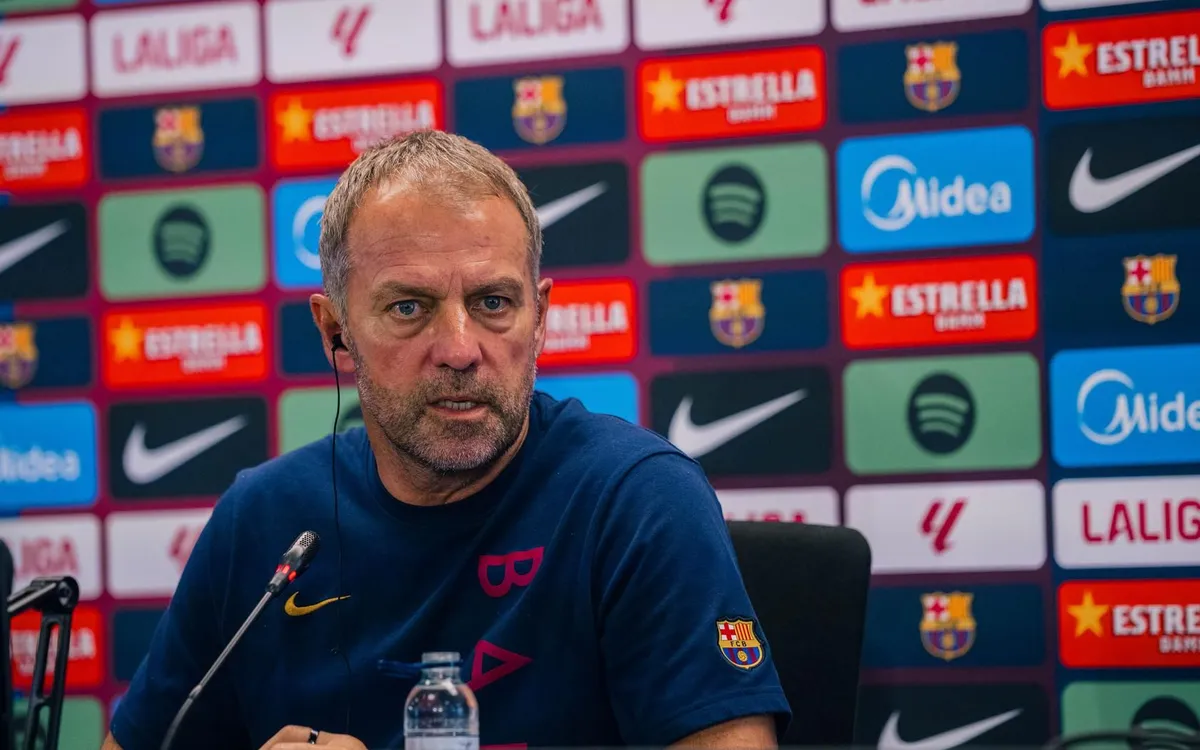
Hansi Flick Lauds 'Almost Perfect' Barcelona as Catalans Take Top Spot in La Liga
Hansi Flick has praised Barcelona's commanding display against Valencia as 'almost perfect' after the Blaugrana climbed to the summit of La Liga.
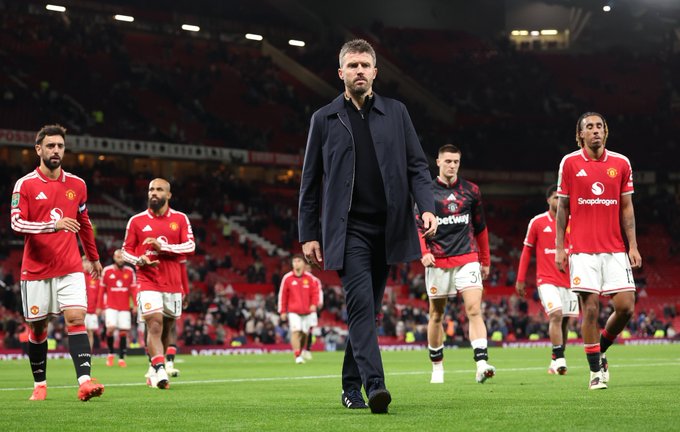
A Man Up, a Goal Ahead, Yet No Victory: Has Michael Carrick Run Out of Answers at Manchester United?
is Carrick struggling to find the answers, or are Manchester United’s problems deeper than their manager?

Silenced? Martínez's Apology Smells Like a Club in Damage Control, and INEOS Has Questions to Answer
Players do not walk back the most honest interview of their season by accident. The club got to him.