ARSENAL WASN’T BORN IN NORTH LONDON SO WHY DOES NORTH LONDON FEEL LIKE THEIRS?
Today, Arsenal and Tottenham supporters can debate trophies, managers, players and league positions endlessly. But underneath all of that sits an older argument: Who truly belongs to North London?

There is a line Tottenham supporters have used for generations to taunt Arsenal:
“You come from Woolwich.”
It sounds like ordinary football banter.
It isn’t.
Behind those four words sits a piece of history that helps explain one of English football’s most intense rivalries and raises an uncomfortable question for Arsenal supporters:
How did a club founded miles away from North London become one of the defining institutions of North London itself?
The answer begins in Woolwich.
And it begins in 1886.
BEFORE THE RIVALRY, THERE WAS WOOLWICH
Arsenal’s story did not begin at Highbury.
It did not begin at the Emirates.
And, importantly, it did not begin in North London.
The club was founded in Woolwich in 1886 by workers at the Royal Arsenal, initially as Dial Square.
Woolwich was then a very different environment from the fashionable image associated with Arsenal today.
This was a club built from an industrial community.
Working men created the football club.
They played their football in south-east London.
For decades, Woolwich was not merely a footnote in Arsenal’s history.
It was home.
Then came the decision that would alter English football forever.
THE DECISION THAT CHANGED NORTH LONDON
By the early 1910s, Arsenal’s leadership, under chairman Henry Norris, was looking for a different future.
The club’s ambitions were growing, but Woolwich presented limitations.
Then Arsenal made the decision that would eventually transform its identity.
In the winter of 1912, plans were publicly announced for the club to leave Woolwich.
The destination?
Highbury.
That was not simply a change of address.
It was a geographical leap into territory already associated with another London club.
Tottenham were established in North London.
Arsenal were coming from the south-east.
And suddenly, the foundations of what would become the North London derby were being laid.
ARSENAL MOVED — AND THE RIVALRY FOLLOWED
Construction of Arsenal’s new home began in 1913.
By September that year, the move was complete enough for Arsenal to play their first competitive match at Highbury.
They beat Leicester Fosse 2–1.
The club had officially planted itself in North London.
But there was an obvious problem.
Arsenal had not arrived in an empty footballing landscape.
Tottenham Hotspur were already there.
And Arsenal’s arrival brought the two clubs into geographical proximity.
The rivalry that followed would become one of English football’s defining fixtures.
But its roots are often simplified into red versus white, Arsenal versus Tottenham, Gunners versus Spurs.
The history is deeper.
Tottenham supporters could point south and say:
You weren’t originally from here.
Arsenal supporters could point to more than a century of existence in North London and answer:
We are here now.
That argument has never really ended.
THE 12-MILE MOVE THAT CREATED A FOOTBALL WAR
There is something particularly fascinating about Arsenal’s relocation.
The club moved roughly 12 miles from Woolwich to Highbury.
Twelve miles may not sound like much today.
In football terms, however, it changed everything.
A club that had spent its formative years in Woolwich suddenly found itself operating almost directly inside Tottenham’s geographical sphere.
The rivalry wasn’t manufactured by marketing executives.
It wasn’t created for television.
It grew naturally from location, history, identity and competition.
And once Arsenal established itself at Highbury, there was no going back.
The move ultimately became one of the most consequential relocations in English football history.
Because Arsenal didn’t simply move stadiums.
It moved into a rivalry.
SO WHO OWNS NORTH LONDON?
This is where the argument becomes particularly interesting.
Tottenham supporters have a historical point when they remind Arsenal fans of Woolwich.
Arsenal really were founded there.
The club really did spend its early existence there.
And Arsenal really did move north.
But history does not stop in 1913.
Arsenal spent more than a century establishing itself in North London after that move.
Highbury became synonymous with the club.
Generations of supporters were born into Arsenal’s North London identity.
The Emirates later replaced Highbury, but the geographical and cultural connection remained.
So when Tottenham fans sing about Arsenal coming from Woolwich, they’re invoking the beginning of Arsenal’s story.
When Arsenal supporters claim North London, they are invoking what happened after the move.
Both sides are therefore arguing from different chapters of the same history.
THE REAL ORIGIN OF THE NORTH LONDON DERBY
Perhaps the most revealing part of this story is that the North London derby was not born because Arsenal and Tottenham simply disliked each other.
It was shaped by movement.
Arsenal’s decision to leave Woolwich placed the club in Tottenham’s backyard.
Competition intensified.
Identity hardened.
And eventually, the geographical proximity became footballing tribalism.
Today, Arsenal and Tottenham supporters can debate trophies, managers, players and league positions endlessly.
But underneath all of that sits an older argument:
Who truly belongs to North London?
And perhaps that is why the old Tottenham taunt still carries weight.
“You come from Woolwich.”
It isn’t just an insult.
It is a reminder that Arsenal’s North London identity had a beginning.
And that beginning was 12 miles away.
Read next
Stories you should not miss

Related stories

Published Friday, 25 September 2026. Published through the Nisty Football newsroom.
Fan reaction
Comments (0)
Leave a comment
No account needed · 0 approved
0/1500 characters · comments are reviewed before publication
More from Nisty Football
Related stories

Silenced? Martínez's Apology Smells Like a Club in Damage Control, and INEOS Has Questions to Answer
Players do not walk back the most honest interview of their season by accident. The club got to him.

Licha Drops the Mask: Martínez Exposes United's Rotten Core, But the Dressing Room Isn't Innocent
"You keep changing managers but what about other areas?" That is not a throwaway remark. It is a defender looking past the touchline and pointing at the people upstairs.

Man City Found Guilty. Two Weeks Later: "94% of Clubs Are Losing Money." Coincidence?
Ask yourself who gains from the headline "the whole game is broken." It isn't Burnley or Wrexham. It's the club that needs the public to see its guilty verdict as one more symptom of a rotten system.
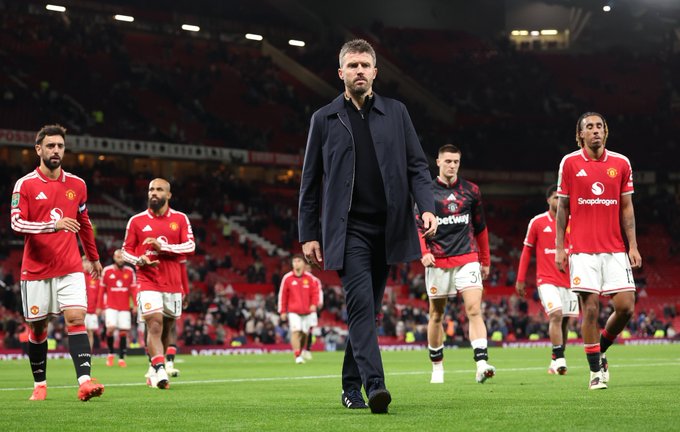
A Man Up, a Goal Ahead, Yet No Victory: Has Michael Carrick Run Out of Answers at Manchester United?
is Carrick struggling to find the answers, or are Manchester United’s problems deeper than their manager?