CRISTIANO RONALDO: HERO and EGO
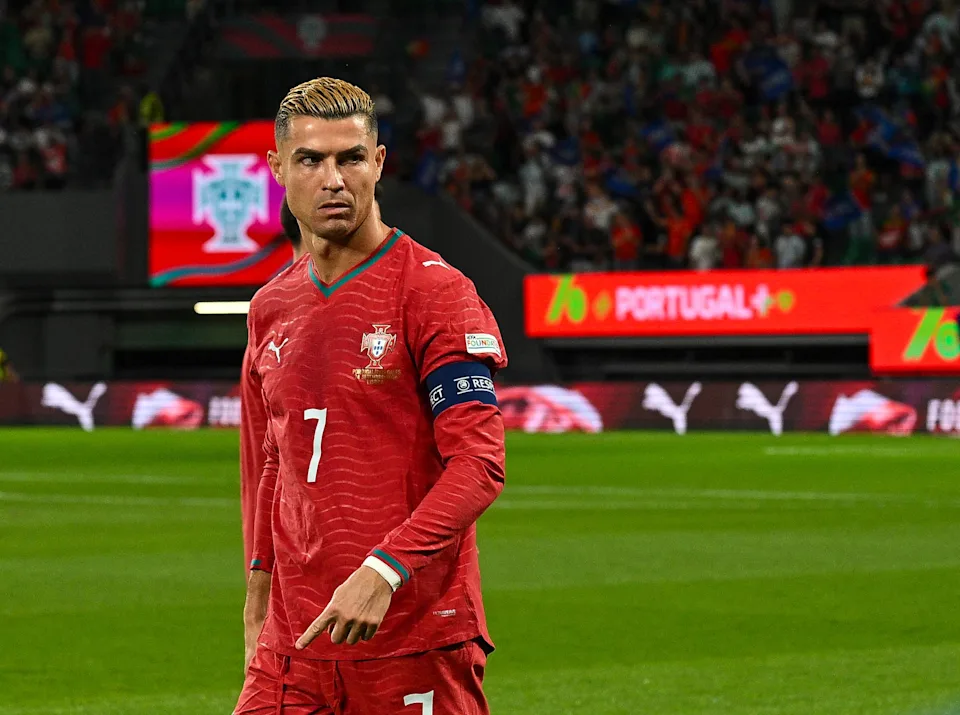
Reports citing Portuguese football regulations say a player who leaves the national-team camp without permission can face a suspension of one to six months.
CRISTIANO RONALDO: HERO and EGO
By Pau Ribas
There are footballers who represent a country.
And then there are footballers who, for a generation, almost become the country.
Cristiano Ronaldo is the latter.
For almost two decades, Portugal’s greatest footballer has carried its hopes, its expectations, its criticism and, eventually, its pride.
He gave Portugal its first major men’s international trophy at Euro 2016. He became the country’s record goalscorer and most-capped player. At 41, his numbers and longevity remain extraordinary.
But football has a cruel rule.
Nobody gets to choose when the game begins moving on without them.
And that is where the latest Cristiano Ronaldo saga becomes much bigger than one argument with Jorge Jesus.
It is about power, pride, loyalty, leadership and the uncomfortable question of whether the greatest player in Portuguese history can accept being treated like an ordinary member of the squad.
The title of this story writes itself:
RONALDO: HERO and EGO.
⸻
THE NIGHT EVERYTHING CHANGED
On September 27, Portugal defeated Norway 2–1.
Ronaldo started the match on the bench.
That, by itself, was hardly a national emergency. At 41, rotation should not be shocking.
But then came the moment that changed everything.
Ronaldo warmed up.
And warmed up.
And waited.
Jorge Jesus ultimately decided not to send him onto the pitch.
Ronaldo finished the match as an unused substitute.
It was reportedly the first time since Euro 2008 that he had been left unused for Portugal in such circumstances.
Jesus later explained that Ronaldo had been unhappy after warming up for 20 or 30 minutes without entering.
That part is understandable.
What happened next was not.
Ronaldo trained separately in the gym in the following days, while questions about his relationship with Jesus intensified.
Jesus insisted there was no major problem.
But the relationship clearly wasn’t as smooth as it had appeared.
Then came Denmark.
Jesus announced that Ronaldo would again not start.
And this time, Ronaldo made his move.
⸻
THE WALKOUT
Ronaldo left Portugal’s training camp.
The Portuguese Football Federation confirmed his departure.
Ronaldo then explained on Instagram that his decision came after Jesus’ press conference and a conversation with FPF president Pedro Proença.
But instead of giving the full story, he left the biggest piece of the puzzle hanging.
He promised that:
“In due course” he would tell the Portuguese people the truth about why he left. (The National)
That sentence transformed a football disagreement into a national saga.
According to Reuters’ reporting, Jesus and Proença even travelled to Copenhagen airport in an unsuccessful attempt to persuade Ronaldo to remain with the squad. Ronaldo eventually left on a private flight to Madrid. (Reuters)
And suddenly, Portugal had a crisis.
Not because Cristiano Ronaldo had been injured.
Not because Portugal had been eliminated.
But because Cristiano Ronaldo had walked away.
⸻
HERO OR EGO?
This is where the debate becomes uncomfortable.
Ronaldo has earned an enormous amount of respect.
His career is not a matter of opinion.
Five Ballon d’Or awards.
Champions League titles.
European Championship glory.
International scoring records.
Decades at the highest level.
And an almost absurd commitment to maintaining his physical condition.
Portugal did not merely benefit from Ronaldo.
Portugal was transformed by Ronaldo.
He helped turn the national team from perennial underachievers into European champions and a genuine global football power.
So when Ronaldo feels disrespected, there is an understandable emotional argument behind it:
“After everything I have given this country, have I really become disposable?”
But there is another side.
A national team manager has to manage the future, not simply honour the past.
Jorge Jesus may believe that Portugal needs to learn how to win without its greatest-ever player.
And Portugal just provided him with ammunition.
⸻
PORTUGAL WON WITHOUT HIM
Ronaldo left.
Portugal played Denmark.
Portugal won.
4–2.
That result does not erase Ronaldo’s contribution to Portuguese football.
But it changes the conversation.
Because for years, one of the questions surrounding Portugal has been:
What happens when Ronaldo isn’t there?
Against Denmark, Portugal provided an answer.
They survived.
They scored four.
They played with confidence.
And Bruno Fernandes — wearing the captain’s armband — became one of the central figures in the aftermath.
Suddenly, the story wasn’t simply:
Portugal needs Ronaldo.
It became:
Portugal can function without Ronaldo.
That distinction matters.
Vitinha has also reportedly been among those whose comments have been interpreted as suggesting Portugal’s play improved after Ronaldo’s absence.
But Bruno Fernandes has taken a different position.
⸻
BRUNO REFUSES TO PICK A SIDE
Fernandes spoke directly with Ronaldo.
And his message was remarkably clear.
Whatever happens next, he said, Ronaldo remains the greatest symbol of Portugal’s national team, its football and its country.
But Fernandes also asked the Portuguese public not to divide itself over the dispute.
There are, he insisted, no divisions within the dressing room. (Reuters)
That may be the most important intervention yet.
Because Portugal does not need a Ronaldo camp and a Jesus camp.
It needs a football team.
Fernandes understands something both sides may have forgotten:
Ronaldo’s legacy belongs to Portugal.
But Portugal’s future does not belong exclusively to Ronaldo.
⸻
THEN CAME THE INSTAGRAM LIKE
And then Ronaldo appeared to add another chapter.
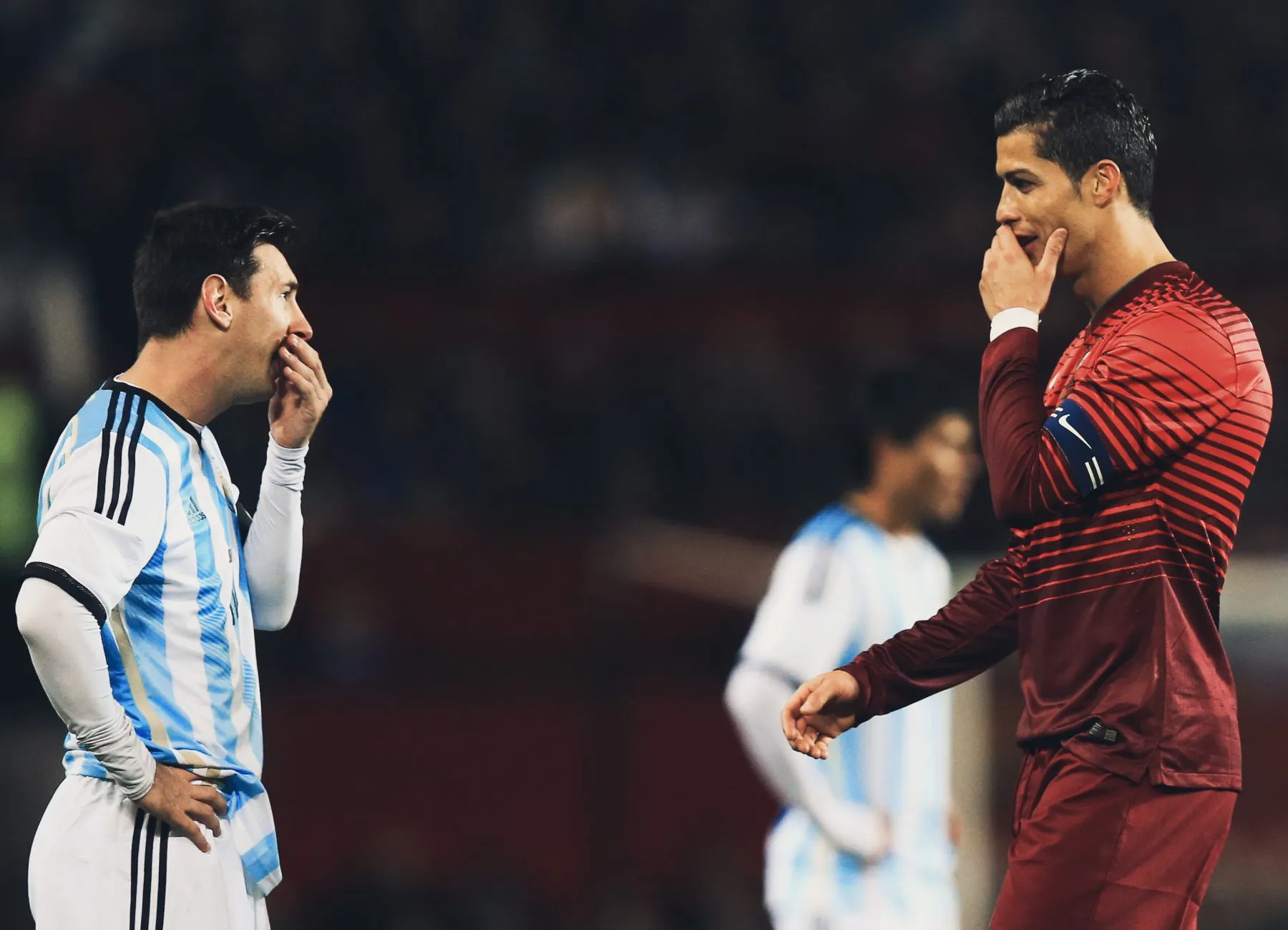
Former Brazil international Felipe Melo criticised the way Portugal treats Ronaldo and compared it with Argentina’s treatment of Lionel Messi.
The argument was essentially that Argentina embraced Messi in a way Portugal has not embraced Ronaldo.
Ronaldo subsequently appeared to like the post.
That “like” was enough to ignite another storm. (Yahoo Sports)
Was it a deliberate message?
Was it simply an Instagram interaction?
Nobody outside Ronaldo’s circle can know for certain.
But timing matters.
And the timing made it impossible to ignore.
The Messi comparison is particularly fascinating.
Two men dominated an era.
Messi eventually lifted the World Cup with Argentina and became almost inseparable from the country’s football identity.
Ronaldo helped Portugal win Euro 2016 and Nations League titles.
But their relationships with their national teams have often felt different.
Now, in the twilight of both careers, that contrast has resurfaced.
⸻
THE NUMBER 7 CONTROVERSY
Then came another symbolic moment.
With Ronaldo gone, Portugal handed the iconic No.7 shirt to Rafael Leão against Denmark.
Technically, it is just a shirt number.
Emotionally?
It is anything but.
For nearly two decades, No.7 has been synonymous with Cristiano Ronaldo.
Its reassignment immediately generated reaction, including criticism from broadcaster Piers Morgan. (Streamline)
And perhaps that is the problem.
Portugal is already beginning to confront the reality that eventually No.7 will belong to somebody else.
The question is whether Ronaldo is ready to confront the same reality.
⸻
THE BAN THAT COULD MAKE EVERYTHING WORSE
There is also a potential disciplinary consequence.
Reports citing Portuguese football regulations say a player who leaves the national-team camp without permission can face a suspension of one to six months.
That possibility hangs over the situation. (Reuters)
If Ronaldo were suspended, the dispute would move beyond personalities.
It would become institutional.
Ronaldo versus the federation.
Ronaldo versus the coach.
And potentially Ronaldo versus the rules governing every Portugal international.
That would be an ugly ending to an extraordinary international career.
And nobody should want that.
⸻
EVEN POLITICS HAS ENTERED THE STORY
The saga has become so significant in Portugal that reports say Prime Minister Luís Montenegro contacted Jorge Jesus following Ronaldo’s departure.
That tells you something about the size of Ronaldo’s influence.
This is no longer merely a dressing-room disagreement being discussed by football journalists.
It has become a national conversation.
Because Ronaldo isn’t just an athlete in Portugal.
He is part of the country’s global identity.
⸻
BUT WHAT DOES RONALDO ACTUALLY WANT?
This may be the central question.
Does Ronaldo want to remain Portugal’s undisputed No.1?
Does he want a guaranteed starting position?
Does he simply want respect for what he has achieved?
Or does he believe that, at 41, he still has enough to demand the same status he enjoyed at 28?
There is a legitimate distinction between respect and entitlement.
Portugal owes Ronaldo enormous respect.
But Ronaldo does not automatically have the right to start every match.
That decision belongs to the coach.
And this is where Jorge Jesus has a point.
Jesus was hired to manage Portugal — not Cristiano Ronaldo.
Yet Jesus must also understand something else.
Managing Ronaldo is unlike managing an ordinary player.
He is the greatest footballer Portugal has ever produced.
You cannot treat his status as irrelevant.
The art is finding the line between respecting the legend and protecting the team.
⸻
THE POSSIBLE WAY BACK
There may still be a way out.
The latest reports indicate that Jorge Jesus has agreed to another meeting with Ronaldo, with the Portuguese federation attempting to mediate.
Ronaldo’s response has reportedly not yet been confirmed. (Folha de S.Paulo)
That meeting could determine the final chapter.
A handshake could end the crisis.
A compromise could restore Ronaldo to the squad.
Or both men could discover that the relationship is simply beyond repair.
And there is another complication.
Portugal have now seen what life looks like without Ronaldo.
That does not mean they no longer need him.
It means they now know they can survive without him.
That is a powerful psychological shift.
⸻
THE FINAL VERDICT
So, is Cristiano Ronaldo the hero?
Absolutely.
Nothing that happens in this dispute can erase what he has done for Portugal.
He gave the country unforgettable nights.
He carried an extraordinary burden for years.
He became its greatest goalscorer, its most recognisable footballer and one of the greatest players football has ever produced.
But is there an ego?
That question cannot simply be dismissed.
Because greatness can create a dangerous problem.
When you spend 20 years being the centre of everything, eventually accepting that the centre is moving somewhere else becomes incredibly difficult.
Perhaps Ronaldo is fighting for respect.
Perhaps Jesus is fighting for authority.
Perhaps both men believe they are defending something important.
And perhaps, ironically, both can be right and wrong at the same time.
Portugal now stands at a crossroads.
One road leads to reconciliation.
The other leads to an acrimonious ending to one of the greatest international careers football has ever witnessed.
The most tragic outcome would be for Ronaldo’s final memory in a Portugal shirt to be a walkout rather than a celebration.
Because legends deserve better endings.
But legends also have to know when the story is changing.
Cristiano Ronaldo spent almost two decades teaching the world that limits were meant to be challenged.
Now he faces perhaps the hardest challenge of his career:
accepting that even Cristiano Ronaldo cannot stop time.
The hero remains.
The question is whether the ego can make peace with him.
RONALDO: HERO and EGO.
And perhaps that is the real saga.
NistyFootball — The Standard in Football Journalism.
Gallery
More from this story
Read next
Stories you should not miss
Published Sunday, 4 October 2026. Published through the Nisty Football newsroom.
Fan reaction
Comments (0)
Leave a comment
No account needed · 0 approved
0/1500 characters · comments are reviewed before publication
More from Nisty Football
Related stories

Silenced? Martínez's Apology Smells Like a Club in Damage Control, and INEOS Has Questions to Answer
Players do not walk back the most honest interview of their season by accident. The club got to him.
Licha Drops the Mask: Martínez Exposes United's Rotten Core, But the Dressing Room Isn't Innocent
"You keep changing managers but what about other areas?" That is not a throwaway remark. It is a defender looking past the touchline and pointing at the people upstairs.
Man City Found Guilty. Two Weeks Later: "94% of Clubs Are Losing Money." Coincidence?
Ask yourself who gains from the headline "the whole game is broken." It isn't Burnley or Wrexham. It's the club that needs the public to see its guilty verdict as one more symptom of a rotten system.
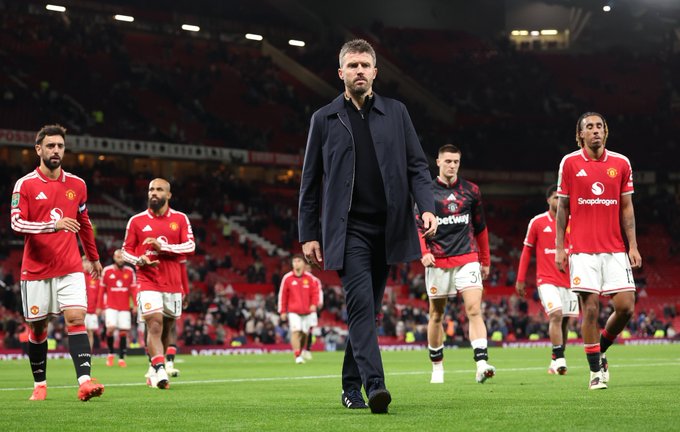
A Man Up, a Goal Ahead, Yet No Victory: Has Michael Carrick Run Out of Answers at Manchester United?
is Carrick struggling to find the answers, or are Manchester United’s problems deeper than their manager?