Ronaldo, Jorge Jesus and the Battle for Portugal’s Soul
For a footballer who has spent almost two decades making the impossible look routine, Cristiano Ronaldo’s latest chapter with Portugal feels strangely human.
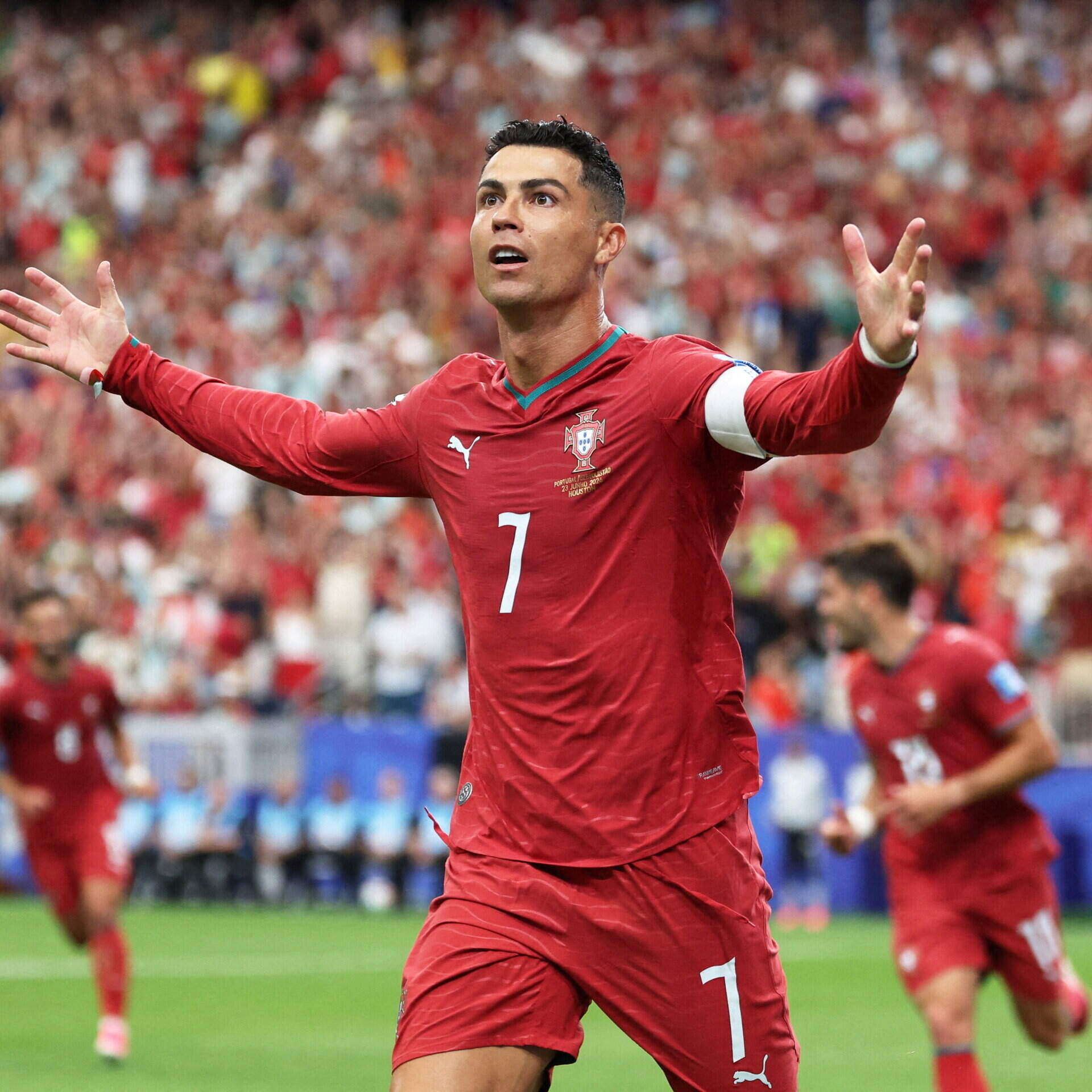
Ronaldo, Jorge Jesus and the Battle for Portugal’s Soul
Cristiano Ronaldo has apologised. Jorge Jesus has left the door open. Portugal’s players insist there is no civil war. Yet beneath the carefully chosen words, one uncomfortable question remains: who really controls Portugal’s future — the greatest player in its history, or the man now responsible for deciding when that player plays?
For a footballer who has spent almost two decades making the impossible look routine, Cristiano Ronaldo’s latest chapter with Portugal feels strangely human.
There is no Champions League final here. No Ballon d’Or ceremony. No record-breaking goal to celebrate.
Instead, there is hurt, frustration, a disputed conversation, a walkout from a national-team camp — and now a public explanation from a 41-year-old captain who says his coach broke his word.
Ronaldo has finally broken his silence over the extraordinary dispute with Portugal head coach Jorge Jesus, and his account has added another layer to an already explosive situation.
The five-time Ballon d’Or winner says an agreement had been reached for him to sit out Portugal’s matches against Norway and Denmark as part of a plan to manage his fitness.
Then, according to Ronaldo, everything changed.
He was told he would play around 30 minutes against Norway. He warmed up from half-time. He waited.
The minutes passed.
He never entered the pitch.
For Ronaldo, that was the first breach of trust.
The second came afterwards.
According to the Portugal captain, a meeting involving Jesus and Al Nassr sporting director Simao Coutinho produced an agreement over how the situation would be publicly explained. Ronaldo says an eight-point document was prepared to clarify that he had not demanded playing time, had respected the coach’s decisions and that the warm-up situation had been a mistake.
But Ronaldo claims Jesus’ subsequent public comments did not reflect that agreement.
That, he says, was the moment he decided to leave.
(Reuters)
Ronaldo admits he got it wrong
But there is an important part of Ronaldo’s statement that should not be overlooked.
He apologised.
The Portugal captain admitted that leaving the camp was wrong. He apologised to his teammates and the Portuguese public, particularly for failing to greet supporters after the Norway game.
And he accepted that his status as captain made his actions more serious.
Most importantly, Ronaldo said he is prepared to accept whatever punishment the Portuguese Football Federation decides to impose.
That matters.
Because this is no longer simply about whether Ronaldo believes he was treated unfairly.
It is about whether a captain can walk away from his country when emotions boil over.
Ronaldo appears to understand that distinction.
Yet he has also made one thing crystal clear: he does not consider his Portugal story finished.
If he remains fit, continues playing and scoring for Al Nassr, and serves whatever suspension may come his way, Ronaldo says he remains available for Portugal.
That is not the language of a retirement announcement.
It is the language of a man who believes he still has something to give.
(Al Jazeera)
Jorge Jesus: The manager cannot surrender the dressing room
And then there is Jorge Jesus.
The Portuguese manager finds himself in one of the most difficult positions in international football.
He is not dealing with an ordinary veteran.
He is dealing with Portugal’s greatest goalscorer, most-capped player and arguably the most influential footballer the country has ever produced.
Ronaldo has 146 international goals and 234 appearances for Portugal.
But Jesus has a dressing room to manage.
And that means making decisions based on what he believes is best for the team — even when that decision involves leaving Ronaldo on the bench.
Jesus has repeatedly insisted that Ronaldo remains welcome in the national team and that the decision to return ultimately belongs to the player.
But he has also refused to accept that selecting Ronaldo should be an obligation simply because of his extraordinary history.
That is the line every national-team manager eventually has to draw with a superstar.
Respect the legend. Protect the team.
The problem is that those two things can sometimes collide.
(Reuters)
Portugal has already shown life without Ronaldo
Perhaps the most uncomfortable part of this entire episode for Ronaldo is what happened after he left.
Portugal won 4–2 in Denmark.
They then defeated Norway 2–1.
Those results helped Portugal secure qualification for the Nations League quarter-finals.
And suddenly the argument became bigger than Ronaldo’s feelings.
The Portuguese team had demonstrated that it could function — and win — without its greatest star.
That does not mean Portugal is better without Ronaldo.
It does not erase his contribution.
It does, however, give Jesus something extremely valuable: evidence that his team can compete without automatically depending on Ronaldo.
And that changes the balance of power.
The debate is no longer:
“Can Portugal survive without Cristiano Ronaldo?”
It already has.
The real question is:
“What is the best way to use Cristiano Ronaldo when he returns?”
Because if Ronaldo comes back, the challenge will not simply be getting him onto the pitch.
It will be convincing one of the most competitive players football has ever produced that his role can change.
Perhaps he starts.
Perhaps he comes off the bench.
Perhaps he plays fewer minutes.
Perhaps there are games where he does not play at all.
For most players, that would be normal.
For Ronaldo, it has become one of the defining battles of the final stage of his career.
Where do his teammates stand?
This is where the story becomes particularly fascinating.
Because if there is one group whose opinion could determine whether this situation becomes a permanent dressing-room fracture or simply an ugly chapter, it is Ronaldo’s teammates.
So far, there has been no public mutiny.
No player has launched a campaign against Jesus.
And Bruno Fernandes has gone in the opposite direction.
The Manchester United midfielder described Ronaldo as Portugal’s greatest symbol, while urging the country not to divide itself over the controversy.
Fernandes’ message was significant.
He did not publicly choose Ronaldo over Jesus.
He did not attack the coach.
Instead, he defended Ronaldo’s legacy while insisting that the national team must remain united.
That may be exactly what Portugal needs.
Because the danger is not simply Ronaldo versus Jesus.
The danger is Ronaldo versus Jesus becoming Portugal versus Portugal.
Other players have largely kept their distance from the public confrontation, which may be deliberate. Dressing-room disputes rarely benefit from being fought through microphones and social media.
And there is another subtle message coming from the squad.
Portugal have continued winning.
That means the players are not being forced to choose between supporting their legendary captain and following their manager.
They can respect Ronaldo.
They can respect Jesus.
And they can still put Portugal first.
(The Guardian)
The real battle is bigger than one argument
This is why the Ronaldo-Jesus confrontation should not be reduced to a simple story about a player being angry at being benched.
It is about transition.
Portugal are approaching a post-Ronaldo era.
Ronaldo is still playing.
He is still scoring.
He still believes he can contribute.
But football does not stop moving simply because a legend is not ready to stop.
Jesus has inherited a team that must prepare for the future while respecting the past.
Ronaldo, meanwhile, is confronting something every great athlete eventually faces:
the loss of automatic control.
For years, Ronaldo was the player Portugal built around.
Now Portugal must decide how much of the team should still revolve around him.
That is not necessarily disrespect.
It is football.
And perhaps the most mature outcome would be neither Ronaldo defeating Jesus nor Jesus defeating Ronaldo.
It would be both men recognising that Portugal is bigger than either of them.
Ronaldo deserves the dignity of finishing his international career on his own terms.
Jesus deserves the authority to manage his team without fear of the name on the back of the shirt.
Portugal deserve a dressing room where neither ego nor nostalgia becomes more important than winning.
Ronaldo has apologised.
Jesus has kept the door open.
The players are calling for unity.
The ball, now, appears to be in Ronaldo’s court.
But when the greatest player in Portuguese football walks back through that dressing-room door, another question will inevitably follow:
Can Cristiano Ronaldo accept being treated like a player rather than a monument — and can Jorge Jesus find a way to manage the legend without forgetting what he still brings to Portugal?
Because perhaps the final battle of Ronaldo’s international career is no longer about proving that he is Portugal’s greatest ever.
Perhaps it is about proving that greatness can also mean knowing when to let the team come first.
Gallery
More from this story
Read next
Stories you should not miss

Published Tuesday, 6 October 2026. Published through the Nisty Football newsroom.
Fan reaction
Comments (0)
Leave a comment
No account needed · 0 approved
0/1500 characters · comments are reviewed before publication
More from Nisty Football
Related stories

Silenced? Martínez's Apology Smells Like a Club in Damage Control, and INEOS Has Questions to Answer
Players do not walk back the most honest interview of their season by accident. The club got to him.
Licha Drops the Mask: Martínez Exposes United's Rotten Core, But the Dressing Room Isn't Innocent
"You keep changing managers but what about other areas?" That is not a throwaway remark. It is a defender looking past the touchline and pointing at the people upstairs.

Man City Found Guilty. Two Weeks Later: "94% of Clubs Are Losing Money." Coincidence?
Ask yourself who gains from the headline "the whole game is broken." It isn't Burnley or Wrexham. It's the club that needs the public to see its guilty verdict as one more symptom of a rotten system.
A Man Up, a Goal Ahead, Yet No Victory: Has Michael Carrick Run Out of Answers at Manchester United?
is Carrick struggling to find the answers, or are Manchester United’s problems deeper than their manager?