THE INEOS PATTERN: Nine years. Three clubs. One broken method.
INEOS came to Old Trafford promising the end of Manchester United's chaos era but INEOS hasn't ended anyone's chaos. It is the chaos — just with better PR and a bigger budget.
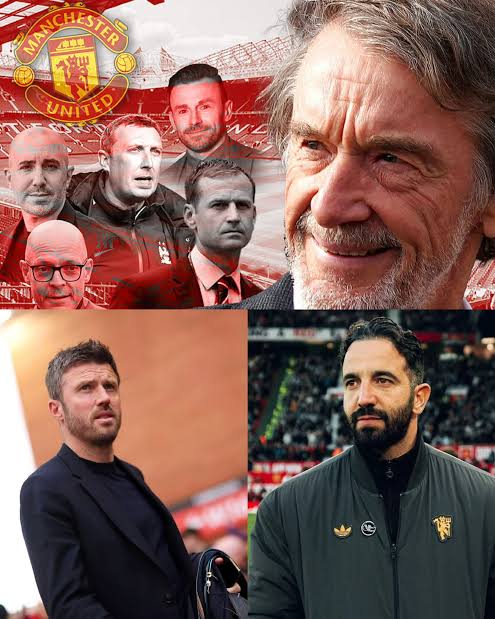
Manchester United fans have spent the past two and a half years being told a story: that Sir Jim Ratcliffe's INEOS arrived with a plan. Structure. Discipline. A "sporting model" built on the same relentless, data-driven precision that powered Ineos's cycling and sailing teams. But zoom out. Look at Lausanne-Sport. Look at OGC Nice. Look at what's happening right now at Old Trafford. The pattern isn't subtle — it's identical, repeating itself club after club, continent after continent, like a glitch INEOS can't debug. Hire big. Panic fast. Fire. Rebuild. Repeat. This isn't a Manchester United problem. It's an INEOS problem — and United are simply the newest, most expensive laboratory for it.
Act One: Lausanne — The Blueprint for Chaos INEOS took over Lausanne-Sport in November 2017 promising to build "Switzerland's next major club." Within months, they'd been relegated. The first football decision INEOS made wasn't even about football — it was changing the club badge, sparking supporter fury so intense the new owners had to backtrack within weeks. Before a single transfer window closed, INEOS had taught Lausanne's fanbase that their identity was negotiable. Then came the merry-go-round: manager Fabio Celestini — who'd rebuilt the club from the lower leagues — sacked mid-crisis. Relegation followed anyway. A promising sporting director, Pablo Iglesias, axed in 2020 while promotion was already secured, replaced by a structure explicitly wired into INEOS's sister club, Nice — turning Lausanne, by Swiss reporting's own account, into less of a football club and more of a feeder pipeline. By 2022, Lausanne had used 34 different players in a single season — one of the highest squad-turnover rates in the league — and had simultaneously fielded the division's weakest defence and least productive attack. They were relegated again. Second relegation in four years. Stability only returned when INEOS finally left a manager, Ludovic Magnin, alone for three seasons. The result? Promotion, survival, and in 2024/25 — Lausanne's first European qualification in fifteen years. Then INEOS lost him to Basel. His replacement, Peter Zeidler, produced a genuinely stunning European run — wins over Beşiktaş and Fiorentina — while the domestic side collapsed. INEOS fired him during that European run. Another reset. A brand-new manager, Luka Elsner, now has the exact same brief handed to every predecessor since 2017: establish the club among the elite. Nine years. Same starting line. Act Two: Nice — Money Without a Memory Nice should have been the proof of concept. INEOS paid roughly €100m for full control in 2019 and immediately spent big. But the pattern from Lausanne didn't just repeat — it escalated. Patrick Vieira, inherited from the previous ownership, was backed, then dumped mid-season after five straight losses. Christophe Galtier arrived fresh off winning Ligue 1 with Lille — a genuine marquee appointment — and had Nice sitting second at the winter break, within touching distance of PSG. Then, according to contemporaneous French reporting, Galtier begged for January reinforcements to sustain a Champions League push. INEOS gave him a barely-fit loan signing and a teenager with almost no top-flight minutes. Nice collapsed to 5th. Galtier and sporting director Julien Fournier's relationship disintegrated so badly that Jim Ratcliffe had to order Sir Dave Brailsford to audit the club. Fournier — the man who'd helped bring Ratcliffe to Nice in the first place and who'd been architect of the entire Nice-Lausanne multi-club network — was gone within a year. So was Galtier, engulfed in separate controversy. Lucien Favre was brought back on nostalgia and lasted a matter of months before losing to fourth-tier opposition in the cup. Francesco Farioli, a bold, modern appointment, delivered European qualification in a single season — then left, taking the sporting director with him, at the exact moment the project found coherence. Then Franck Haise took Nice to 4th place — their best finish of the INEOS era. Nice's reward for him? A summer of selling key attacking players and restrained spending. Haise publicly complained about being under-equipped. By December, Nice had suffered nine straight defeats, set an unwanted French record of 18 winless European matches, and sat 13th. Haise was gone. Claude Puel was parachuted in purely to avoid relegation. Nice survived a relegation playoff by the skin of their teeth — while fans physically confronted players after matches, and Nice's own official statement admitted the season had failed to meet the club's ambitions, standards or expectations. INEOS then tried to sell Nice. The deal collapsed. Transfer spending, which peaked above €70m a season, has crashed to just over €3m recorded this window. As of this piece, Nice sit 18th in Ligue 1, bottom of the table, with one goal scored in four games. Act Three: Manchester United — The Most Expensive Repeat in Football History If you've read this far, you already know what's coming. INEOS took control of football operations in February 2024 with Omar Berrada declaring the ambition was to make United "a title-winning club" again, and Ratcliffe publicly targeting the Premier League by the club's 150th anniversary in 2028. Decision one: keep Erik ten Hag after an eighth-place finish, then extend his contract on the strength of an FA Cup win. Ratcliffe has since admitted, in his own words, that keeping and extending Ten Hag was a mistake. United paid £10.4m in compensation sacking a manager they'd just handed a new deal to — four months after extending him. Decision two, running in parallel: a months-long chase for Newcastle's Dan Ashworth, publicly hailed by Ratcliffe as a "10 out of 10 sporting director," secured after paying compensation and waiting through gardening leave. He lasted five months before being frozen out and dismissed, at a total cost reported around £4.1m. Ratcliffe's explanation? A vague "chemistry" issue — from the man who'd fought Newcastle for him. Decision three: spend more than £200m in summer 2024 on players — Zirkzee, de Ligt, Mazraoui, Yoro, Ugarte — largely assembled for Ten Hag's system. Then sack Ten Hag two months into the season and hire Ruben Amorim, whose entire footballing identity is built around a 3-4-3 system the newly-purchased squad was never designed to play. The result was the worst Premier League finish in Manchester United's history: 15th place, a club-record 18 league defeats, and a Europa League final defeat to Tottenham that meant United — despite £200m+ of fresh signings — ended the season with no European football at all. INEOS's response wasn't to question the method. It was to double down: another £150m+ in summer 2025 on Cunha, Mbeumo and Šeško. It briefly worked. United rebounded into the top half. And then, in January 2026 — mid-recovery, sixth in the table — INEOS sacked Amorim anyway, at further enormous compensation cost, on the same reasoning United fans have now heard three separate times in two years: it just wasn't working. Michael Carrick, promoted from interim duty, briefly rewrote the story — winning 11 of his first 16 games and dragging United to 3rd and Champions League qualification. He got the permanent job. Now, September 2026: United sit 13th, already eliminated from the Carabao Cup, beaten by Hull, held by Everton, beaten by City in the derby, and blown apart in an extraordinary collapse against Brighton. The Pattern INEOS Can't Escape Lay the three timelines side by side and the "INEOS football model" reveals itself for what it actually is — not a philosophy, but a reflex: • Arrive with grand public promises of sustained, structural success • Make an early, panicked reversal that damages trust (Lausanne's badge; Ten Hag's sacking months after extension; Ashworth's five-month execution) • Spend large sums that don't match the tactical or structural reality of the squad • Hand a manager a mandate, then remove it the moment results dip — even mid-recovery, even mid-European-run, even sitting sixth • Purge the entire sporting hierarchy in one motion, wiping out institutional memory (Ratcliffe, Cissé and Casanova all out at Lausanne in one summer; Fournier and Ghisolfi both gone from Nice within a season of each other; Ashworth, and effectively Ten Hag's whole framework, gone at United inside a year) • Only ever find stability by accident, when a manager is simply left alone long enough (Magnin at Lausanne; Carrick, so far, at United) — and even then, success gets treated as license to reset again rather than reason to persist Three different clubs. Three different countries. Three different footballing cultures. The identical failure mode, every single time. Why It Could Get Worse at United United are not Lausanne or Nice — the financial stakes, wage bill and global scrutiny are exponentially larger, which means every reset costs more, hurts more, and is scrutinised more brutally. Nice's story shows what happens when an INEOS project reaches its fourth or fifth reset: austerity, player sales, supporter revolt, physical confrontations with players, and the club's own hierarchy admitting failure in public. Lausanne's story shows that even when a model does eventually work — European qualification, a top-five finish — INEOS's instinct is still to blow it up rather than protect it. Carrick has United playing coherent, promising football right now, at least in patches. On the INEOS track record established twice already on two different continents, that is not a reason for United fans to relax. If anything, based on Lausanne and Nice, it's the exact moment the project tends to detonate. INEOS came to Old Trafford promising the end of Manchester United's chaos era. The uncomfortable truth, sitting in black and white across Switzerland, the French Riviera and Greater Manchester, is that INEOS hasn't ended anyone's chaos. It is the chaos — just with better PR and a bigger budget.
Read next
Stories you should not miss

Breaking
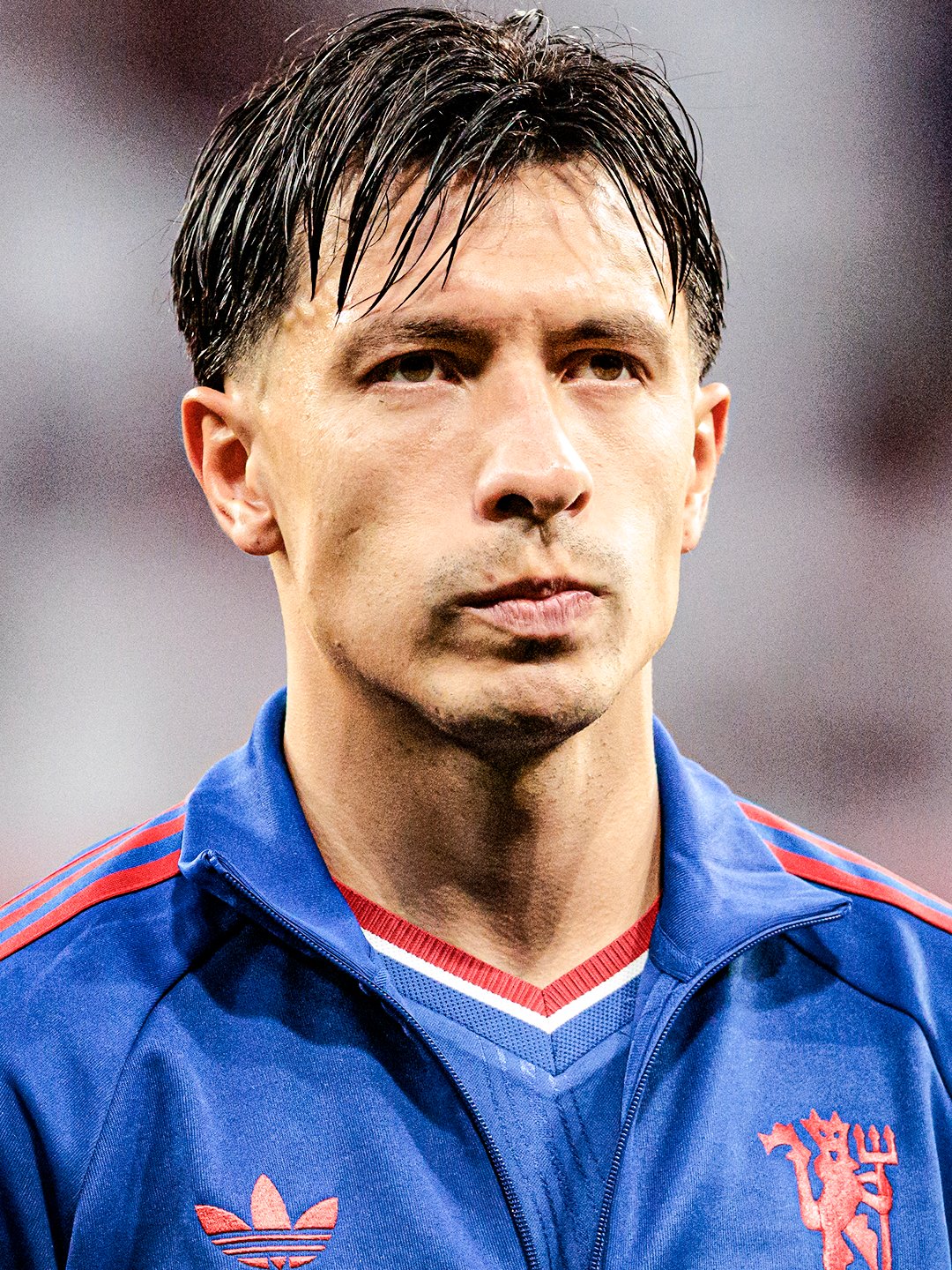
Silenced? Martínez's Apology Smells Like a Club in Damage Control, and INEOS Has Questions to Answer
Breaking
Licha Drops the Mask: Martínez Exposes United's Rotten Core, But the Dressing Room Isn't Innocent
Breaking
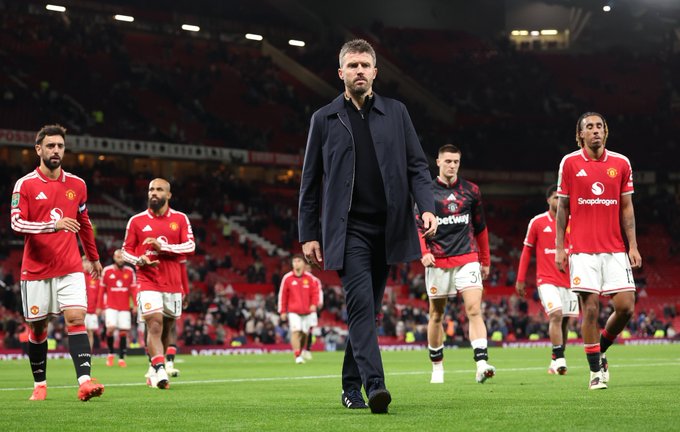
A Man Up, a Goal Ahead, Yet No Victory: Has Michael Carrick Run Out of Answers at Manchester United?
Published Sunday, 20 September 2026. Published through the Nisty Football newsroom.
Fan reaction
Comments (0)
Leave a comment
No account needed · 0 approved
0/1500 characters · comments are reviewed before publication
More from Nisty Football
Related stories
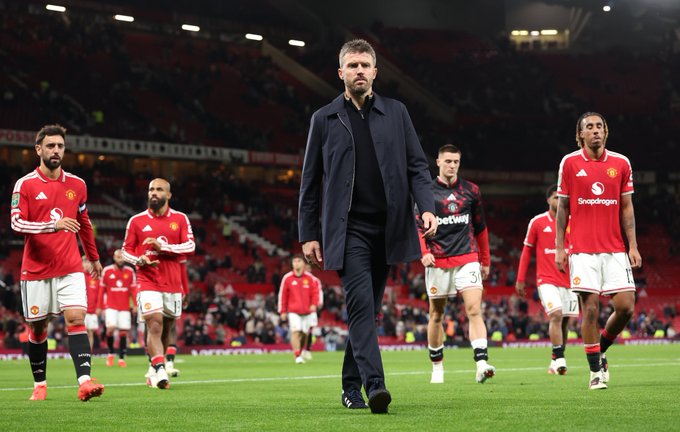
EXCLUSIVE: THE CARRICK FORMULA — WHY MANCHESTER UNITED’S NEXT CHAPTER MAY DEMAND A LITTLE MORE ‘FERGUSON’
There is a difference between managing Manchester United and managing Manchester United successfully.
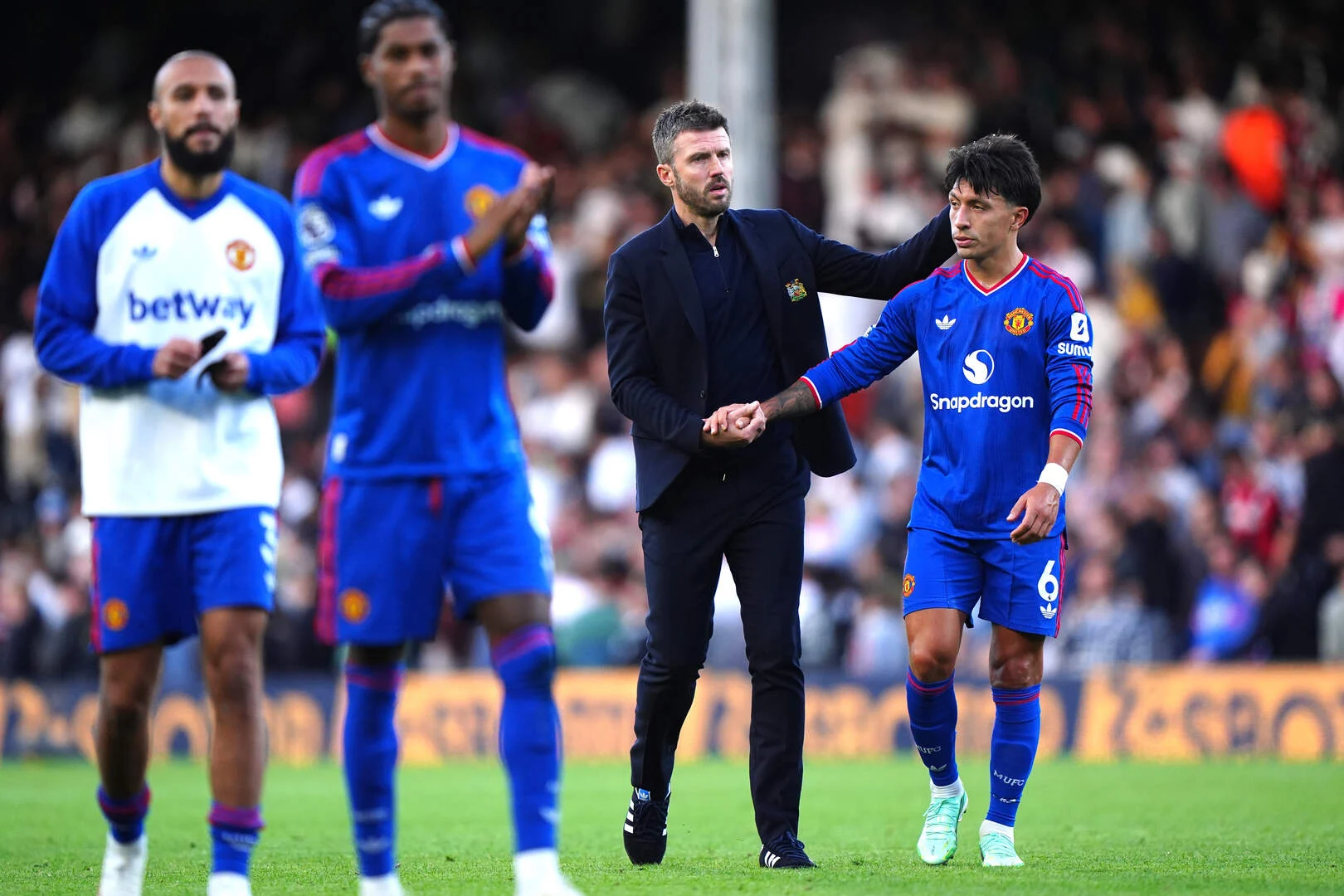
UNITED DON’T RUN. THEY DON’T WIN. SO WHAT EXACTLY IS CARRICK’S PLAN?
Manchester United rank near the bottom of the Premier League for sprints and high-speed running. But is that a deliberate tactical choice or evidence that Carrick’s system is failing to demand enough from his players?
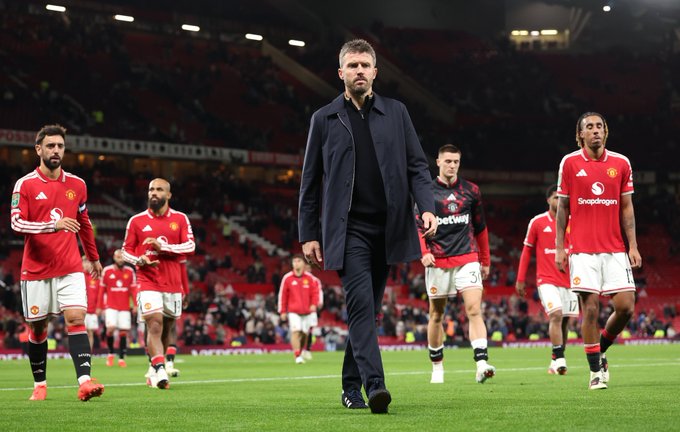
Carrick Says His Future Is ‘Not on the Radar’ But Manchester United Need Answers
And although he insists his job security is irrelevant to his immediate thinking, the simplest answer to managerial pressure remains the same: RESULTS.
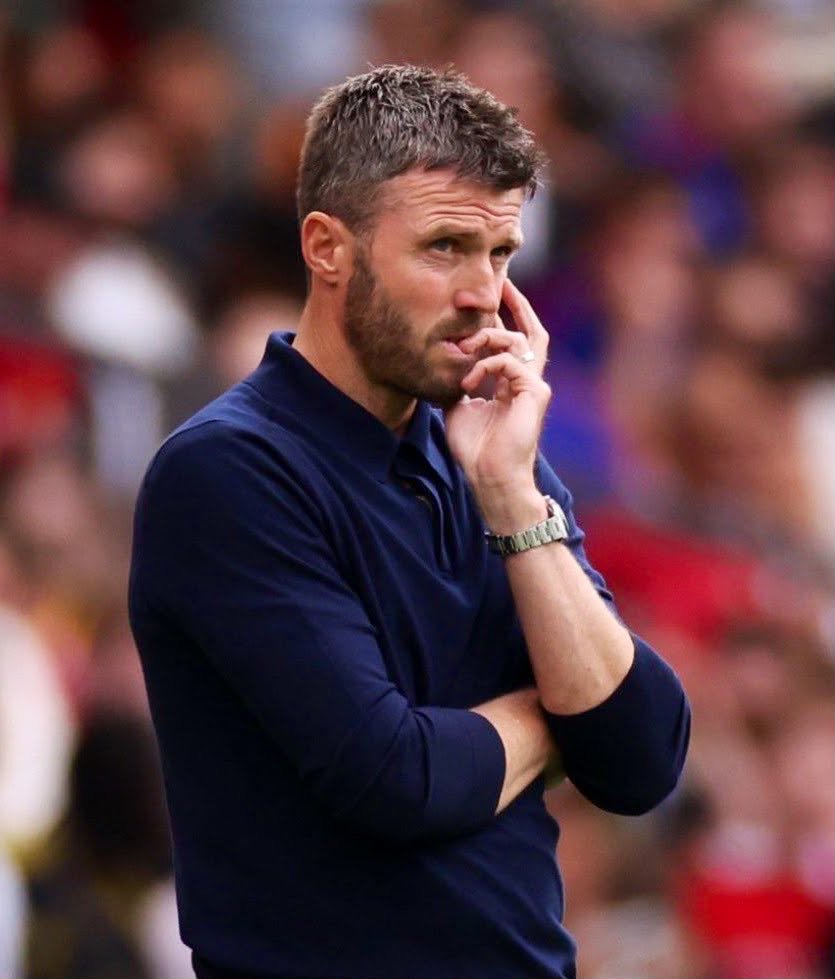
MAYBE MANCHESTER UNITED ARE SACKING THE WRONG PEOPLE
But the derby defeat has exposed something far more important than the league table.