The Glazers Keep Winning Because Manchester United Fans Are Part of the Problem
Manchester United do not simply need another manager. They need supporters who refuse to forget why the club needed another manager in the first place.
The Glazers Keep Winning Because Manchester United Fans Are Part of the Problem
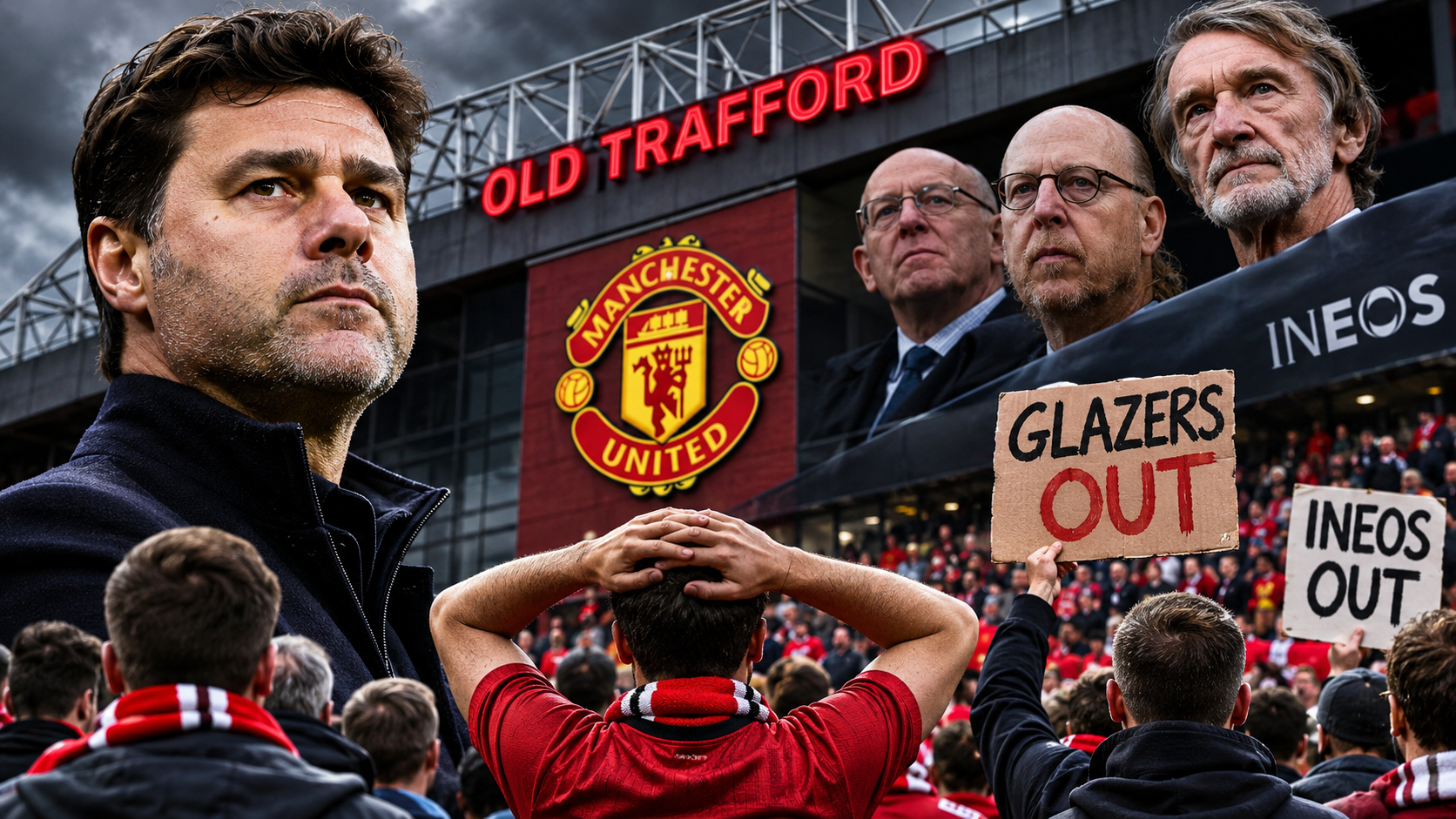
Manchester United could be on the verge of another managerial change, with Mauricio Pochettino emerging as the expected successor to Michael Carrick. But while supporters prepare to welcome another new face into the dugout, perhaps it is time they examined their own role in a cycle that continues to protect the people responsible for the club’s decline.
There is something painfully predictable about Manchester United’s current predicament. The club struggles, performances deteriorate, supporters become furious, questions are asked about the hierarchy, and eventually the manager becomes the centre of the conversation.
Then comes the familiar solution: find another manager.
And just like that, the conversation changes.
The latest chapter appears to be unfolding at Old Trafford. Mauricio Pochettino is reportedly close to agreeing terms to become Manchester United’s next head coach if Michael Carrick is dismissed. Chief executive Omar Berrada and director of football Jason Wilcox are expected to recommend a managerial change to Sir Jim Ratcliffe, with the Glazer family also represented at board level.
United’s reported pursuit of Pochettino comes against the backdrop of an appalling start to the campaign, with the club sitting in the relegation zone after winning just once in the Premier League.
It is a situation that would ordinarily demand serious questions about the people responsible for the club’s footballing direction.
Yet, as history has repeatedly demonstrated, Manchester United supporters could soon find themselves discussing formations, pressing systems, transfer targets and Pochettino’s preferred starting XI rather than the deeper institutional problems that have brought the club to this point.
And that is precisely where the problem lies.
How many managerial appointments will it take before Manchester United supporters realise that changing the man in the dugout is not the same as changing the club?
Another manager, another temporary distraction?
Pochettino is an accomplished coach. His work at Tottenham, Southampton and Paris Saint-Germain has demonstrated his ability to build competitive teams, develop players and establish a recognisable footballing identity.
If appointed, he deserves an opportunity to do his job.
But he should not arrive at Old Trafford with the burden of being presented as the solution to problems that extend far beyond the touchline.
Manchester United’s decline cannot be explained exclusively by the shortcomings of one manager. Nor can every disappointing season be attributed to players who supposedly lack commitment or a particular tactical system.
There are legitimate questions about recruitment, football administration, leadership, long-term planning and the ownership structure.
These are questions that will not disappear simply because Pochettino wins his first three matches.
Unfortunately, that is where sections of the United fanbase have repeatedly struggled.
A new manager arrives. There is renewed excitement. A few victories follow. The atmosphere improves, the stadium becomes louder, supporters begin dreaming again and the immediate anger gradually fades.
The club’s deeper problems are pushed into the background.
Then another disappointing season arrives, the same questions return, another manager is sacrificed and the entire exercise begins again.
The supporters who were demanding accountability suddenly find themselves defending the latest appointment, while the people who oversee the broader football operation remain in position.
It is a remarkably convenient cycle for those who would rather have the public discussing the manager than examining the institution.
The uncomfortable truth: Matchday supporters are part of the equation
This is perhaps the most uncomfortable conversation Manchester United supporters need to have with themselves.
The Glazers own the club. INEOS, through Sir Jim Ratcliffe, has assumed significant responsibility for football operations. Berrada and Wilcox occupy influential executive positions.
They carry the primary responsibility for the decisions that shape Manchester United.
But supporters should not pretend they have no influence over the environment that allows the current arrangement to continue.
Football is not simply a business that operates independently of its customers. Matchday supporters are part of its commercial ecosystem, its atmosphere, its global presentation and, importantly, its legitimacy.
Every home match at Old Trafford brings thousands of people through the turnstiles. Supporters purchase tickets, hospitality packages, food, drinks and merchandise. Their presence helps sustain matchday operations and contributes to the commercial value associated with one of football’s most recognisable stadiums.
More importantly, a packed Old Trafford creates an image of normality.
The television cameras capture the famous stadium. The supporters sing. The players emerge to a familiar atmosphere. The spectacle continues.
And from the outside, Manchester United still looks like Manchester United.
But what message does that send when the club’s supporters are supposedly furious with the people running it?
There is a difference between supporting the football team and continually providing an unchallenged endorsement of the environment in which the club is being run.
A supporter can love Manchester United without agreeing to participate in every matchday ritual while believing the institution is heading in the wrong direction.
Indeed, sometimes the most powerful demonstration of loyalty to a football club is refusing to allow those in charge to confuse the supporters’ devotion with unconditional acceptance.
This is not an argument that every supporter who buys a ticket is personally responsible for United’s decline. Many have followed the club for generations, and attending matches is an important part of their lives.
It is, however, an argument that collective behaviour matters.
If supporters are serious about demanding structural change, their protest must be capable of surviving a good result, a new signing or an exciting managerial appointment.
Otherwise, the people they are protesting against have little reason to believe the anger will last.
Lazio have shown that a full stadium is not the ultimate measure of loyalty
Manchester United supporters do not need to look far for an example of what organised resistance can look like.
Lazio supporters have spent considerable time protesting against club president Claudio Lotito, and their response has been particularly striking because it has not depended on whether the team is winning or losing.
In 2026, organised supporters escalated their opposition by boycotting home matches and refusing to purchase season tickets as part of their campaign against Lotito’s leadership.
The impact has been difficult to ignore.
According to figures reported by The Guardian in September, Lazio’s season-ticket numbers fell from almost 30,000 in the previous campaign to fewer than 4,500. Their supporters also continued travelling to away matches, making a distinction between supporting the players and endorsing the ownership.
Even more revealing was the fact that the protest continued despite Lazio making an impressive start under Gennaro Gattuso.
Think about that.
The team was performing well, yet supporters were not prepared to abandon their position simply because results had improved.
They understood something that Manchester United supporters would do well to consider: a winning team does not automatically mean a well-run club.
The Lazio supporters’ message was not that they had stopped loving their football club. It was that their love for the club should not be interpreted as approval of its leadership.
They chose to demonstrate that distinction through their absence.
That is the sort of consistency that makes a protest difficult to dismiss.
It also exposes the weakness in Manchester United’s recurring response to disappointment. If supporters can be persuaded to return to business as usual after a few victories, what incentive is there for those in charge to believe that anything fundamental needs to change?
Lazio’s experience offers no guarantee that a boycott will force an owner to sell. Ownership structures, finances and legal realities are complicated. But it demonstrates that supporters can create a visible, sustained challenge without waiting for the team to lose another match.
Rayo Vallecano: When supporters make their voices impossible to ignore
Another example emerged in Spain in October.
Rayo Vallecano’s return to their home ground for a league meeting with Athletic Club was overshadowed by protests against club president Raúl Martín Presa.
Supporters had been expressing their opposition to Presa’s leadership for months, and tensions reached a dramatic point during the October 10 fixture.
Paper aeroplanes and small rubber objects were thrown onto the pitch as part of the protest. The referee repeatedly interrupted proceedings before eventually suspending the match in the 25th minute.
The incident attracted significant attention because it demonstrated how supporters can turn their dissatisfaction into an issue that football authorities, broadcasters and club executives cannot simply ignore.
There is an important distinction here: throwing objects onto a pitch is not something to celebrate or encourage. It can endanger participants and carries consequences for the club and supporters.
But the wider point remains relevant.
The Rayo supporters wanted their opposition to the club’s leadership to be seen and heard. Their protest became the central story surrounding the fixture rather than another ordinary afternoon of football.
Their actions, and the subsequent suspension, demonstrated the extent to which a determined fanbase can disrupt the normal presentation of a football club when it believes its concerns are being ignored.
For Manchester United supporters, the lesson is not to replicate the methods used at Vallecas. It is to understand that matchday is not an obligation to remain silent.
There are peaceful ways to make a powerful statement: coordinated boycotts, demonstrations, organised chants, banners, public campaigns and sustained pressure on the club’s leadership.
The important thing is consistency and clarity of purpose.
A protest that disappears after a 2-0 victory is hardly a protest capable of changing an institution.
Manchester United supporters have become too easy to pacify
This brings us back to the words in a recent post on X by Nisty (@Breakingg247), which raises a question that should resonate with every Manchester United supporter.
The argument is that the focus should not simply be on the board, the Glazers or INEOS. It should also be directed at the people who continue to fill Old Trafford every matchday while allowing the same cycle to repeat itself.
The post makes a particularly uncomfortable observation: a new manager arrives, a few wins follow, supporters forget their grievances, and the cycle eventually returns.
It is difficult to dismiss that observation entirely.
Manchester United have become familiar with the process of changing managers and resetting expectations. Each appointment brings the promise of a new beginning, and each new beginning provides an opportunity for supporters to postpone the difficult conversation about the club’s wider direction.
The problem is not that United supporters celebrate victories. They should. Football exists to be enjoyed, and nobody should be expected to approach every match with permanent hostility.
The problem is when temporary sporting improvement becomes an excuse to abandon demands for long-term accountability.
What happens if Pochettino arrives and United win five consecutive matches?
Will the questions about Berrada and Wilcox disappear? Will supporters suddenly become satisfied with the club’s recruitment strategy? Will concerns about ownership and the long-term direction of the institution become irrelevant?
Will the Glazers become less responsible for the club’s affairs simply because the new manager has found a winning formula?
Of course not.
Yet history suggests that the noise surrounding these issues could become considerably quieter.
That is the danger.
Supporters who are prepared to demand the departure of a manager after a disappointing run must also be prepared to maintain pressure on the people responsible for the club’s broader direction when the results improve.
Otherwise, the managerial merry-go-round becomes a convenient escape route for everyone else.
Omar Berrada and Jason Wilcox cannot be exempt from scrutiny
There is another important dimension to this conversation.
The frustration expressed in the X post also extends to Omar Berrada and Jason Wilcox.
That deserves consideration.
Manchester United’s problems should not be reduced to a simplistic argument that the manager is always the victim and the executives are always the villains. Berrada and Wilcox have responsibilities within the club’s football structure, and their decisions must be judged on their outcomes.
If they are recommending another managerial change, supporters should be asking what the club’s long-term plan actually is.
What is the footballing identity they want Manchester United to establish?
How does Pochettino fit into that plan?
What happens if he struggles?
Will the club support a coherent footballing project, or will another difficult run trigger another managerial search?
Who takes responsibility for recruitment failures, inconsistent planning and the repeated inability to build a team capable of sustaining success?
These are not unreasonable questions. They are essential questions.
A football club cannot keep changing the person responsible for implementing its vision without seriously examining the people responsible for defining that vision.
And if the same executives remain in place after another managerial dismissal, they must be prepared to accept the scrutiny that comes with their positions.
Old Trafford needs more than noise. It needs a message.
Manchester United have one of the most recognisable supporter bases in world football. Their influence extends far beyond Manchester, and their collective voice has the potential to command international attention.
That influence should not be underestimated.
But a loud stadium is not necessarily a dissatisfied stadium. Singing for the team, cheering a goal and creating an intimidating atmosphere for visiting opponents are all part of football culture.
The question is whether supporters can separate those responsibilities from their relationship with the people running the club.
There is nothing wrong with backing the players while demanding accountability from the owners and executives.
There is nothing contradictory about celebrating a Pochettino victory while continuing to question the decisions that made another managerial change necessary.
And there is certainly nothing disloyal about refusing to allow a few good results to erase years of frustration.
If supporters genuinely believe the club needs structural change, then their position must remain consistent regardless of who is in the dugout.
A peaceful, coordinated and sustained withdrawal of matchday support would send a different message from the familiar cycle of protests followed by full stadiums and renewed optimism.
It would also force the club to confront a difficult question: what happens when the people who give Old Trafford its atmosphere decide that simply turning up is no longer enough?
The real question Manchester United fans must answer
Mauricio Pochettino may soon become Manchester United’s next manager. Michael Carrick’s time at the club may be approaching its end.
Perhaps Pochettino will succeed where his predecessors have struggled. Perhaps he will restore confidence, improve performances and bring trophies back to Old Trafford.
Manchester United supporters should hope he does.
But they must not confuse a new manager with a new Manchester United.
The club’s problems are bigger than one man on the touchline. They demand scrutiny of ownership, leadership, recruitment, football administration and the long-term decisions that determine whether Manchester United can return to being a genuinely successful institution.
The Glazers, INEOS, Berrada and Wilcox must be held accountable for the responsibilities they carry. That accountability cannot depend on whether the team wins its next three matches.
And supporters must recognise that their collective influence is not limited to social media complaints, angry phone-ins or chants after another defeat.
They have a voice, an economic presence and the ability to organise.
Lazio supporters have shown what sustained resistance can look like. Rayo Vallecano supporters have demonstrated how dramatically matchday protests can bring a club’s internal conflict into public view.
Manchester United supporters have an opportunity to decide what kind of message they want to send.
Because if every new manager brings a few victories, every protest disappears and Old Trafford returns to business as usual, the people running the club may reasonably conclude that the anger is temporary.
And that is perhaps the most damaging contribution supporters can make to the very cycle they claim to despise.
Manchester United do not simply need another manager. They need supporters who refuse to forget why the club needed another manager in the first place.
Read next
Stories you should not miss
Breaking
Carrick on the Brink! Manchester United Turn to Pochettino as Crisis Deepens
Breaking
Lisandro Martínez Is Becoming Manchester United’s Convenient Scapegoat — And the Real Culprits Are Still in the Boardroom
Analysis
Manchester United Could Be About to Find Their Spark Again: What Mauricio Pochettino Would Bring to Old Trafford
Related stories
More on Premier League

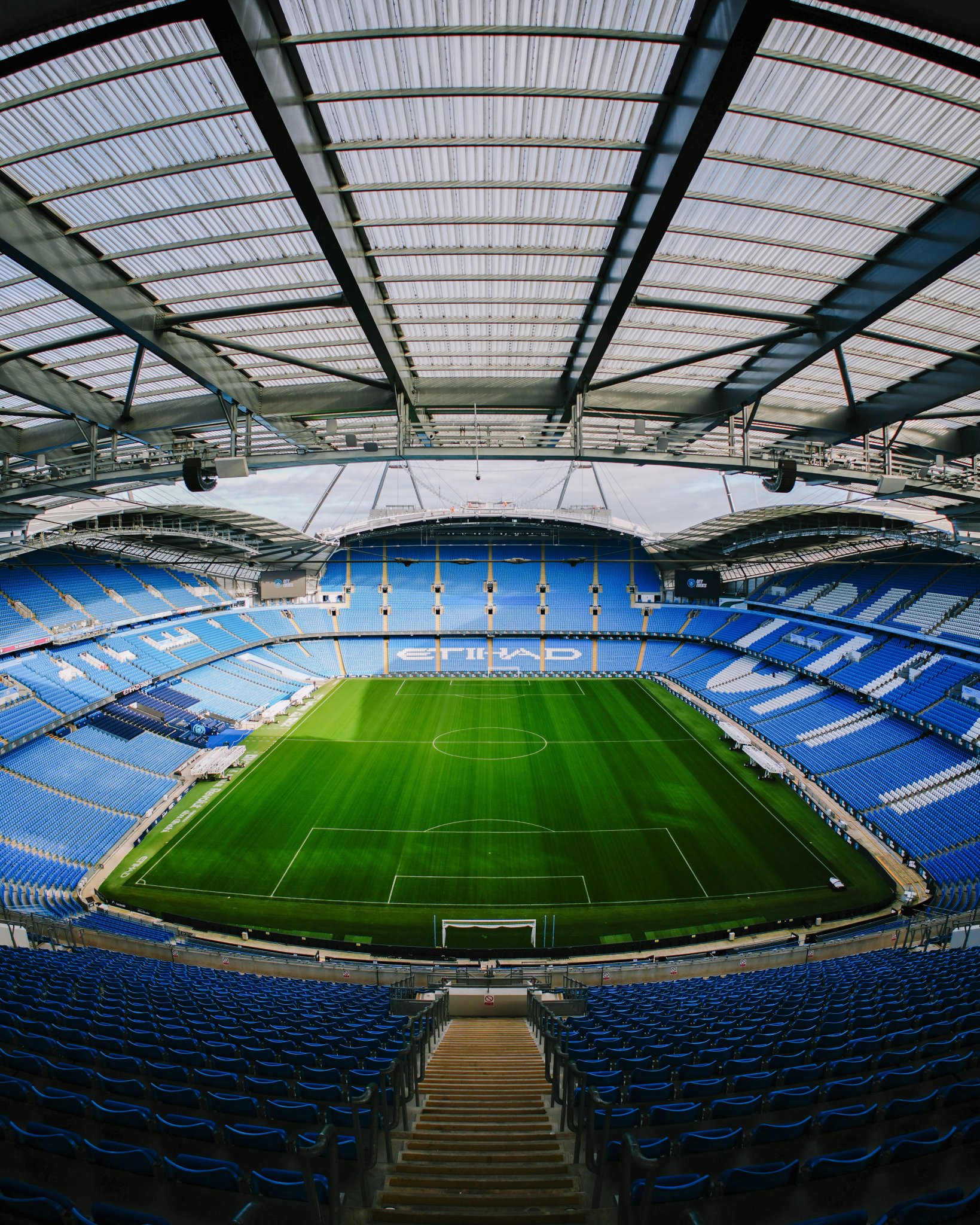
Published Wednesday, 11 November 2026. Published through the Nisty Football newsroom.
Enjoyed it? Tell us — and pass it on
The discussion
What do you think? (0)
Leave a comment
No account needed · 0 approved
0/1500 characters · comments are reviewed before publication
The Daily Kick-off
Football in your inbox, every morning at 7am
One email: the overnight transfer moves, the tactical story of the night, and every fixture that matters today. No noise, no clickbait.
More from Nisty Football
Related stories
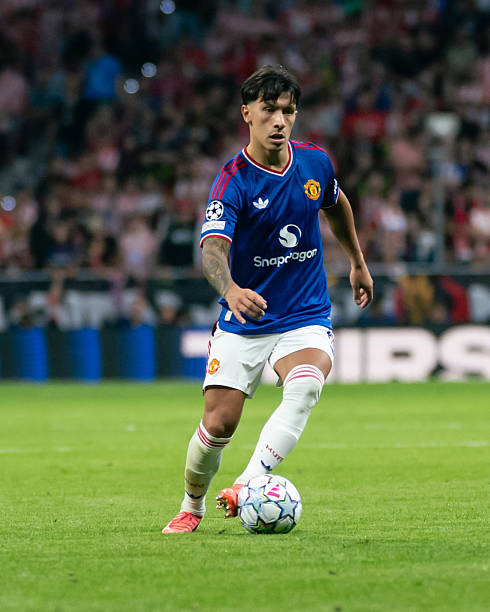
Silenced? Martínez's Apology Smells Like a Club in Damage Control, and INEOS Has Questions to Answer
Players do not walk back the most honest interview of their season by accident. The club got to him.
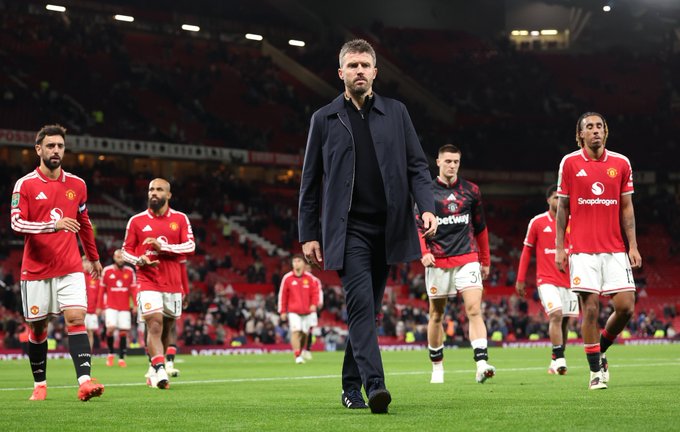
A Man Up, a Goal Ahead, Yet No Victory: Has Michael Carrick Run Out of Answers at Manchester United?
is Carrick struggling to find the answers, or are Manchester United’s problems deeper than their manager?

Inside Pochettino's Manchester United Arrival: Leaks, Audits and Old Trafford's Toxic Culture
Mauricio Pochettino finally arrives at Manchester United, but an immediate drone leak at Carrington and a daunting squad audit on stars like Fernandes and Rashford await him.
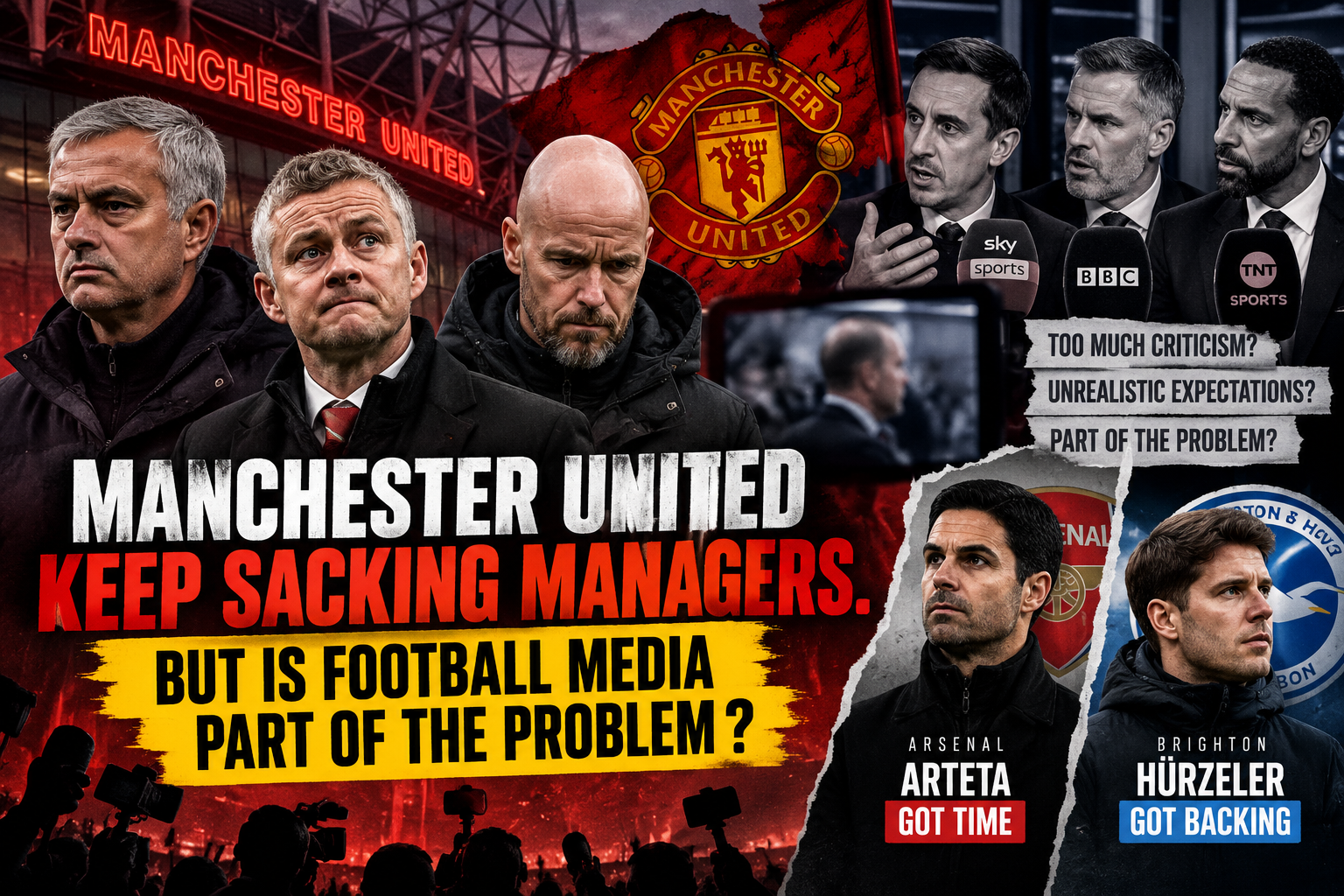
Manchester United Keep Sacking Managers. But Is Football Media Part of the Problem?
Manchester United’s managerial crisis raises a difficult question: are the club’s hierarchy and football pundits making long-term success harder to achieve? From José Mourinho to Erik ten Hag, repeated managerial changes have failed to restore sustained dominance. While the board must answer for its decisions, relentless media pressure also deserves scrutiny. Arsenal’s patience with Mikel Arteta and Brighton’s backing of Fabian Hürzeler offer valuable lessons.