Manchester United Keep Sacking Managers. But Is Football Media Part of the Problem?
Manchester United’s managerial crisis raises a difficult question: are the club’s hierarchy and football pundits making long-term success harder to achieve? From José Mourinho to Erik ten Hag, repeated managerial changes have failed to restore sustained dominance. While the board must answer for its decisions, relentless media pressure also deserves scrutiny. Arsenal’s patience with Mikel Arteta and Brighton’s backing of Fabian Hürzeler offer valuable lessons.
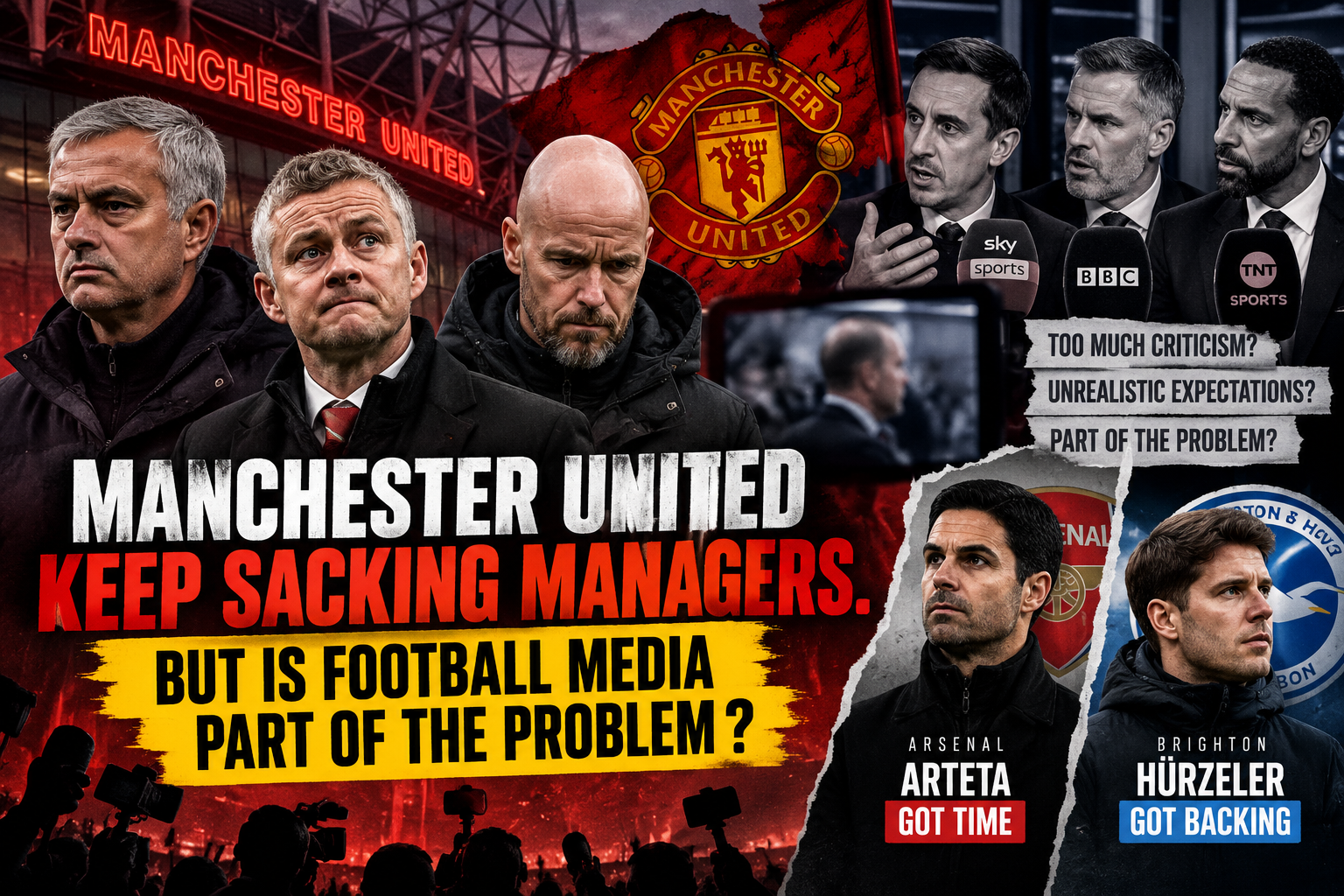
Manchester United Keep Sacking Managers. But Is Football Media Part of the Problem?
By RHYS NOAH
Manchester United’s failure to rebuild into a consistent Premier League title contender has become one of football’s most enduring stories. The club’s hierarchy deserves scrutiny for recruitment decisions, managerial appointments and the apparent absence of a consistently executed football philosophy. But there is another uncomfortable question worth asking: has the football media helped create an environment in which rebuilding Manchester United has become almost impossible?
The manager is routinely the most visible casualty of a club’s failures. Players underperform, recruitment disappoints, sporting directors make questionable decisions and executives struggle to establish a coherent strategy. Yet when results deteriorate, the conversation frequently returns to the same question: should the manager be sacked?
Manchester United have repeatedly answered that question by changing the person in the dugout. What remains less clear is whether the club has ever established a sufficiently stable football structure to make a different outcome likely.
A cycle of appointments, expectations and dismissals
José Mourinho arrived at Old Trafford with a formidable reputation and delivered the League Cup and Europa League in his first season. United finished second in the Premier League in 2017/18, yet Mourinho departed in December 2018 with the club sixth after 17 matches and 19 points behind Liverpool. His declining results and deteriorating relationships were legitimate concerns, but his departure also raised a bigger question: what exactly was United building towards?
Ole Gunnar Solskjær offered a different proposition. He was expected to restore a more attractive style, reconnect the club with its identity and rebuild its foundations. United finished third in his first full season and second in 2020/21. They also reached the Europa League final in 2021, losing to Villarreal on penalties. Yet a run of one win in seven league matches in the following campaign preceded his dismissal in November 2021.
Erik ten Hag subsequently won the Carabao Cup in 2023 and the FA Cup in 2024. His tenure also included a third-place league finish in his first season. But poor performances and a disastrous start to the 2024/25 campaign left United 14th when he was dismissed in October 2024.
These managers were not beyond criticism. Mourinho’s relationships, Solskjær’s inability to secure silverware and Ten Hag’s inconsistent performances all warranted serious scrutiny.
The point is not that any of them deserved unlimited time. It is that each appointment came with expectations of progress, yet United repeatedly struggled to sustain it.
When different managers encounter familiar institutional problems, changing the manager cannot be the entire solution.
A club needs more than a name, a tactical preference and a transfer window. It needs an agreed football identity, recruitment aligned with that identity, clear decision-making authority and a realistic assessment of the time required to build a competitive squad.
Without those foundations, every new appointment risks becoming another attempt to solve yesterday’s problems with tomorrow’s manager.
What is the project at Manchester United that supersedes winning?
This is the question United’s leadership must answer.
Not because winning is unimportant, but because sustained winning requires a process that survives difficult periods.
A genuine football project should establish what the team wants to become, which players are needed to achieve it, how young talent will be developed and how progress will be measured beyond the last three results.
It should also define the circumstances in which a manager’s position becomes untenable. Persistent tactical failures, dressing-room breakdowns, poor recruitment collaboration and an inability to develop players are legitimate grounds for concern. A temporary dip in results, however, should not automatically be treated as proof that an entire project has failed.
United’s challenge is that the demand for immediate success often collides with the need for structural rebuilding. Supporters are entitled to expect more from one of the world’s biggest clubs. But if the hierarchy appoints a manager to rebuild the team, it must be prepared to assess that manager against the stated rebuilding objectives.
Otherwise, the word “project” becomes a convenient slogan used when a new manager arrives and abandoned when the first serious storm hits.
Arsenal’s Arteta experiment offers a lesson in patience
Mikel Arteta’s experience at Arsenal provides a useful comparison.
Appointed in December 2019, Arteta inherited a club that had lost its direction and needed more than a change of touchline personality. His early years were far from universally convincing. Arsenal finished eighth in both 2019/20 and 2020/21, before finishing fifth in 2021/22.
There was pressure. There were doubts about his methods, selection decisions and the club’s willingness to entrust a relatively inexperienced manager with a major rebuild.
Arsenal nevertheless continued to back the broader project. They made difficult squad decisions, invested in players suited to the desired style and gradually developed a more coherent team.
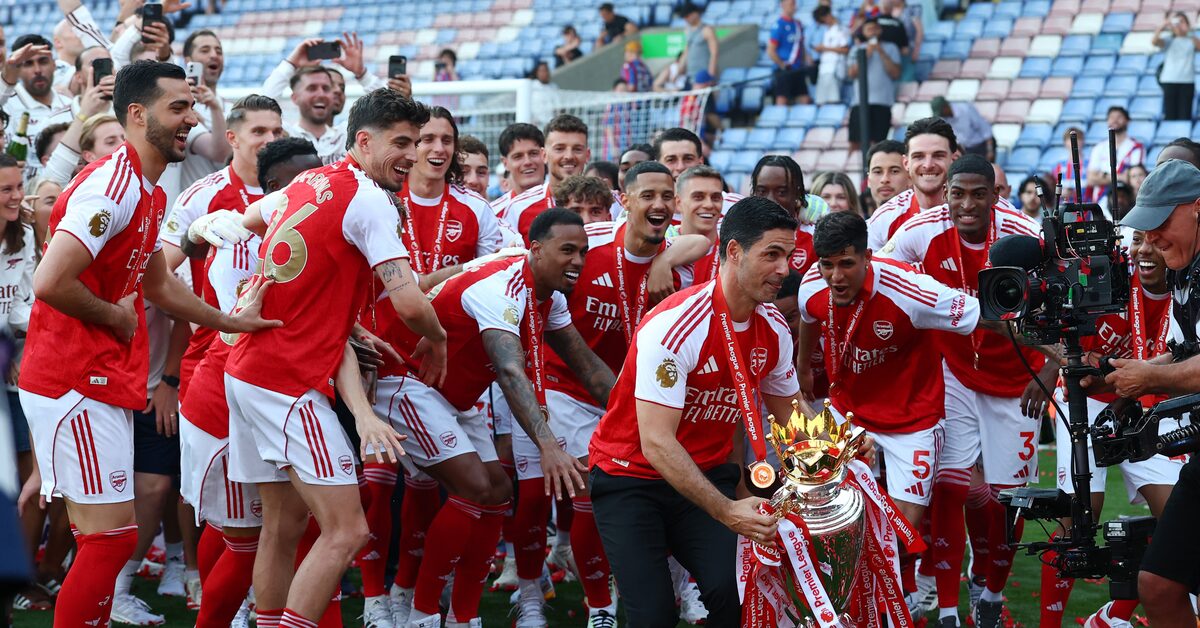
The results followed. Arsenal finished second in three consecutive Premier League seasons from 2022/23 to 2024/25, having returned to the Champions League places and established themselves as consistent title contenders.
That progress does not prove every struggling manager deserves patience. Arteta benefited from recruitment, ownership support and time to implement his ideas. Other managers may not possess the same qualities or produce the same outcome.
But Arsenal demonstrate an important principle: a club cannot demand the benefits of a rebuild while refusing to tolerate the difficulties that accompany one.
The lesson for Manchester United is not to copy Arteta’s tactics or give every manager three years regardless of performance. It is to establish a credible project, appoint a manager who fits it and judge the appointment against evidence of progress rather than allowing each difficult spell to trigger a complete rethink.
Brighton and Fabian Hürzeler: identity before panic
Brighton provide another instructive example, albeit at a club operating under different financial and competitive pressures.
Fabian Hürzeler was appointed in June 2024 after guiding St Pauli to promotion to the Bundesliga. Brighton gave him a contract through June 2027. In his first Premier League season, he led the club to an impressive eighth-place finish. In May 2026, Brighton extended his contract until June 2029, with chairman Tony Bloom citing the team’s progress and developing playing identity.
Brighton’s model is not risk-free, and their circumstances differ significantly from United’s. They have built their reputation around recruitment, player development and a clear organisational approach rather than the expectation of winning the Premier League immediately.
That difference is precisely why the comparison matters.
Brighton’s approach recognises that a head coach works within a broader structure. Recruitment, development and the club’s footballing principles are not supposed to begin and end with one individual.
Manchester United have the resources and global profile to pursue greater honours, but their ambition should make structural clarity more important, not less. A club with greater expectations needs better decision-making, not simply faster reactions.
When punditry becomes part of the problem
The football media has a legitimate responsibility to question poor management. Journalists should investigate recruitment failures, challenge misleading statements and expose organisations that repeatedly make the same mistakes.
But there is a difference between holding a manager accountable and helping create a climate in which dismissal becomes the default response to every setback.
Former professionals bring valuable experience to football coverage. Their knowledge of dressing rooms, tactical demands and the psychological pressures of elite competition can enrich public debate. Their opinions should not be dismissed simply because they work in the media rather than on the touchline.
However, former players who become pundits must also recognise the responsibility that comes with their platforms.
When criticism becomes theatrical, when every defeat is described as a catastrophe and when managerial dismissal dominates the conversation before structural problems are properly examined, analysis can give way to reaction.
The BBC’s coverage of Ten Hag’s difficult start in September 2024 recorded former United defender Gary Neville describing the Tottenham defeat as “disgusting” and “disgraceful”, while Jamie Redknapp called the performance “embarrassing”. Those were opinions expressed in the heat of a poor performance, not proof that pundits caused Ten Hag’s eventual dismissal. But they illustrate the intensity of the public conversation surrounding an under-pressure manager.
More recently, BBC analysis of managerial pressure has acknowledged that social media can amplify pundit comments, while criticism from prominent figures can leave managers feeling compelled to defend themselves. That does not establish that media criticism determines boardroom decisions. It does show why responsible commentary matters.
The question is not whether pundits should soften their criticism. It is whether they apply the same intellectual discipline to managerial projects that they demand from the managers themselves.
If a former player argues that a coach should be dismissed after a poor run, what evidence supports that conclusion? Has the squad been assembled for the coach’s system? Are key players injured? Has the club recruited effectively? Is the team improving in identifiable areas, even when results remain disappointing?
These questions do not excuse failure. They make criticism more useful.
Knowing how difficult management is should inspire humility
There is a particularly important responsibility for former professionals who have experienced elite football.
Playing at the highest level requires discipline, tactical understanding and extraordinary ability. Managing a team introduces a different set of responsibilities: selecting and motivating players, managing egos, planning training, adapting tactics, handling recruitment discussions, communicating with executives and maintaining performance under constant scrutiny.
Being an exceptional player does not automatically make someone an exceptional manager. Nor does becoming a pundit mean a former professional has abandoned the game or lacks the knowledge to analyse it.
But the difficulty of management should encourage humility.
A former player who has never managed a club through a sustained rebuild should be careful about presenting managerial dismissal as an obvious solution to every problem. Those who have managed and failed themselves should understand particularly well that football is rarely as straightforward as it appears from a television studio.
There is no contradiction in being critical and being fair. In fact, the best analysis requires both.
Pundits should be able to say a manager has made serious mistakes while also asking whether the club has given that manager the right players, a stable structure and a reasonable opportunity to implement a plan.
The job of football punditry is not merely to identify who has failed. It is to explain why, what the evidence says and what should happen next.
The media did not sack United’s managers. The hierarchy did.
This distinction is essential.
Manchester United’s executives cannot blame journalists for recruitment mistakes, poor strategic planning or decisions to dismiss managers. They control the appointments, the budgets and the football structure. If outside criticism influences their decisions more than their own long-term objectives, that is a failure of leadership.
Likewise, a manager cannot escape responsibility simply by invoking a long-term project. Results matter. Tactical flexibility matters. Player development matters. A club must be willing to act when credible evidence shows that an appointment is no longer working.
But the media has influence over the terms of the debate. It can encourage a more thoughtful examination of institutional responsibility, or reduce complex problems to a weekly argument about whether one individual should lose their job.
The most damaging outcome is a cycle in which the hierarchy appoints a manager, the media scrutinises every setback, the club reacts to mounting pressure, and the next appointment inherits many of the same unresolved problems.
That cycle is not inevitable. It can be challenged by better leadership at the club and better judgement in the media.
Manchester United need accountability, not another reset
The answer is not to demand patience without limits. It is to make patience conditional on a credible plan and measurable progress.
United must establish what kind of football they want to play, recruit accordingly, clarify the relationship between the head coach and sporting leadership, and define realistic milestones. They must also explain how they will distinguish a temporary downturn from a project that has genuinely failed.
Journalists and pundits, meanwhile, should continue to challenge the club—but challenge the entire system, not just the person standing on the touchline.
Mourinho, Solskjær and Ten Hag each had shortcomings. Their dismissals cannot be reduced to media pressure alone, and their periods in charge should not be romanticised. Yet the succession of managerial changes raises a legitimate question about the club’s ability to sustain a coherent football strategy.
Manchester United cannot recover their former standing by searching endlessly for a manager who can deliver immediate success without institutional stability. Nor can the media claim to want better-run clubs while treating every difficult period as a referendum on a manager’s survival.
Ultimately, the measure of a football project is not how convincingly it is announced at a press conference. It is whether the club remains committed to its principles when results become uncomfortable—and whether it has the leadership to recognise when those principles are no longer working.
Manchester United do not need protection from criticism. They need criticism that goes beyond the dugout.
Gallery
More from this story
Read next
Stories you should not miss
Analysis
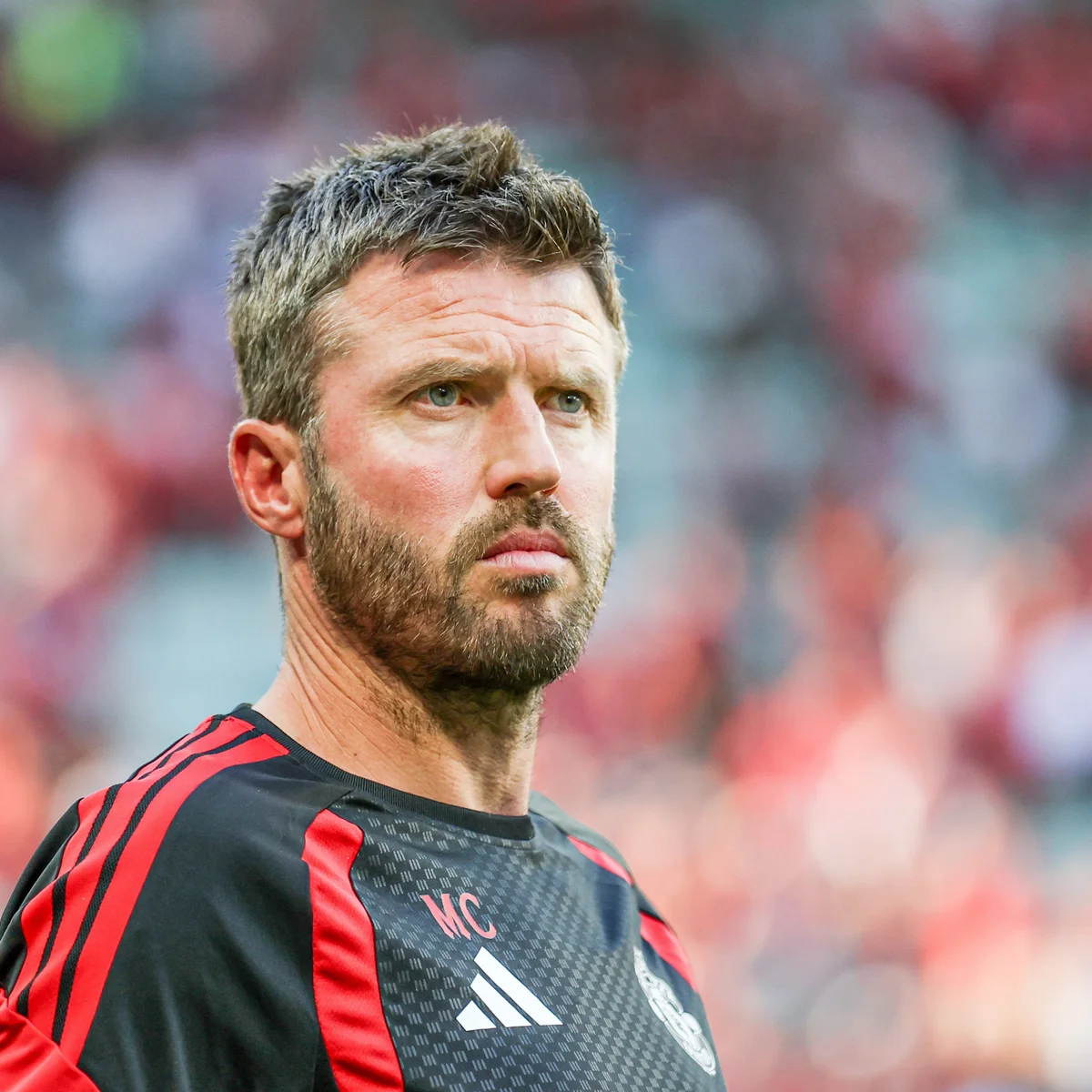
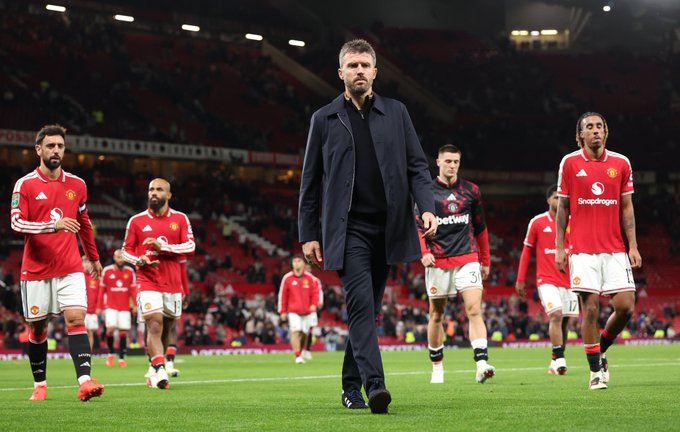
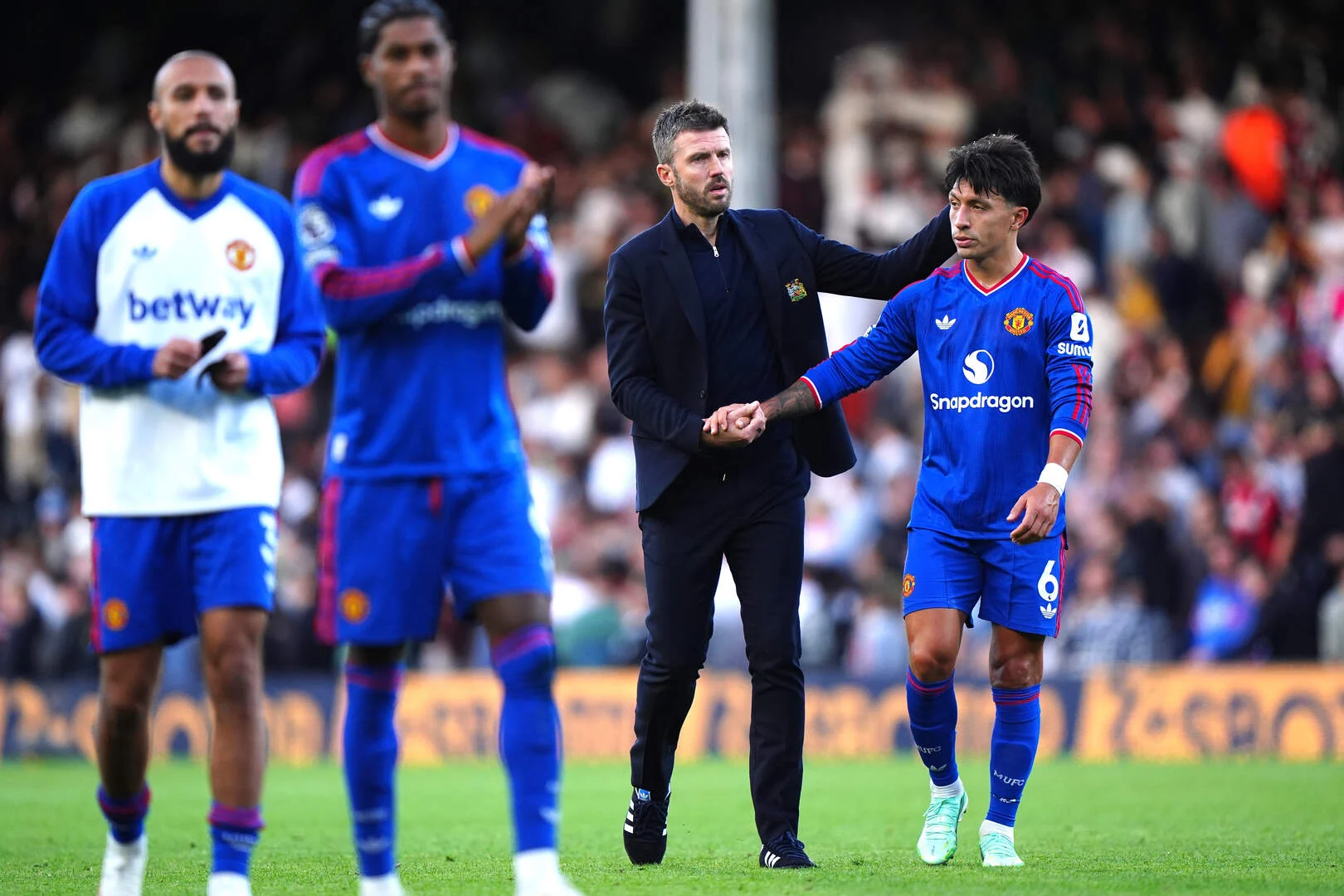
Michael Carrick Under Pressure: Is Football Giving Young Managers a Fair Chance?
Breaking
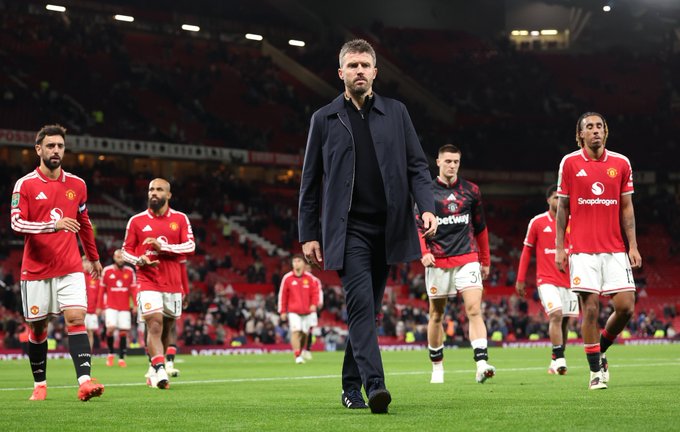
A Man Up, a Goal Ahead, Yet No Victory: Has Michael Carrick Run Out of Answers at Manchester United?
Breaking
EXCLUSIVE: THE CARRICK FORMULA — WHY MANCHESTER UNITED’S NEXT CHAPTER MAY DEMAND A LITTLE MORE ‘FERGUSON’
Related stories
More on Manchester United
Published Friday, 23 October 2026. Published through the Nisty Football newsroom.
Fan reaction
Comments (0)
Leave a comment
No account needed · 0 approved
0/1500 characters · comments are reviewed before publication
More from Nisty Football
Related stories
Silenced? Martínez's Apology Smells Like a Club in Damage Control, and INEOS Has Questions to Answer
Players do not walk back the most honest interview of their season by accident. The club got to him.
Arsenal Working Towards New Deal for Mikel Arteta
Arsenal are reportedly advancing negotiations to secure manager Mikel Arteta to a new contract at the Emirates Stadium.
Ederson Addresses Collapsed £35m Manchester United Transfer
Atalanta midfielder Ederson has spoken out on his proposed £35m switch to Manchester United after the Premier League club changed course on the deal.
CONTE, HOWE AND NAGELSMANN: WHO DO MANCHESTER UNITED REALLY NEED NOW?
Manchester United face another defining decision as Michael Carrick’s future comes under scrutiny. With Antonio Conte, Eddie Howe and Julian Nagelsmann linked to the managerial conversation, which candidate offers the clearest path forward? We assess their tactical approaches, experience, potential risks and suitability for Old Trafford, while examining why United’s next appointment must address deeper structural problems beyond the manager’s position.