Michael Carrick Under Pressure: Is Football Giving Young Managers a Fair Chance?
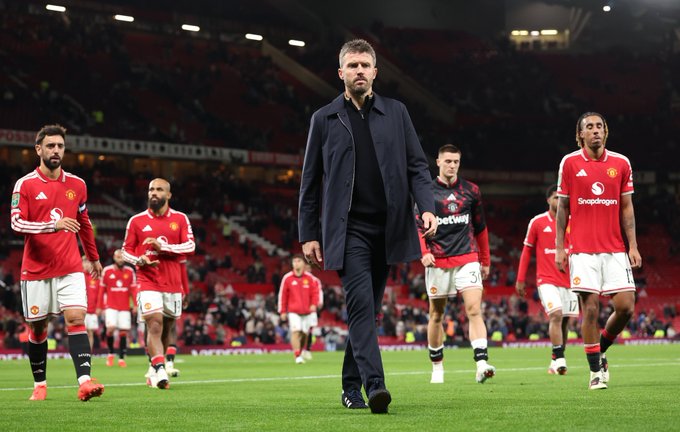
At Manchester United, patience has become one of football’s rarest commodities.
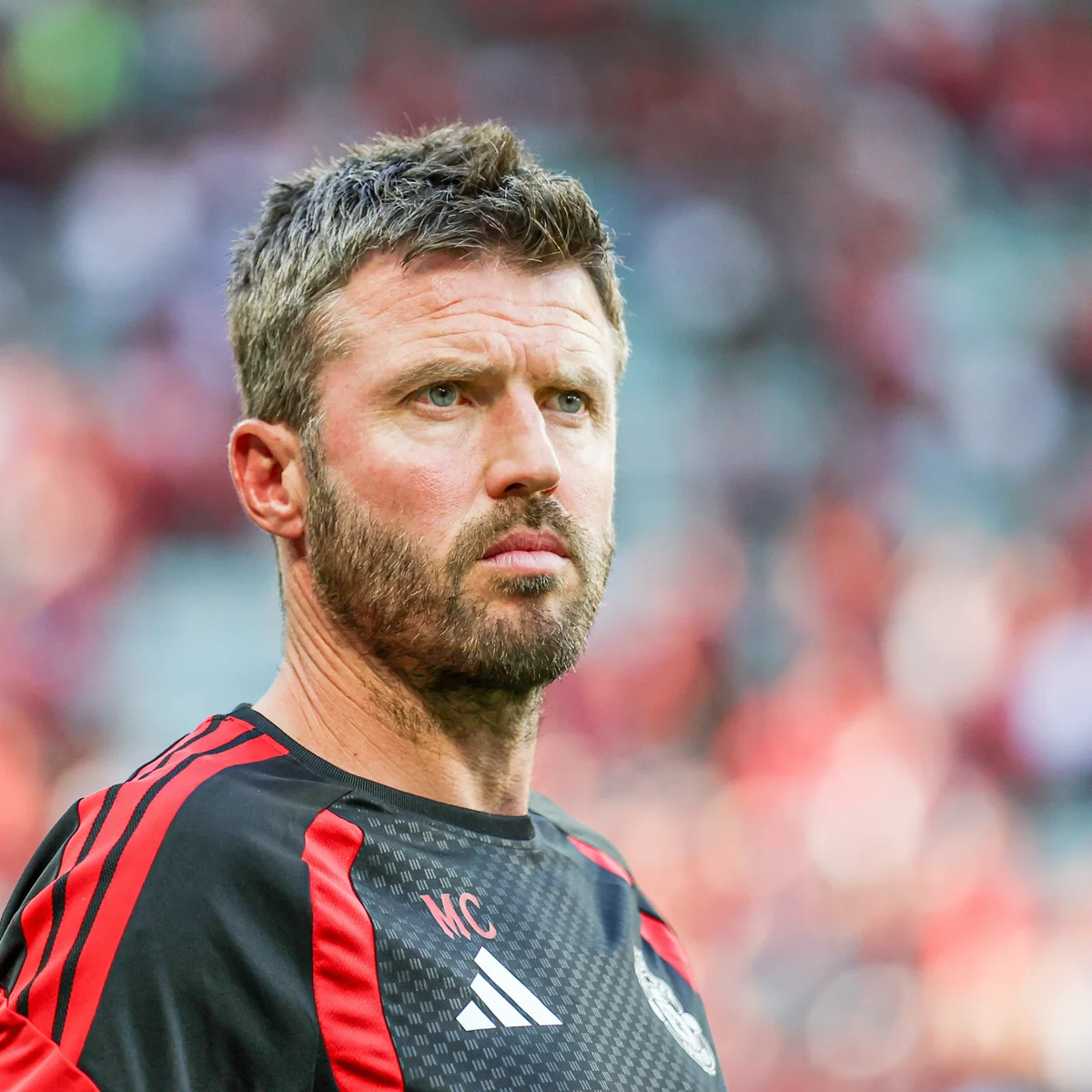
Michael Carrick Under Pressure: Is Football Giving Young Managers a Fair Chance?
By Emmanuel Adekunle
At Manchester United, patience has become one of football’s rarest commodities.
A difficult run of results, an early cup exit and growing questions about the club’s direction have placed Michael Carrick under intense scrutiny. For a manager who enjoyed a promising spell last season, the speed of the change in mood has been striking.
Yet, amid the criticism, an unexpected voice has called for restraint.
Leeds United manager Daniel Farke has defended Carrick, praising the work he did at Middlesbrough and the way he steadied Manchester United last season. Farke questioned why criticism had intensified so quickly and urged people to support young British coaches.
His intervention raises a question that extends beyond Old Trafford: does football give young managers enough time to prove themselves, or does it demand immediate results before they have the opportunity to build?
From promise to pressure
Carrick’s appointment at Manchester United carried considerable expectation. He was not an outsider arriving without an understanding of the club. He had spent years at Old Trafford as a player and had already experienced the demands of managing at Middlesbrough.
His early work at United gave supporters reasons to believe he could provide stability. The club finished strongly last season after he took charge, and that improvement helped strengthen the case for making his appointment permanent.
But the challenge of succeeding over a short spell is different from managing a full campaign.
A longer season brings tactical adjustments, injuries, squad rotation, transfer expectations and the pressure of competing across multiple competitions. What works over a limited run of matches may not be enough to sustain results over several months.
Carrick is now confronting that reality.
Manchester United’s poor start, their Carabao Cup elimination against Brighton and a 2-0 Champions League defeat to Atlético Madrid have intensified scrutiny. United were also sitting 13th in the Premier League ahead of their trip to Leeds, underlining the gap between the club’s ambitions and its results.
The criticism is understandable. Manchester United are not a club built to celebrate mediocrity, and their supporters have endured years of instability since Sir Alex Ferguson’s departure.
However, recognising the seriousness of the situation should not mean ignoring its complexity.
Farke’s defence raises a bigger issue
Farke’s comments matter because they challenge the increasingly familiar pattern of judging a manager almost entirely by the latest result.
His argument was not that Carrick should be immune from criticism. It was that the work Carrick had already done deserved to count for something, particularly when he was still developing as a manager.
That is a reasonable distinction.
Managers must be accountable. Results matter, tactical decisions deserve scrutiny and poor performances cannot be explained away indefinitely. But accountability is not the same as impatience, and criticism is not automatically evidence of fair assessment.
Young managers often enter elite jobs with less experience of managing sustained pressure than their more established counterparts. They may have tactical ideas and strong leadership qualities, but still need time to develop their methods, learn from setbacks and build a squad suited to their approach.
If every difficult spell becomes a referendum on their entire career, the opportunity to develop can disappear before the work has had time to take shape.
Carrick’s situation is particularly revealing because he is managing one of England’s most scrutinised clubs. Every defeat attracts disproportionate attention, every selection decision becomes a debate and every disagreement inside the dressing room can become a national story.
That environment makes patience difficult. It also makes sound judgement more important.
But is Carrick being judged too harshly?
There is a danger in turning every young manager under pressure into a victim of unrealistic expectations.
Carrick has accepted the Manchester United job, and with it comes responsibility for performances. The club’s history cannot excuse poor results, while his experience as a player does not automatically make him the right manager.
Questions about his tactics, defensive organisation, team selection and ability to manage multiple competitions are legitimate.
United’s early cup exit was a disappointment, and their league position was below the standard expected of a club with their resources. Supporters are entitled to ask whether Carrick has a convincing plan to improve the situation.
The crucial issue is what happens next.
Can he identify the defensive problems? Can he make the team more consistent? Can he respond when opponents expose weaknesses? Can he manage the pressure without allowing results to undermine the dressing room?
Those questions should be answered through evidence over time, not simply through reputation or a handful of favourable performances.
The same standard should apply to every manager, whether young or experienced.
Manchester United’s problems cannot begin and end with the manager
The scrutiny surrounding Carrick has also coincided with public tension over Manchester United’s recruitment.
Following the defeat to Atlético Madrid, defender Lisandro Martínez criticised the club’s lack of investment in certain positions and expressed frustration with director of football Jason Wilcox. Martínez subsequently apologised for the manner and timing of his remarks after discussions with Carrick and senior club officials.
The incident exposed a broader concern: whether the squad has been strengthened sufficiently to meet the demands placed upon it.
Recruitment, squad depth and long-term planning are not exclusively the manager’s responsibility. A head coach must work with the players available, but the club’s leadership must also provide a coherent strategy and recruit players who fit its ambitions.
If those responsibilities are blurred, the manager can become the most visible target for problems that extend beyond the touchline.
That does not absolve Carrick of responsibility. It simply means Manchester United must assess the whole football operation rather than assume that changing managers will automatically resolve every weakness.
The club has repeatedly searched for solutions through managerial appointments. If it continues to change direction without addressing the underlying issues, another dismissal could produce a familiar outcome: a brief improvement followed by another period of uncertainty.
The experience question
There is a legitimate argument for appointing experienced managers. They have often encountered more difficult dressing rooms, survived more crises and developed a wider range of tactical responses.
Experience can be invaluable when results deteriorate.
But experience is not a guarantee of success, just as youth is not evidence of incompetence. Football has seen managers of different ages and backgrounds succeed when they combine clear ideas, strong communication, effective recruitment and the ability to adapt.
The question should therefore be less about how long a manager has been in the profession and more about whether the work demonstrates a credible route forward.
For Carrick, that means showing that his early promise can become sustained progress. For Manchester United, it means deciding what success looks like, providing the necessary support and judging the manager against clear objectives.
Patience without accountability becomes complacency. Accountability without patience becomes instability.
Elite football needs to understand the difference.
The final whistle
Michael Carrick may yet prove that he is the right manager for Manchester United. He may also discover that the job demands qualities and experience he has not fully developed. Neither conclusion should be predetermined by the current noise surrounding Old Trafford.
Daniel Farke’s defence is a timely reminder that young coaches need room to grow. But that room must exist within a framework of clear expectations, honest evaluation and responsibility for results.
Manchester United supporters do not owe Carrick unlimited patience. Carrick, in turn, owes the club performances that justify its faith in him.
What the club must avoid is confusing a difficult period with proof that the entire project has failed — or blaming one manager for problems that the wider organisation has yet to solve.
The real test is not whether Carrick deserves criticism. It is whether Manchester United can distinguish between a manager who needs time to develop and a club that has yet to resolve its own problems.
Read next
Stories you should not miss
Breaking
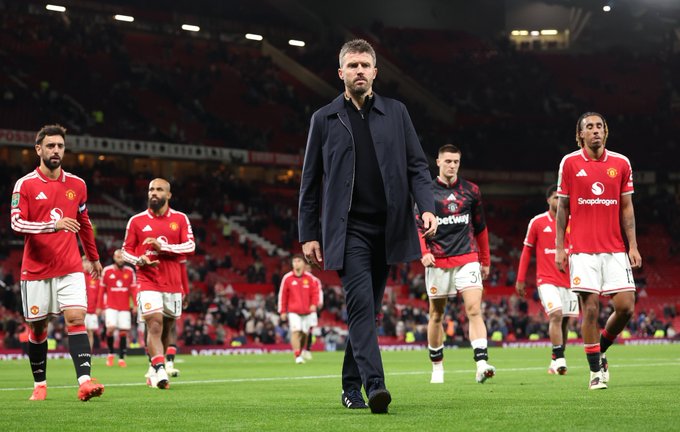
A Man Up, a Goal Ahead, Yet No Victory: Has Michael Carrick Run Out of Answers at Manchester United?
Breaking
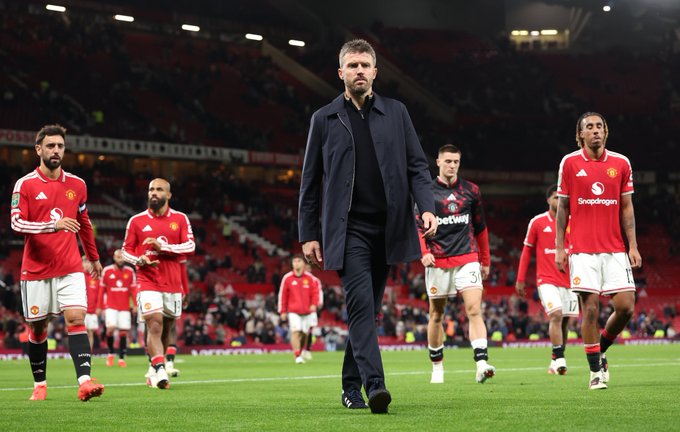
EXCLUSIVE: THE CARRICK FORMULA — WHY MANCHESTER UNITED’S NEXT CHAPTER MAY DEMAND A LITTLE MORE ‘FERGUSON’

Breaking
Silenced? Martínez's Apology Smells Like a Club in Damage Control, and INEOS Has Questions to Answer
Related stories
More on Manchester United
Published Saturday, 17 October 2026. Published through the Nisty Football newsroom.
Fan reaction
Comments (0)
Leave a comment
No account needed · 0 approved
0/1500 characters · comments are reviewed before publication
More from Nisty Football
Related stories
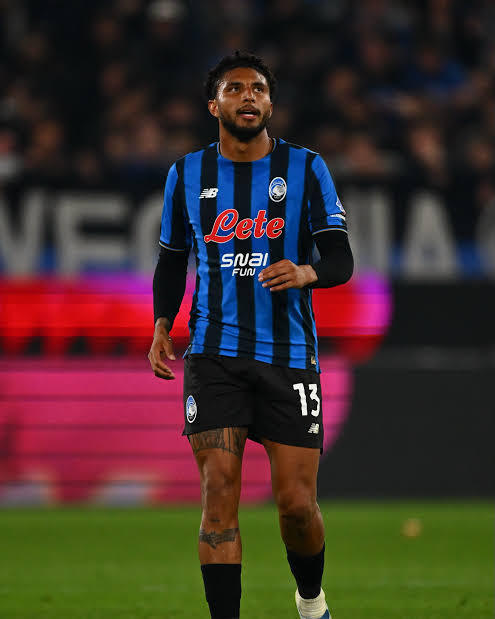
Ederson Addresses Collapsed £35m Manchester United Transfer
Atalanta midfielder Ederson has spoken out on his proposed £35m switch to Manchester United after the Premier League club changed course on the deal.
Manchester United Commercial Focus Under Scrutiny Following Sponsorship Deal
Manchester United's off-pitch priorities have come under the spotlight once again after securing a fresh sleeve sponsorship deal in the wake of the transfer window.
Pressure Mounts on Manchester United After Sluggish Premier League Start
Manchester United face mounting scrutiny after taking just one win from their opening three Premier League fixtures, conceding two goals in every outing.
Manchester city's 115-charge saga: what punishment would truly fit the crime?
If Manchester City’s financial-rule breaches are upheld on appeal, what punishment would truly fit the case?