Manchester city's 115-charge saga: what punishment would truly fit the crime?
If Manchester City’s financial-rule breaches are upheld on appeal, what punishment would truly fit the case?
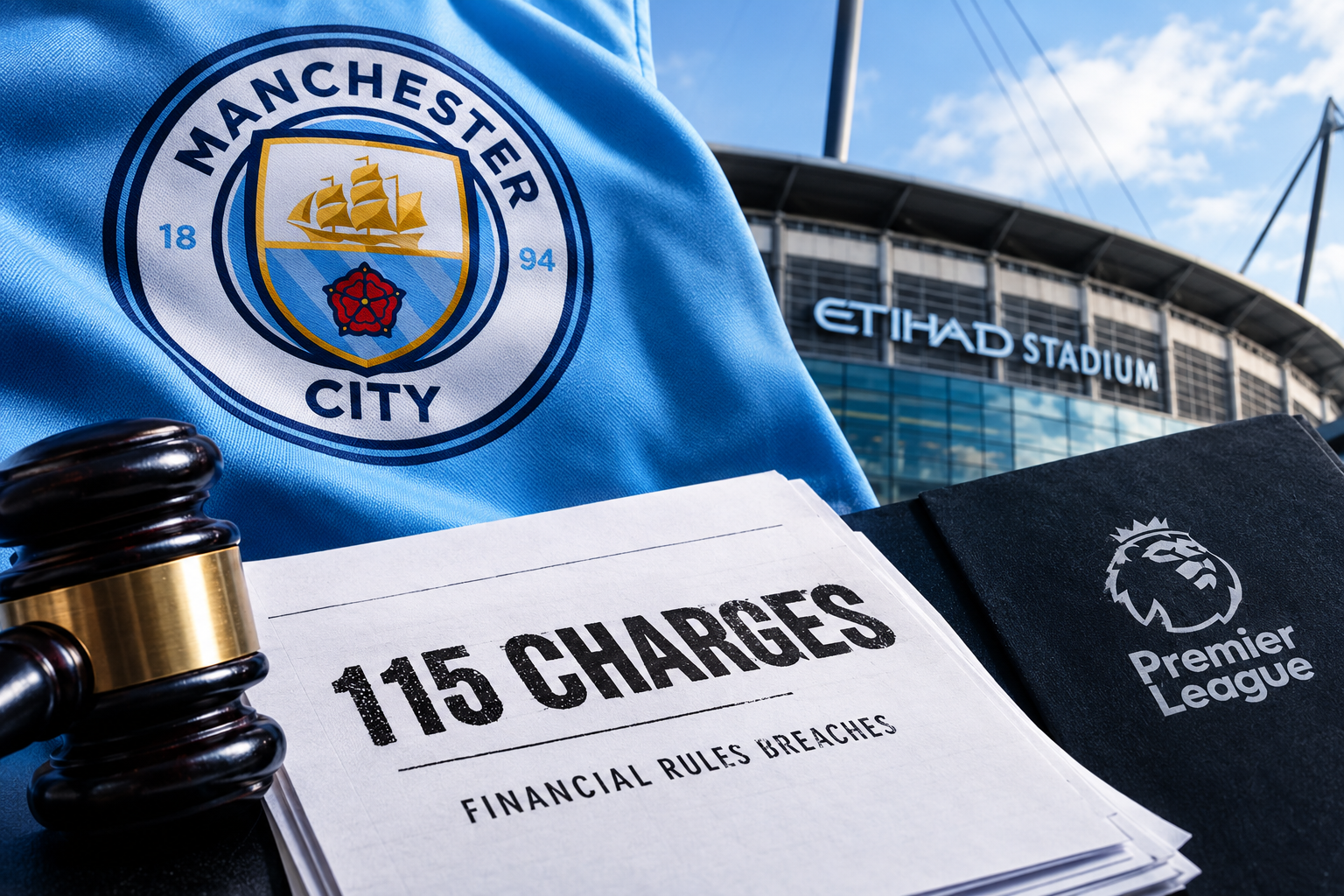
Manchester City’s 115-Charge Saga: What Punishment Would Truly Fit the Breaches?
Manchester City’s financial case has become about more than money. It raises a difficult question about fairness in football: what should happen when a club is found to have breached the financial rules governing a competition it has dominated?
For years, City’s success has been built on an exceptional squad, tactical consistency and significant investment. However, findings by an independent commission have placed the club’s financial conduct under intense scrutiny. If those findings survive City’s appeal, a substantial points deduction would be the most appropriate starting point, with any additional sanctions determined by the seriousness of the breaches and the rules governing the case.
The challenge is not simply to punish Manchester City. It is to determine a sanction that reflects the established breaches, protects the integrity of the Premier League and reinforces the principle that every club must be held to the same standards.
Understanding the Scale of the Case
In an official statement published on 29 September 2026, the Premier League confirmed that an independent commission had found Manchester City guilty of serious financial-rule breaches covering nine seasons, from 2009/10 to 2017/18. The commission also upheld three of the four alleged breaches relating to the club’s failure to cooperate with the league’s investigation.
Source: premier league
The findings included the use of sham commercial agreements to artificially inflate revenue and reduce costs. The commission also found that City had submitted misstated accounts and concealed the true state of its finances from auditors and football regulators.
Such findings raise serious questions about whether clubs have been competing under the same financial conditions. If financial information is deliberately misrepresented, the consequences can extend beyond accounting records to the competitive environment in which clubs operate.
However, the case has not reached its final outcome. On 2 October 2026, the Premier League confirmed that Manchester City had appealed the decision.
Source: premier league
That distinction matters. Any discussion of punishment must recognise the seriousness of the commission’s findings while respecting the established appeal process. The final sanction, if the findings are upheld, should be based on the evidence and the applicable rules rather than public pressure.
Why a Points Deduction Makes Sense
A substantial points deduction would directly affect Manchester City’s position in the competition. Unlike a fine, which can be absorbed as a financial cost, a deduction would carry immediate sporting consequences and could significantly affect the club’s league campaign.
Previous cases demonstrate that the Premier League already uses points deductions to punish financial breaches.
In February 2024, Everton’s original 10-point deduction was reduced to six following an appeal. BBC Sport’s report explained that the appeal board identified errors in the reasoning behind the original sanction, although the underlying breach remained established.
Source: BBC SPORT
Nottingham Forest received a four-point deduction in March 2024 after breaching the league’s profitability and sustainability rules. The Guardian reported on the decision, and Forest’s subsequent appeal was rejected.
Source: The Guardian
PEP GUARDIOLA: THE GENIUS, THE SCANDALS & THE QUESTIONS
These cases provide useful comparisons, but they do not establish a formula for Manchester City’s punishment. Everton and Forest were penalised for different financial breaches, whereas City’s case covers a longer period and includes findings concerning inaccurate financial information and failures to cooperate with an investigation.
If the findings against City stand, the commission should consider the scale, duration and nature of the misconduct when determining the appropriate sanction. The objective should be a proportionate punishment that reflects the established breaches, rather than one determined by the club’s wealth, reputation or success.
A points deduction would send a clear message that financial regulations carry sporting consequences. The question is how substantial that deduction should be, not whether the club’s status should place it beyond meaningful punishment.
Should Manchester City Be Relegated?
Relegation is a more severe possibility, but it should not be treated as the inevitable consequence of the findings.
The appropriate punishment must be determined under the applicable Premier League rules. If City’s appeal fails, the commission should consider whether a points deduction adequately reflects the seriousness of the misconduct. A more severe sporting penalty could be justified if it is permitted by the rules and proportionate to the established breaches.
There is an important difference between demanding relegation out of anger and demonstrating that it is a justified sanction. The decision should rest on the evidence, the applicable rules and the seriousness of the conduct, not pressure from rival supporters or the intensity of media debate.
Relegation would carry consequences far beyond a difficult league campaign. It could affect the club’s finances, commercial relationships, players and supporters. Such consequences do not make relegation inappropriate by definition, but they underline why the decision must be carefully justified.
The principle should be straightforward: Manchester City must neither be protected from a severe punishment because of its stature nor subjected to one simply because it is a successful club.
Should City Be Stripped of Its Titles?
Removing trophies won during the period covered by the findings would be among the most controversial sanctions available.
For rival supporters, stripping City of titles may seem like the clearest response to concerns that financial misconduct affected the competition. If breaches gave a club an unfair advantage, questions about the legitimacy of its achievements are inevitable.
However, removing titles could also alter the historical record and affect other clubs, players and supporters. It would therefore require more than public demand for retrospective punishment.
Whether titles can be removed depends on the powers available under the relevant rules and the scope of the disciplinary process. If such a sanction is legally available, the commission would need to explain why it was justified and proportionate to the established breaches.
Title removal should not be presented as an automatic consequence while the final outcome remains unresolved. Accountability matters, but so does due process. Any decision must have a clear legal basis and withstand scrutiny.
Ultimately, the question is not whether rival supporters would welcome the removal of City’s trophies. It is whether the rules permit such a sanction and whether the evidence justifies it.
Why a Fine Alone Would Not Be Enough
A substantial fine could form part of an appropriate sanction, but relying on money alone would be difficult to justify if the findings stand.
Given City’s financial resources, the commission should consider whether a monetary penalty would provide a meaningful deterrent. A fine that the club can readily absorb may not adequately reflect the seriousness of the breaches or discourage similar conduct in the future.
Financial penalties still have value. Their effectiveness, however, depends on their size, the circumstances of the case and the consequences of non-compliance. A fine should be substantial enough to matter rather than become another operating cost for a wealthy club.
Combining a meaningful fine with a substantial points deduction could address both the financial dimension of the findings and their potential sporting implications. Such an approach would recognise that alleged or established financial misconduct can affect more than a club’s accounts; it can also raise questions about competitive fairness.
The final decision should explain why the financial penalty is appropriate and how it complements any sporting sanction.
What About the Club’s Ownership?
The case also raises questions about governance and accountability at ownership level. However, sanctions against the club should not automatically determine the consequences for its owners.
In a report published on 13 October 2026, The Guardian covered comments by Independent Football Regulator chair David Kogan, who stressed the regulator’s independence amid scrutiny surrounding the Manchester City case.
Any assessment of ownership suitability must follow the regulator’s legal framework and established procedures. The disciplinary process governing a club and the regulatory framework governing its ownership serve different purposes and should not be confused.
Accountability should extend to the appropriate level where the evidence and applicable rules justify it. Nevertheless, ownership consequences must be determined through the proper regulatory process rather than assumed to follow automatically from a club’s punishment.
The wider lesson is that effective football governance requires clear responsibilities, independent oversight and consistent enforcement. Those principles should apply regardless of the club involved.
The Punishment Must Protect the Integrity of the League
The Manchester City case requires a careful balance between seriousness and fairness. A weak punishment could undermine confidence in the Premier League’s financial regulations, while an excessive or unsupported sanction could damage trust in the disciplinary process.
The Everton and Nottingham Forest cases demonstrate that financial breaches can carry sporting consequences. However, consistency does not mean imposing identical punishments for different circumstances. It means applying the same principles of evidence, proportionality and accountability to every club.
If the findings against City survive the appeal, a substantial points deduction should form the centre of the punishment, accompanied by a meaningful fine where justified. Relegation should remain a possibility only if permitted by the rules and proportionate to the breaches. Title removal would require a clear legal basis, while any ownership consequences should follow the appropriate regulatory process.
The objective must be to ensure that financial regulations are meaningful and that their enforcement does not depend on a club’s standing in the game.
Manchester City’s success should neither make it a target for excessive punishment nor shield it from accountability. The same standards must apply to every club, regardless of its wealth, influence or achievements.
The punishment that truly fits the breaches is not necessarily the harshest one available. It is the one that reflects the seriousness of the findings, survives scrutiny and reinforces the principle that no club is bigger than the competition it enters.
Read next
Stories you should not miss
Related stories
Published Friday, 16 October 2026. Published through the Nisty Football newsroom.
Fan reaction
Comments (0)
Leave a comment
No account needed · 0 approved
0/1500 characters · comments are reviewed before publication
More from Nisty Football
Related stories
PEP GUARDIOLA: THE GENIUS, THE SCANDALS & THE QUESTIONS
The trophies are undeniable. So are the questions surrounding Barcelona, Manchester City and the man who stood at the centre of both eras.

Man City Tried to BLOCK the Verdict From Leaking. Here's Why.
This isn't just about a trophy asterisk anymore. This is a football institution that could be staring down expulsion from the competition it has dominated for over a decade a competition many now believe it never should have been dominating in the first place.

Ayyoub Bouaddi Handed Manchester City Start for Champions League Clash with Porto
Ayyoub Bouaddi has been named in Manchester City's starting lineup for their UEFA Champions League encounter against FC Porto.

Silenced? Martínez's Apology Smells Like a Club in Damage Control, and INEOS Has Questions to Answer
Players do not walk back the most honest interview of their season by accident. The club got to him.