CONTE, HOWE AND NAGELSMANN: WHO DO MANCHESTER UNITED REALLY NEED NOW?
Manchester United face another defining decision as Michael Carrick’s future comes under scrutiny. With Antonio Conte, Eddie Howe and Julian Nagelsmann linked to the managerial conversation, which candidate offers the clearest path forward? We assess their tactical approaches, experience, potential risks and suitability for Old Trafford, while examining why United’s next appointment must address deeper structural problems beyond the manager’s position.
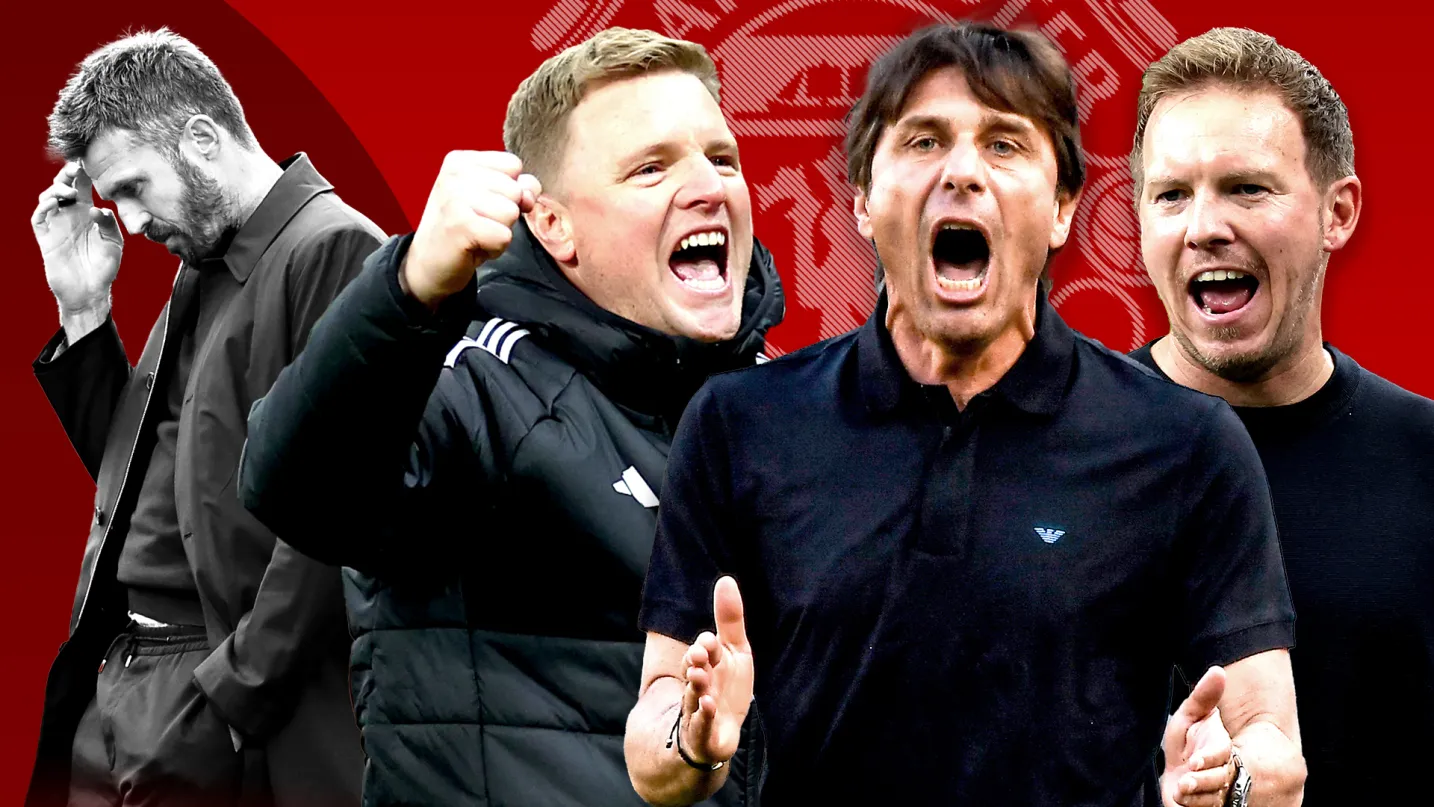
CONTE, HOWE AND NAGELSMANN: WHO DO MANCHESTER UNITED REALLY NEED NOW?
Manchester United’s search for answers has returned to a familiar question: can another managerial appointment fix a club that continues to struggle with consistency, direction and accountability?
Manchester United may be preparing for another change in the dugout, but the question facing the club is bigger than Michael Carrick’s future. It is whether the next appointment will address the problems that have repeatedly undermined their attempts to rebuild.
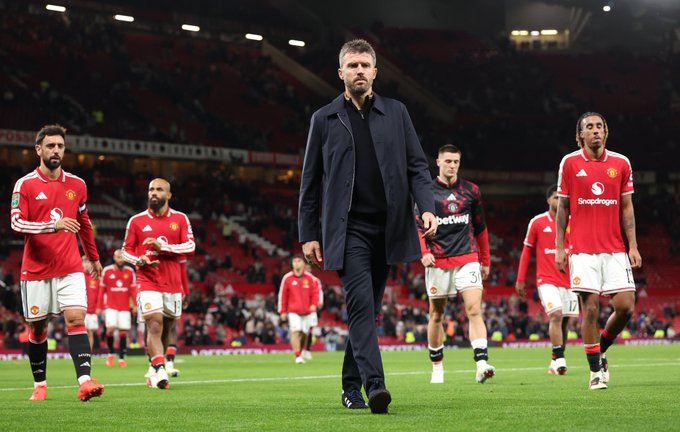
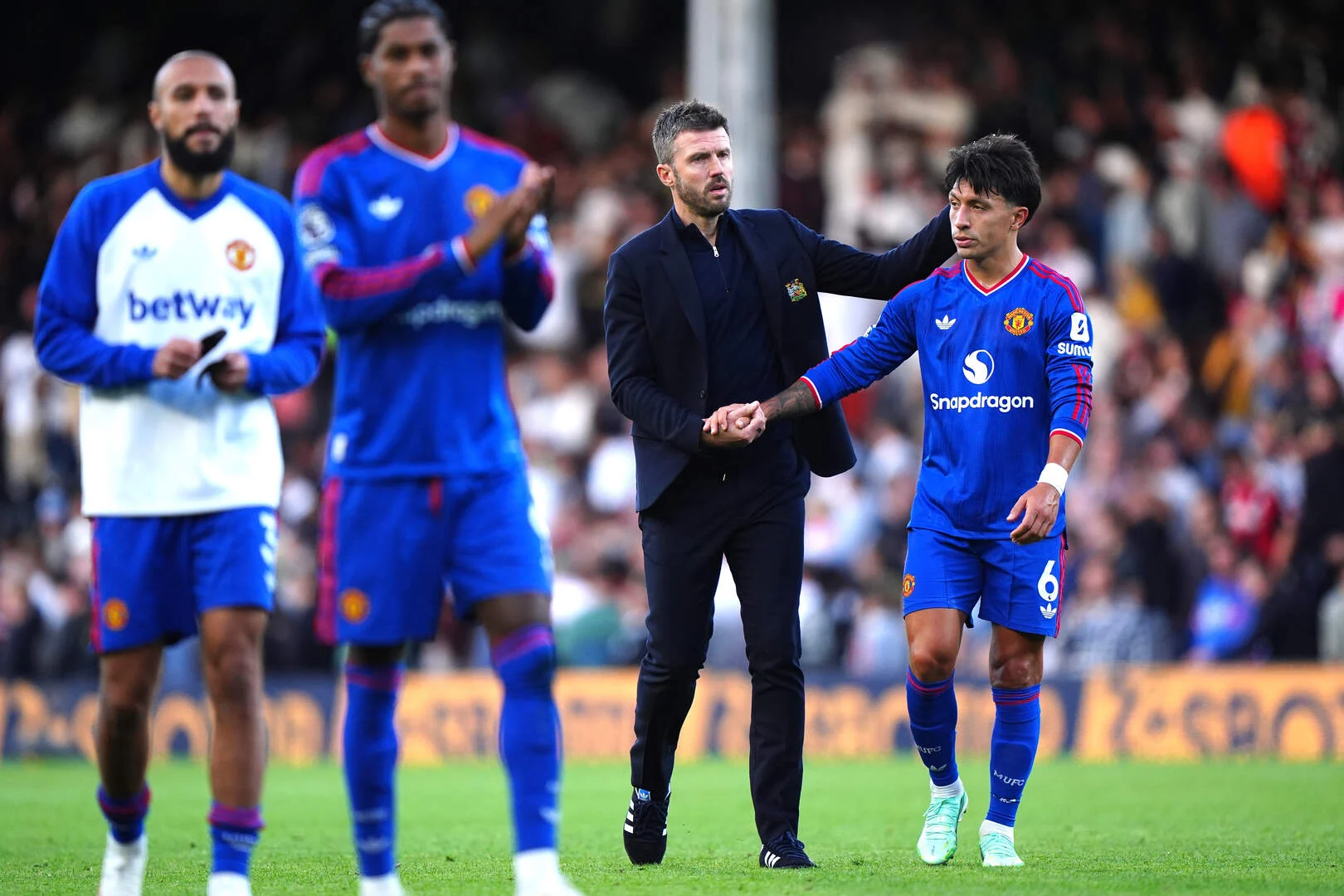
Carrick is expected to lead United against Bournemouth on Sunday, October 25, despite mounting pressure following the 4-1 defeat to Como in the Champions League. Reports on Thursday, October 22, indicate that the club is assessing potential replacements, with Eddie Howe, Julian Nagelsmann and Antonio Conte among the names being discussed.
However, the precise status of each candidate remains unclear. There is no confirmed announcement that Carrick will be dismissed next week, and links to the three managers should not be mistaken for completed negotiations.
For United, the challenge is not simply finding a coach with a prestigious CV. It is identifying the manager whose football, personality and expectations can deliver sustainable progress at Old Trafford.
ANTONIO CONTE: THE WINNER WHO DEMANDS CONTROL
Conte offers something Manchester United have repeatedly sought: a manager with a proven record of turning underperforming teams into champions.
His Premier League title with Chelsea in 2016/17 demonstrated his ability to organise a side quickly, establish clear tactical principles and demand exceptional intensity. His subsequent successes with Inter Milan and Napoli further strengthened his reputation as a coach capable of delivering domestic titles.
Tactically, Conte could offer United a more structured defensive organisation, aggressive wing-back play and a clearly defined system built around coordinated movement and transitions. His teams typically know their responsibilities, and his demanding approach leaves little room for passengers.
That could appeal to a United side whose recent performances have raised questions about collective discipline, defensive organisation and commitment without the ball.
But Conte’s strengths come with significant considerations.
His methods require commitment from the squad and support from the hierarchy. His managerial history has also featured difficult departures and disagreements over recruitment and club ambition. At United, where questions about sporting authority and recruitment have repeatedly surfaced, those tensions could become decisive.
There is also a reporting distinction to respect. Conte has been linked with the vacancy, but the Guardian reported on October 22 that he was not on United’s shortlist, while other reports have suggested a potential approach.
The question is whether United want Conte’s intensity and immediate demands—and whether the club is prepared to accommodate the conditions under which he believes he can succeed.
EDDIE HOWE: THE BUILDER WHO COULD BRING STABILITY
Howe presents a different proposition.
His work at Newcastle United demonstrated an ability to improve a squad, establish a recognisable playing identity and guide a club back into the Champions League. Newcastle also won the Carabao Cup in 2025, ending a 70-year wait for a major domestic trophy.
Those achievements matter because United’s problems cannot be separated from the need to build a coherent team rather than assemble a collection of expensive individuals.
Howe’s football is associated with pressing, energy, coordinated movement and attacking transitions. At his best, his teams play with intensity and purpose, qualities that have too often been missing from United’s recent performances.
He could also offer an opportunity to build over several seasons rather than attempt to solve everything through an immediate tactical overhaul.
However, his Newcastle experience does not guarantee success at Old Trafford. United’s expectations, media scrutiny and commercial pressures are considerably different. Howe would need to demonstrate that his methods could work with a squad carrying enormous expectations and a history of managerial upheaval.
His availability is another factor. Reports indicate that Howe left Newcastle in the summer and is open to a return to management, although his willingness to take the United job should not be treated as confirmation that an agreement is possible.
Howe’s appeal lies in the possibility of building a more cohesive team, but United would have to give him time, a clear recruitment strategy and genuine institutional backing.
JULIAN NAGELSMANN: THE TACTICAL PROJECT
Nagelsmann may represent the most intriguing option for a club seeking a modern tactical identity.
His work at Hoffenheim and RB Leipzig established him as one of Europe’s prominent young coaches, while his subsequent spells at Bayern Munich and with Germany exposed him to the pressures of elite football.
He is associated with tactical flexibility, detailed preparation, positional rotations and sophisticated pressing structures. Those qualities could help United develop a more coherent approach to possession, pressing and transitions.
Rather than simply imposing one rigid formation, Nagelsmann has demonstrated a willingness to adapt his systems to personnel and opponents. That flexibility could be valuable for a squad that needs greater collective understanding.
Yet his appointment would carry its own risks.
His previous experience at Bayern and with Germany shows that tactical sophistication alone does not guarantee sustained success. United would need to establish whether his preferred methods suit the players available and whether the club’s recruitment operation can consistently supply the profiles his football requires.
Nagelsmann’s availability and willingness to consider United have been reported, but his appointment remains speculative.
He offers the possibility of a modern tactical reset, but that project would require patience, suitable recruitment and alignment between the manager and the club’s decision-makers.
THE REAL PROBLEM MAY BE BIGGER THAN THE MANAGER
United’s repeated managerial changes should make the hierarchy cautious.
Erik ten Hag was dismissed in October 2024. Ruben Amorim departed in January 2026. Carrick subsequently guided the team to third place in the Premier League last season before receiving a permanent appointment.
Now, after a difficult start to the 2026/27 campaign, Carrick’s position is under renewed scrutiny.
That sequence raises an uncomfortable question: if each managerial change is presented as the beginning of a new era, why do the same questions about consistency, recruitment and accountability keep returning?
The 4-1 defeat to Como intensified the pressure, while Bruno Fernandes’ public criticism of the coaching approach added another layer to the situation. Nevertheless, one defeat and a poor run should not become the sole basis for evaluating an entire managerial project.
United must assess Carrick’s tactical decisions and results alongside injuries, squad depth, recruitment and the support provided by the hierarchy. These factors do not excuse poor performances; they help explain what any replacement would inherit.
Appointing a new manager without resolving the underlying structural questions risks repeating the cycle.
SO, WHO SHOULD MANCHESTER UNITED CHOOSE?
Each candidate offers a different route forward.
Conte represents proven trophy-winning experience and a demanding, immediate approach. Howe offers a potential long-term rebuild built around team organisation and collective intensity. Nagelsmann offers tactical flexibility and the prospect of a more sophisticated playing identity.
The decision should depend on what United want their next era to look like.
If the priority is an immediate push for trophies, Conte’s record deserves serious consideration, provided the club is comfortable with his demands and working methods.
If the objective is to develop a more cohesive squad over several seasons, Howe’s experience of building at Newcastle makes him a credible option.
If United want to establish a modern tactical identity and are prepared to recruit accordingly, Nagelsmann presents an intriguing alternative.
None is a risk-free appointment, and none can guarantee a return to the top.
More importantly, the club must settle its own footballing direction before asking another manager to deliver it. That means establishing clear recruitment responsibilities, agreeing on a sustainable playing philosophy and ensuring that the manager’s authority is understood by everyone involved.
Otherwise, even a celebrated appointment could become another short-lived experiment.
THE VERDICT
Manchester United do not simply need another big name. They need the right relationship between manager, squad and hierarchy.
Conte could bring urgency. Howe could offer a rebuilding framework. Nagelsmann could provide tactical innovation. But the decisive factor may be whether United can create an environment in which any of them can work effectively.
The next appointment must be judged not by the excitement of its unveiling, but by the clarity of its plan and the consistency of its execution.
The question at Old Trafford is no longer just who can manage Manchester United. It is whether Manchester United know what they want their manager to build.
Read next
Stories you should not miss
Analysis
Michael Carrick Under Pressure: Is Football Giving Young Managers a Fair Chance?
Breaking
Licha Drops the Mask: Martínez Exposes United's Rotten Core, But the Dressing Room Isn't Innocent
Breaking
A Man Up, a Goal Ahead, Yet No Victory: Has Michael Carrick Run Out of Answers at Manchester United?
Related stories
More on Manchester United
Breaking
EXCLUSIVE: THE CARRICK FORMULA — WHY MANCHESTER UNITED’S NEXT CHAPTER MAY DEMAND A LITTLE MORE ‘FERGUSON’
Fri 2 Oct
Breaking
UNITED DON’T RUN. THEY DON’T WIN. SO WHAT EXACTLY IS CARRICK’S PLAN?
Mon 21 Sept
Breaking
Carrick Says His Future Is ‘Not on the Radar’ But Manchester United Need Answers
Fri 18 Sept
Published Thursday, 22 October 2026. Published through the Nisty Football newsroom.
Fan reaction
Comments (0)
Leave a comment
No account needed · 0 approved
0/1500 characters · comments are reviewed before publication
More from Nisty Football
Related stories
Are Football Fans Getting It Wrong? The Truth About Competitiveness in the Premier League, La Liga and Serie A
Are football fans confusing entertainment with competitiveness? The Premier League, La Liga and Serie A offer different footballing experiences, but which truly delivers the toughest competition? From title races and relegation battles to goals, drama and tactical quality, we examine the key differences and challenge popular assumptions about Europe's leading leagues.
Ten Hag’s Broken Promises, Amorim’s Exit and Carrick’s Struggle: Has Manchester United Learned Anything?
two years after Erik ten Hag’s dismissal, his account of his time at Old Trafford has reopened questions about a club still struggling to turn its ambitions into consistent results.
The Pressing Trap: Are Elite Teams Making Their Defenders More Vulnerable by Pushing Them Higher?
One mistimed step or poorly coordinated press can transform territorial dominance into a clear goalscoring opportunity for the opposition
THE DEFENDER NOBODY WANTED TO FACE: THE STORY BEHIND TARIBO WEST’S FEARLESS REPUTATION
There are defenders you admire. There are defenders you respect. And then there are defenders you simply do not want to play against.