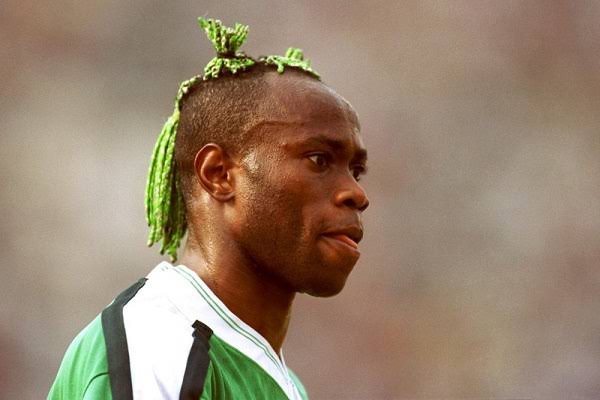
THE DEFENDER NOBODY WANTED TO FACE: THE STORY BEHIND TARIBO WEST’S FEARLESS REPUTATION
There are defenders you admire. There are defenders you respect. And then there are defenders you simply do not want to play against.
THE DEFENDER NOBODY WANTED TO FACE: THE STORY BEHIND TARIBO WEST’S FEARLESS REPUTATION
There are defenders you admire.
There are defenders you respect.
And then there are defenders you simply do not want to play against.
Taribo West belonged to the third category.
For years, the Nigerian defender built a reputation that went beyond tackles, interceptions and defensive positioning. His reputation was psychological. Opponents knew that playing against him meant stepping into a battle where every run, every challenge and every loose ball could become a physical contest.
But what made Taribo West so difficult to play against?
An old interview, resurfacing in a conversation about the toughest defenders of that era, offers an intriguing answer.
The discussion begins with some of the biggest names in European football. Fabio Cannavaro and Carles Puyol are mentioned — defenders whose reputations need little introduction.
Yet when the conversation turns to the kind of opponent who could make an attacking player’s life miserable, Taribo West’s name stands out.
And there is a reason.
THIS WASN’T JUST ABOUT TACKLING
West’s game was built around confrontation.
He did not simply wait for attackers to make mistakes. He imposed himself on them.
His career in France, particularly at Auxerre under the demanding Guy Roux, helped shape that mentality.
Roux was renowned for his discipline and tactical organisation. At Auxerre, young players were expected to understand their responsibilities, work relentlessly and accept that defending was as much about concentration as it was aggression.
West absorbed that culture.
The result was a defender who could make an opponent feel his presence before the ball even arrived.
The evidence was visible in the way he defended.
When an attacker tried to run behind him, West followed.
When a striker attempted to hold the ball up, West challenged him.
When the opposition tried to attack the space in front of him, West stepped forward.
There was little comfort.
And that mattered.
TARIBO DIDN’T NEED PERMISSION TO DEFEND
One of the most revealing aspects of West’s reputation was the fearlessness behind his challenges.
The tackles were not simply attempts to win possession. They were statements.
For an attacker, knowing that the defender behind you was prepared to challenge every ball could change the way you played.
That psychological element is often overlooked when analysing defenders.
Modern football frequently measures defenders through statistics — tackles won, interceptions, clearances, aerial duels and recoveries.
But football has always contained another measurement that is much harder to quantify:
How uncomfortable did you make your opponent?
West was exceptional at that.
His style was aggressive, uncompromising and intensely physical. But it was not random. His upbringing in the defensive culture of Nigerian football, combined with his development in France, produced a player who understood that defending could be psychological warfare.
And opponents felt it.
FROM AUXERRE TO THE BIG STAGE
West’s rise through Auxerre was significant.
He was not simply another physically imposing defender passing through French football. He became part of a team environment that demanded defensive discipline while allowing his personality to flourish.
The move from that environment to the highest levels of European football did not diminish his style.
If anything, it amplified it.
The defender eventually became one of the most recognisable Nigerian footballers of his generation, playing for clubs including Inter Milan, AC Milan, Derby County and Kaiserslautern, while becoming a key figure for Nigeria.
His career also placed him directly against some of the greatest attackers and defenders of the era.
That is what makes the recollection particularly interesting.
When footballers remember difficult opponents, they usually remember the complete package: intelligence, speed, positioning, strength and aggression.
West had several of those qualities.
But perhaps his greatest weapon was his refusal to back down.
THE PART OF WEST’S STORY THAT STATISTICS CAN’T EXPLAIN
It is easy to look back at old football through statistics and forget what it actually felt like to play in that era.
West’s numbers cannot fully explain his reputation.
Neither can a highlights package.
His influence was often visible in the decisions opponents made.
Did they want to run into the channel he was protecting?
Did they want to receive the ball with him tight behind them?
Did they want to contest a fifty-fifty ball?
Sometimes the best defending happens before the tackle is made.
The attacker sees the defender.
The attacker knows what is coming.
And the decision changes.
That was part of Taribo West’s value.
THE LEGACY OF A DEFENDER WHO MADE ATTACKERS THINK TWICE
Cannavaro had extraordinary positioning.
Puyol had remarkable commitment.
But Taribo West brought something distinctly his own: intimidation backed by action.
He wasn’t feared because of a reputation alone.
He was feared because the reputation had evidence behind it.
Every challenge reinforced it.
Every confrontation strengthened it.
Every attacker who discovered that West would not retreat added another chapter to the story.
And perhaps that is why, decades later, his name continues to surface whenever football fans discuss the defenders who were genuinely unpleasant to play against.
Taribo West was not merely a defender who stopped attacks.
He was a defender who could change how an opponent approached the game.
That is a different level of defensive influence.
And in an era increasingly obsessed with data, it is a reminder of something football has never been able to quantify properly:
Sometimes the most important thing a defender does is make the opponent think twice.
Read next
Stories you should not miss

Published Monday, 19 October 2026. Published through the Nisty Football newsroom.
Fan reaction
Comments (0)
Leave a comment
No account needed · 0 approved
0/1500 characters · comments are reviewed before publication
More from Nisty Football
Related stories

Ronaldo’s Record in Sight: Can Harry Kane Turn Champions League Goals Into Ballon d’Or Glory?
Nine games, 11 goals, and a spot in Champions League history: Harry Kane passes Lionel Messi, setting his sights on Cristiano Ronaldo's ultimate European record and making a compelling late bid for the Ballon d'Or.
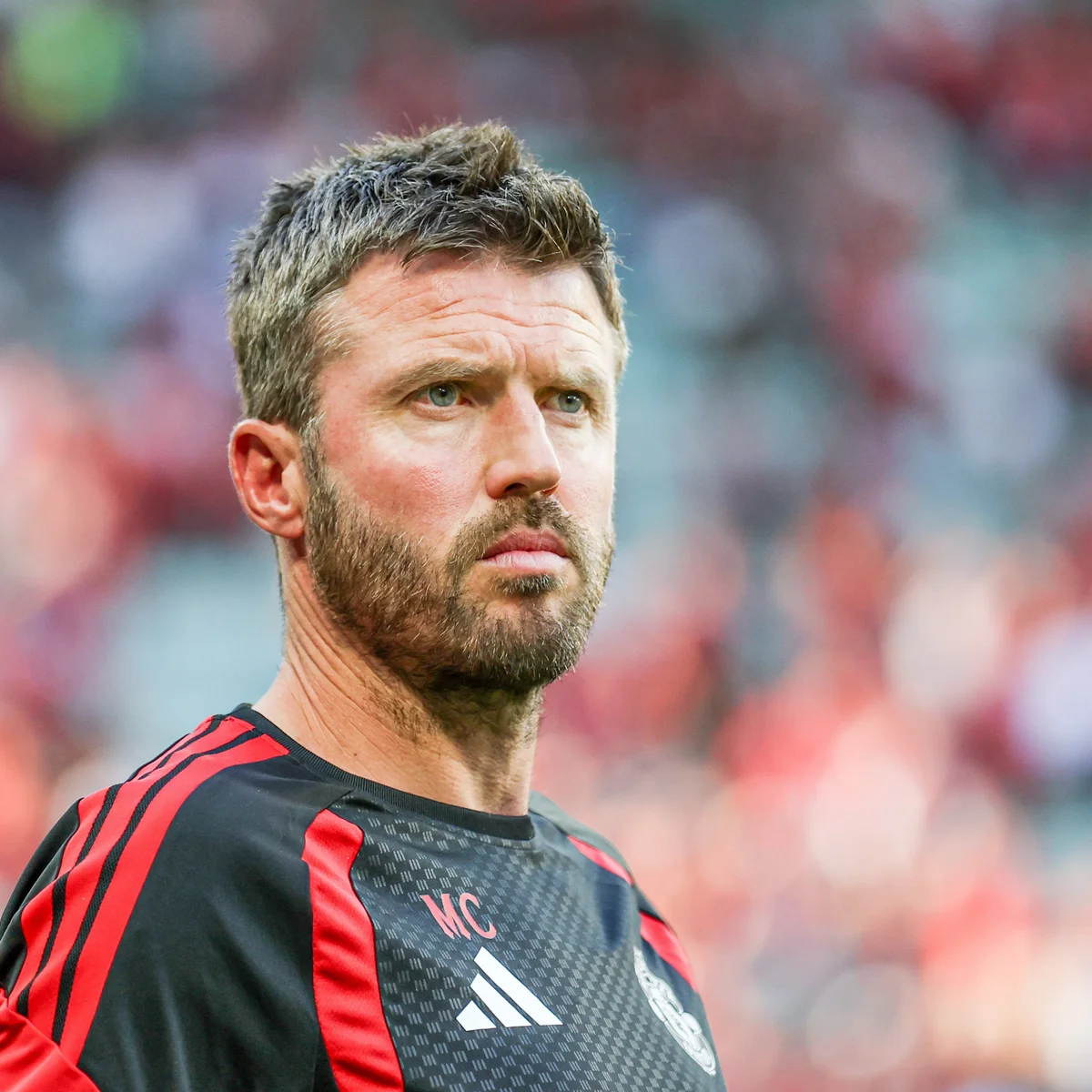
Michael Carrick Under Pressure: Is Football Giving Young Managers a Fair Chance?
At Manchester United, patience has become one of football’s rarest commodities.
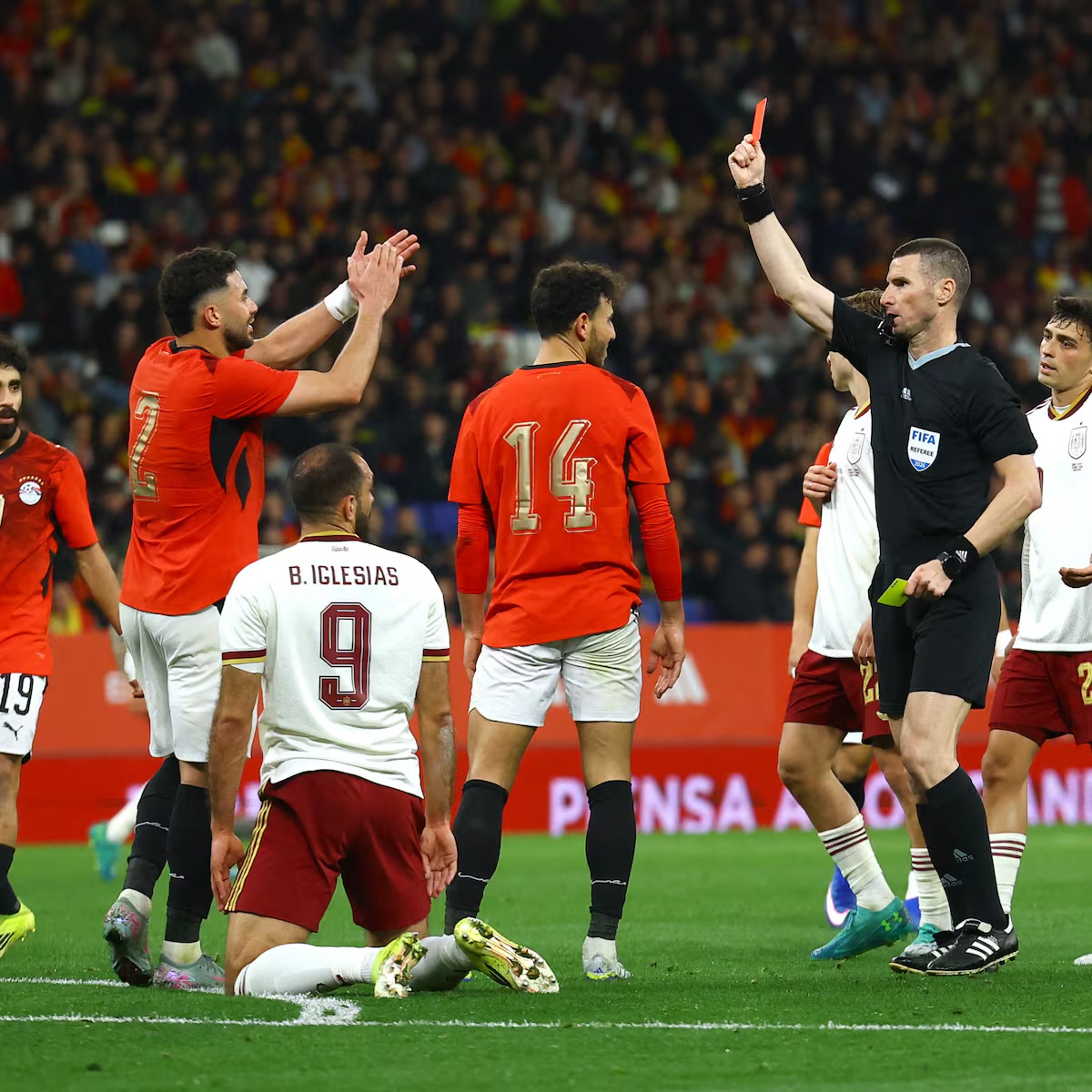
FIFA vs Spain: Are Football’s Anti-Racism Punishments Enough?
The Spanish Football Federation (RFEF) has confirmed that it will take its case to the Court of Arbitration for Sport (CAS) after FIFA rejected its appeal against sanctions imposed over Islamophobic chants during Spain’s friendly against Egypt in Barcelona on 31 March 2026.
Manchester city's 115-charge saga: what punishment would truly fit the crime?
If Manchester City’s financial-rule breaches are upheld on appeal, what punishment would truly fit the case?