FIFA vs Spain: Are Football’s Anti-Racism Punishments Enough?
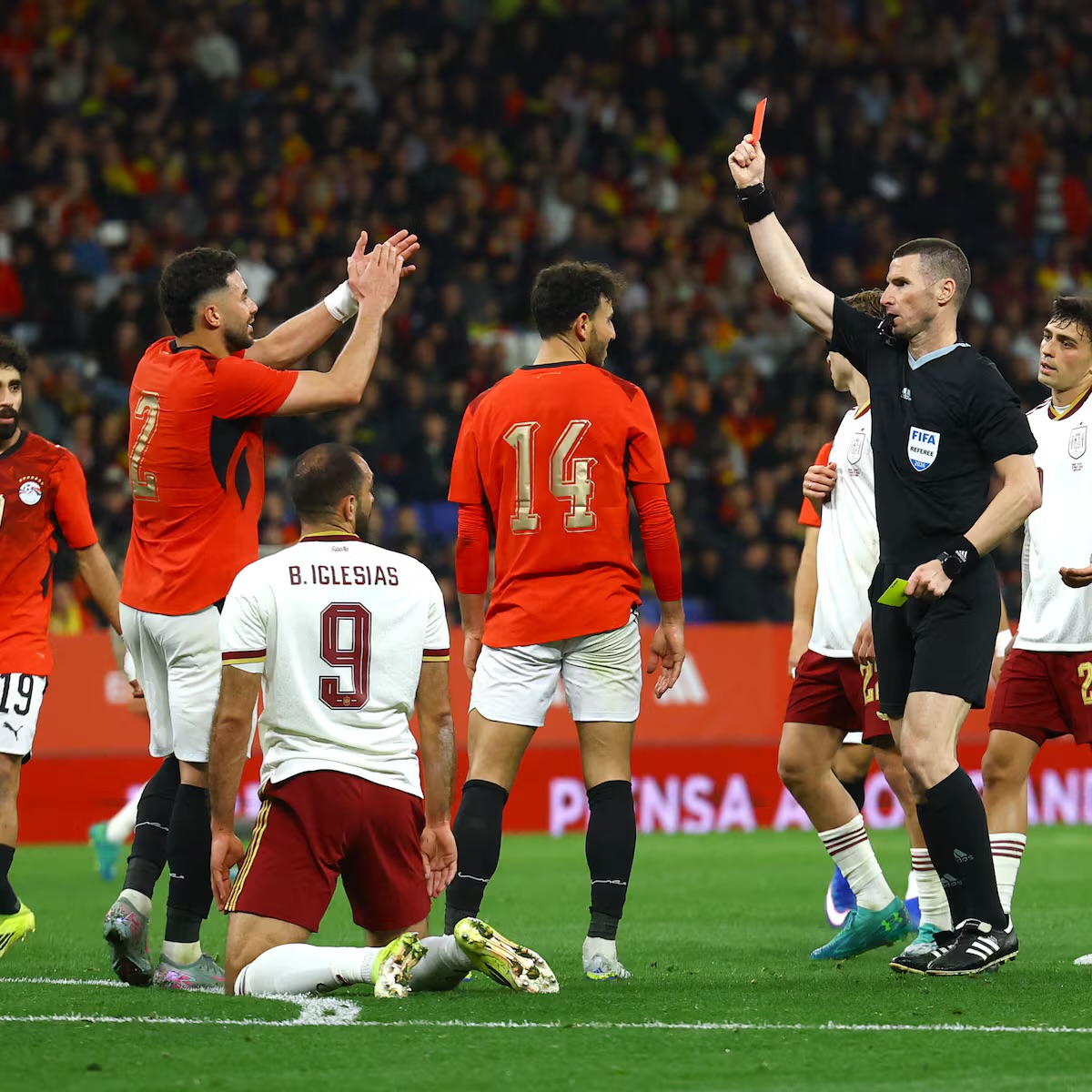
The Spanish Football Federation (RFEF) has confirmed that it will take its case to the Court of Arbitration for Sport (CAS) after FIFA rejected its appeal against sanctions imposed over Islamophobic chants during Spain’s friendly against Egypt in Barcelona on 31 March 2026.
FIFA vs Spain: Are Football’s Anti-Racism Punishments Enough?
By Pau Ribas
Football has spent years promising to eradicate discrimination from its stadiums. Yet whenever discriminatory chants return, the same uncomfortable question follows: are the punishments imposed by football’s governing bodies actually changing anything?
Spain’s latest disciplinary dispute with FIFA has brought that question back into focus.
The Spanish Football Federation (RFEF) has confirmed that it will take its case to the Court of Arbitration for Sport (CAS) after FIFA rejected its appeal against sanctions imposed over Islamophobic chants during Spain’s friendly against Egypt in Barcelona on 31 March 2026.
FIFA fined the federation $20,000 and ordered the closure of at least 15 per cent of the available seats at Spain’s next home friendly. The decision followed chants targeting Muslims during the goalless match at the RCDE Stadium. Reuters reported that FIFA rejected Spain’s argument that the incident should be assessed under a different provision of its disciplinary code.
The controversy is no longer simply about what a section of supporters sang. It is about accountability, proportionality and whether football’s disciplinary system can deliver meaningful change.
When football becomes a platform for discrimination
During the match, some supporters chanted, “If you don’t jump, you’re a Muslim.” The chant was heard more than once, prompting stadium announcements and messages on the scoreboard warning against discriminatory behaviour.
Lamine Yamal, Spain’s Muslim winger, condemned the incident, describing the behaviour as disrespectful and intolerable. Spain’s head coach, Luis de la Fuente, also denounced the chants.
The Spanish federation says it detected the misconduct through its own monitoring systems, acted to discourage the behaviour and cooperated with authorities to identify those responsible.
These actions matter. A federation that responds promptly should be able to demonstrate what it did, when it did it and whether those measures were effective.
But a response during a match cannot automatically erase the harm caused by discriminatory behaviour. Nor does a warning on a stadium screen guarantee that similar incidents will not happen again.
That is the challenge football faces: preventing discrimination requires more than condemning it after the fact.
Should an entire federation pay for the actions of a few?
The RFEF argues that it acted promptly and effectively and considers FIFA’s punishment disproportionately severe. Its position raises a legitimate question about collective responsibility.
If a small group of supporters engages in discriminatory conduct, should thousands of other spectators face restricted access because of their actions?
There is a case for holding football associations responsible for the behaviour of their supporters. Federations organise matches, oversee security arrangements and have a duty to create environments in which players and spectators can participate without discrimination.
Without meaningful consequences, associations may lack sufficient incentive to invest in prevention, identification and enforcement.
Yet collective sanctions also have limitations. They can affect innocent supporters while leaving the individuals responsible for the chants unidentified or unpunished.
The issue, therefore, is not whether discrimination should carry consequences. It should. The more difficult question is how to make those consequences effective, proportionate and directed towards preventing repetition.
FIFA’s rules and the question of consistency
FIFA’s disciplinary committee rejected the argument that the chants should be treated under Article 17, which concerns political, ideological, religious or offensive messages, rather than Article 15, which addresses discrimination.
FIFA’s reasoning was that a term need not be an explicit slur to become discriminatory. Its meaning can depend on the context in which it is used, including whether it functions as an insult or a marker of inferiority. Al Jazeera reported the details of that reasoning.
This distinction is important. Discrimination cannot be assessed simply by examining individual words in isolation; the context, intent and manner of their use also matter.
However, football authorities must apply their disciplinary framework consistently. Where sanctions differ between cases, clear explanations of the relevant circumstances help associations and supporters understand the standards being enforced.
Spain’s appeal to CAS now provides an avenue for independent sports arbitration to examine the dispute. The outcome remains to be determined.
Beyond fines and closed seats
The effectiveness of anti-discrimination measures should not be judged solely by the size of a fine or the number of seats closed.
Football authorities should assess whether offenders are identified, whether clubs and federations improve preventative measures, and whether repeat incidents decline. Stadium education, effective reporting mechanisms, targeted sanctions and cooperation with law enforcement can all contribute to a stronger response.
There is also a responsibility on supporters. Football culture is shaped not only by players and governing bodies but by the people in the stands. Remaining silent when discriminatory behaviour occurs can allow it to become normalised.
At the same time, football authorities must avoid treating every incident as identical. Sanctions should reflect the seriousness of the conduct, the circumstances, the response and any relevant history.
The real test begins now
Spain’s decision to take the case to CAS means the dispute is not over. Whatever the final outcome, the underlying issue will remain: how can football punish discrimination without relying on measures that are primarily symbolic?
The sport cannot promise inclusion while allowing religious identity to become a weapon for taunting opponents or spectators. Equally, its disciplinary system must be transparent enough to command confidence from those expected to follow it.
Fines and stadium restrictions can send a message. Their lasting value, however, depends on whether they help prevent the next incident.
Football does not need stronger statements alone. It needs sanctions that are fair, consistent and capable of changing behaviour.
Until that happens, every new controversy will raise the same question: is football genuinely confronting discrimination, or simply managing the fallout when it happens?
Read next
Stories you should not miss

Related stories

Published Saturday, 17 October 2026. Published through the Nisty Football newsroom.
Fan reaction
Comments (0)
Leave a comment
No account needed · 0 approved
0/1500 characters · comments are reviewed before publication
More from Nisty Football
Related stories
David Raya Explains What Sets Arsenal Apart in Premier League Title Battle
David Raya has outlined what gives Arsenal the edge over their title rivals, insisting hunger remains high despite recent silverware.
The Balogun Controversy Has Forced FIFA to Revisit Its Rules. What Went Wrong?
But if the rules are being reconsidered after such a high-profile controversy, an important question remains: what went wrong in the first place?
WHAT FIFA KNEW BEFORE NIGERIA LOST TO DR CONGO
The Super Eagles’ defeat to DR Congo was painful enough. The revelations surrounding Lionel Mpasi’s eligibility have turned that heartbreak into a much bigger question about football’s governing system.

Champions League Remains Barcelona's Ultimate Ambition, Says Gaizka Mendieta
Former Spain midfielder Gaizka Mendieta believes the UEFA Champions League remains the priority target for Barcelona this season.