The Balogun Controversy Has Forced FIFA to Revisit Its Rules. What Went Wrong?
But if the rules are being reconsidered after such a high-profile controversy, an important question remains: what went wrong in the first place?
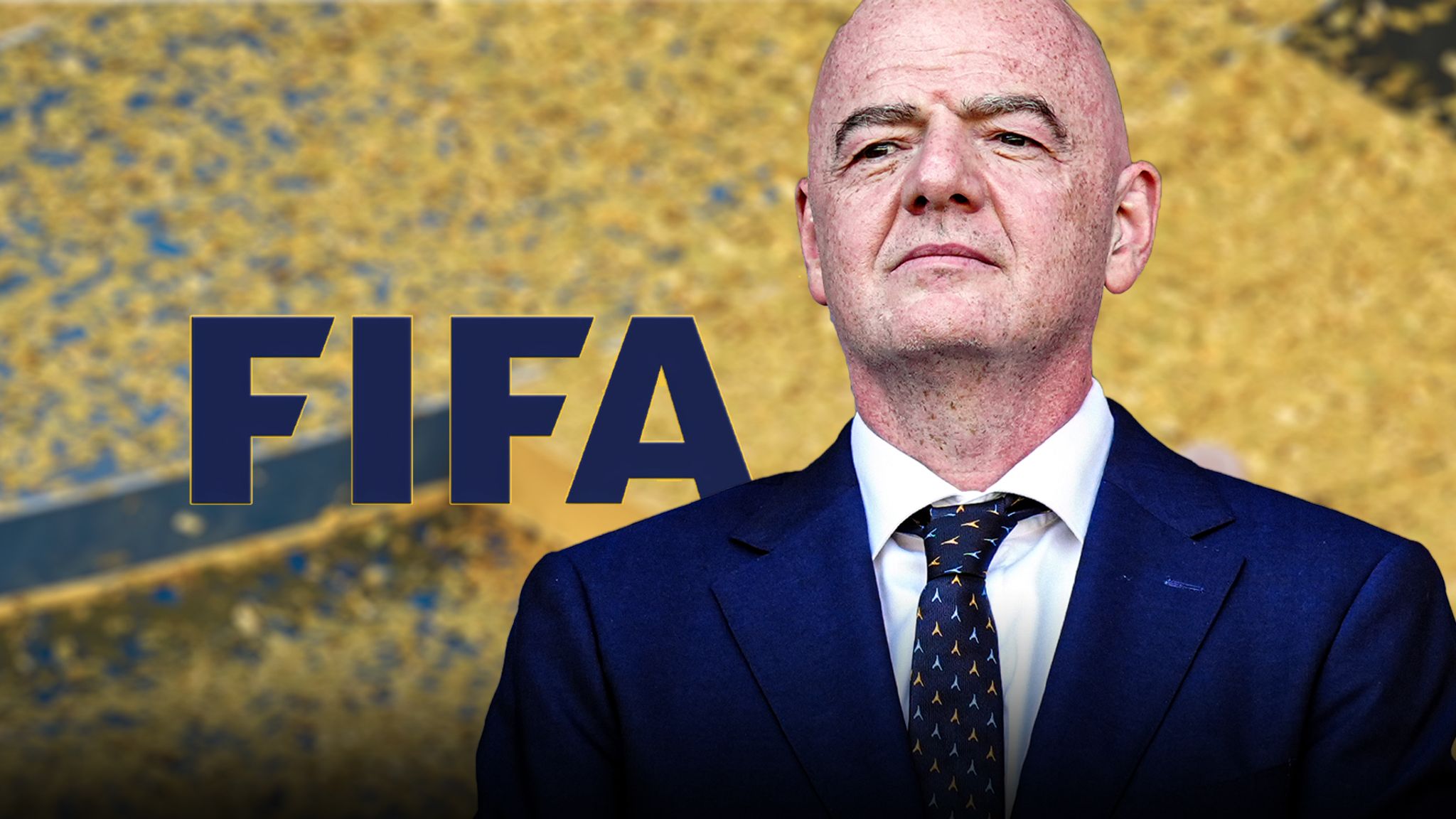
The Balogun Controversy Has Forced FIFA to Revisit Its Rules. What Went Wrong?
By James Mbokani
Football’s disciplinary rules are supposed to be clear, consistent and immune to the influence of powerful individuals. Yet the controversy surrounding Folarin Balogun’s red card at the 2026 FIFA World Cup has raised uncomfortable questions about whether those principles were upheld when they mattered most.
FIFA has now agreed to review Article 27 of its Disciplinary Code following concerns raised by the Royal Belgian Football Association (RBFA). The proposed amendment is expected to be submitted for approval at the FIFA Council meeting in Doha on 16 December 2026. The development represents a significant step in a dispute that has grown far beyond one player’s availability for a knockout match.
But if the rules are being reconsidered after such a high-profile controversy, an important question remains: what went wrong in the first place?
The decision that sparked a storm
The controversy began when Balogun received a straight red card during the United States’ round-of-32 match against Bosnia and Herzegovina at the 2026 World Cup. Under the normal disciplinary procedure, the dismissal triggered an automatic one-match suspension, threatening to rule the American forward out of the subsequent encounter with Belgium.
FIFA’s independent Disciplinary Committee subsequently suspended the implementation of that ban for a probationary period of one year, allowing Balogun to feature against Belgium.
The decision drew immediate scrutiny because Article 27 permits disciplinary sanctions to be suspended in exceptional circumstances. The central issue was not simply whether FIFA possessed the authority to apply the provision, but why the circumstances of this particular case justified its use.
Belgium’s football authorities questioned the transparency of the process and sought an explanation of the criteria applied. Their concerns became more serious after United States President Donald Trump publicly acknowledged asking FIFA president Gianni Infantino to review the situation.
The timing raised questions about the independence of football’s disciplinary process. However, the reported contact does not, by itself, establish that Trump influenced the committee’s decision. FIFA has maintained that its judicial bodies make decisions independently.
That distinction matters. Football governance must be scrutinised rigorously, but allegations of improper influence must be supported by evidence rather than assumption.
Why Belgium is demanding answers
For the Belgian federation, the issue extends beyond the outcome of one World Cup match.
The RBFA has sought clarity on three fundamental questions: whether external interference occurred, what exceptional circumstances justified the suspension, and whether national associations will have the right to be heard in comparable disciplinary cases.
Following the FIFA Council meeting in Zurich on 15 October, the Belgian federation confirmed that FIFA had committed to amending Article 27 and providing further information about the specific circumstances of the Balogun case.
The proposed amendment is important, but changing a regulation will not automatically resolve every concern.
Football associations need to understand how exceptional provisions are applied. Players need certainty about the consequences of disciplinary decisions. Supporters deserve confidence that the same standards apply regardless of a country’s influence, commercial importance or position within the sport.
Without clear criteria and transparent explanations, even a legally permissible decision can damage confidence in the system.
Will changing the rule solve the problem?
FIFA’s planned review presents an opportunity to strengthen the disciplinary framework.
The governing body could establish clearer limits on when automatic suspensions may be deferred, require written explanations for exceptional decisions, and introduce stronger safeguards against actual or perceived external interference.
It must also consider procedural fairness. If a decision directly affects another national association’s competitive interests, should that association have a formal right to be heard before the decision is finalised?
These are not minor administrative questions. They concern the credibility of international competition.
However, FIFA should avoid allowing one controversial case to produce poorly considered regulations. Any amendment must be carefully drafted, consistently applied and clear enough to prevent similar disputes in future tournaments.
The proposed changes still require approval. Until that process is completed, it would be premature to describe the controversy as resolved.
The bigger question facing FIFA
The Balogun case arrives at a time when FIFA’s leadership is facing wider scrutiny over governance and decision-making. The controversy has intensified attention on Infantino and the safeguards surrounding the organisation’s disciplinary structures.
The challenge for FIFA is therefore bigger than defending the legality of one decision. It must demonstrate that its rules are applied consistently and that exceptional circumstances are not a route to unequal treatment.
There is no evidence that a player should be punished more harshly because of his nationality, nor should political prominence become a reason for leniency. The standard must be the same for everyone.
Balogun’s case has exposed a weakness in public confidence that a revised regulation alone may not repair. FIFA must explain what happened, establish clear safeguards and show that future decisions will stand on their merits.
Football cannot demand respect for its rules while leaving supporters uncertain about how those rules are applied.
The proposed amendment is an opportunity to restore confidence. Whether FIFA takes that opportunity seriously will matter far longer than the controversy that started it.
Read next
Stories you should not miss

Published Saturday, 17 October 2026. Published through the Nisty Football newsroom.
Fan reaction
Comments (0)
Leave a comment
No account needed · 0 approved
0/1500 characters · comments are reviewed before publication
More from Nisty Football
Related stories
Man City Found Guilty. Two Weeks Later: "94% of Clubs Are Losing Money." Coincidence?
Ask yourself who gains from the headline "the whole game is broken." It isn't Burnley or Wrexham. It's the club that needs the public to see its guilty verdict as one more symptom of a rotten system.
A Man Up, a Goal Ahead, Yet No Victory: Has Michael Carrick Run Out of Answers at Manchester United?
is Carrick struggling to find the answers, or are Manchester United’s problems deeper than their manager?
Are Premier League Rules Only for the Clubs Without Billionaire Owners?
Manchester City’s 115 charges and the prolonged wait for resolution raise serious questions about financial fairness, accountability, and the Premier League’s credibility.
What Messi’s Farewell Tells Us About Ronaldo’s Unfinished Story
And now, as their international careers approach their final chapters, perhaps the most fascinating comparison is no longer about what they achieved. It is about how their stories are ending.”