The Pressing Trap: How Football’s Most Fearsome Weapon Can Become Its Biggest Weakness
High pressing can suffocate opponents, force mistakes and create goalscoring opportunities. But what happens when the press is beaten? From Manchester City's defensive struggles to Benfica's tactical discipline and Guardiola's solutions against Arsenal, we examine how football's most aggressive defensive weapon can quickly become its biggest weakness.
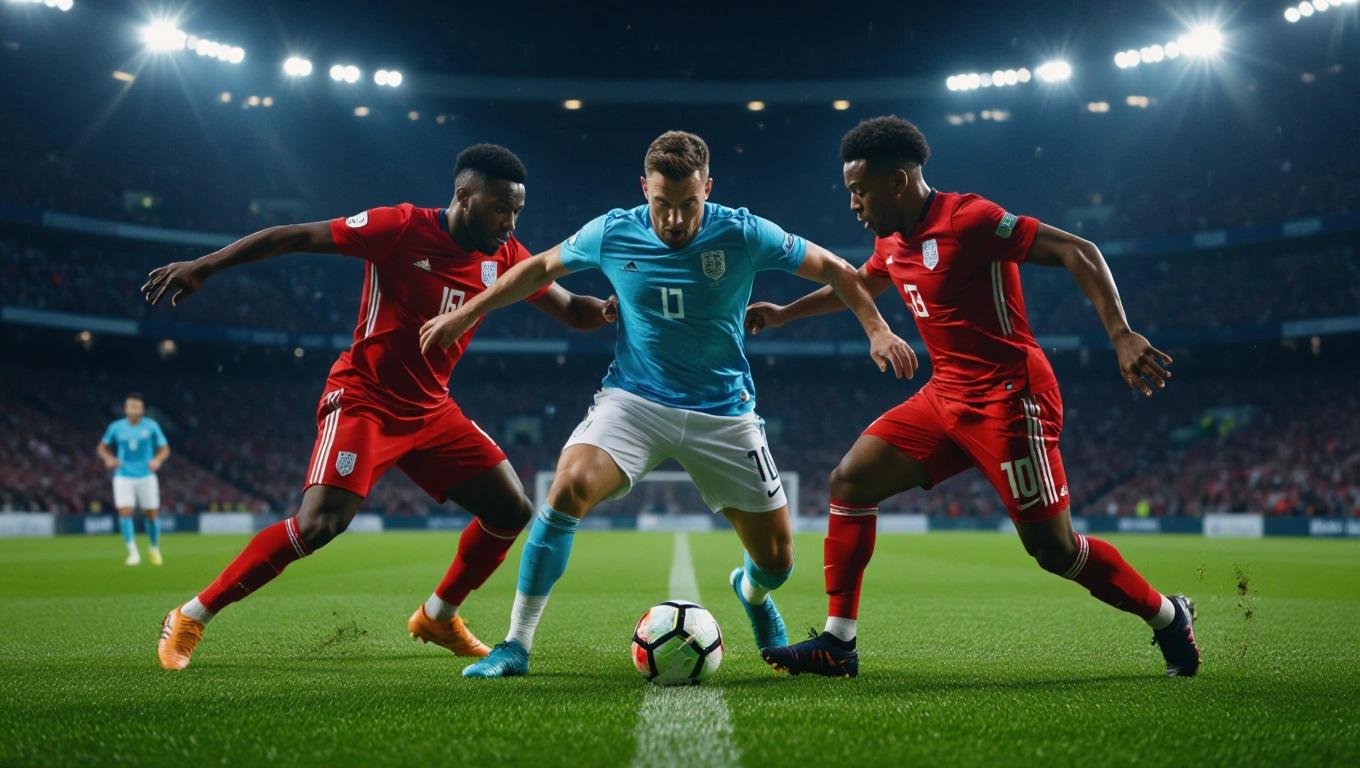
The Pressing Trap: How Football’s Most Fearsome Weapon Can Become Its Biggest Weakness
By Franklin Egelonu
Imagine a team pushing six players into the opposition's half, closing down passing lanes, suffocating the goalkeeper and forcing defenders into hurried decisions. The midfield steps higher, the defensive line follows, and every available passing option appears to disappear.
For a moment, the opposition looks trapped.
Then comes one pass.
A centre-back finds a midfielder who has escaped his marker. One touch takes him beyond the first wave of pressure. Suddenly, the pitch opens up. The pressing team is running towards its own goal, defenders are exposed, and the very intensity that was supposed to give it control has become its biggest problem.
This is the high-pressing paradox.
Few defensive strategies in modern football are as effective or as visually compelling as a well-executed high press. It can suffocate opponents, force mistakes and create scoring opportunities in dangerous areas. But when the coordination breaks down, the same approach can leave enormous spaces for opponents to exploit.
The difference between an effective press and a defensive disaster is not necessarily how many players chase the ball. It is how well the entire team moves together, how intelligently it protects the spaces behind the pressure and, perhaps most importantly, what happens when the opposition escapes.
WHEN THE PRESS BECOMES AN OPEN INVITATION: MANCHESTER CITY'S DEFENSIVE PROBLEMS
Manchester City's defeats against Tottenham Hotspur and Brighton in August 2025 offered a fascinating illustration of how aggressive pressing can expose even the most technically accomplished teams.
In a tactical analysis published by BBC Sport on September 1, 2025, football tactics correspondent Umir Irfan highlighted a recurring weakness in City's defensive approach under Pep Guardiola.
City attempted to press opponents high when they built from the goalkeeper. However, the distances their full-backs had to cover created opportunities for opponents to exploit the spaces around them.
The problem was particularly evident in the sequences leading to Tottenham's opening goal and Brighton's second.
Opponents moved possession towards wide defenders who had enough time to turn and face forward. A player dropping deeper then dragged City's full-back away from his defensive position, triggering a chain reaction across the backline.
The remaining defenders had to shift across to cover the exposed space, leaving the centre-backs responsible for defending wider areas than they would normally occupy.
That was where the danger emerged.
The opposition could attack the spaces between defenders before City had enough time to reorganise.
It is an important tactical distinction. City's problem was not simply that their defensive line was too high. Their pressing movements created an imbalance in the structure behind the ball.
A successful high press should make the opposition uncomfortable without making the pressing team vulnerable to one well-executed forward pass.
When the first wave is beaten, the midfield must be close enough to delay the attack or recover possession. The defensive line must also maintain the distances necessary to protect the spaces behind it.
Without that coordination, pressing becomes an invitation to counter-attack.
THE LONG BALL IS BACK AS A WEAPON AGAINST THE PRESS
One of the biggest misconceptions about escaping a high press is that teams must always produce an elaborate sequence of short passes.
Sometimes, the simplest solution is to go long.
This does not mean abandoning possession or resorting to aimless clearances. A carefully directed forward pass can eliminate several pressing players at once, particularly when the receiving team has prepared to compete for the first and second balls.
The important detail is what happens after the ball travels forward.
A long pass without supporting runners can simply return possession to the opposition. But when teammates are positioned to contest the initial challenge, collect the second ball and attack the spaces left behind, direct football becomes a calculated tactical weapon.
Benfica's 1-0 victory over Bayern Munich at the 2025 FIFA Club World Cup provides another useful perspective.
Andreas Schjelderup scored the decisive goal as Benfica secured victory on June 24, 2025. Bayern enjoyed considerably more possession, but Benfica demonstrated that territorial dominance does not automatically translate into control of a football match.
FIFA's Technical Study Group report provides further tactical context, highlighting Benfica's defensive organisation and attacking transitions.
The lesson is not that long balls alone defeated Bayern. Rather, Benfica showed the importance of recognising when to defend compactly, when to move forward and how to exploit opportunities during transitions.
Teams facing aggressive pressing need more than one route out of trouble.
A goalkeeper can invite pressure before finding a forward. A centre-back can switch play towards an unmarked full-back. A midfielder can carry the ball beyond the first pressing line.
The best solution depends on the opponent's positioning and the space available.
HOW MANCHESTER CITY SOLVED ARSENAL'S PRESS
Escaping pressure does not always require a long ball. Sometimes, the answer is to manipulate the opponent's positioning until an additional passing option becomes available.
Manchester City's 2-1 victory over Arsenal on April 19, 2026, offered an excellent example.
Mikel Arteta's team began with an aggressive defensive structure designed to disrupt City's build-up. Martin Ødegaard and Kai Havertz formed the initial line of pressure, while Declan Rice and Martín Zubimendi worked to restrict the influence of Rodri and Bernardo Silva.
Arsenal attempted to force City's defenders towards the touchlines, limiting their ability to progress centrally.
The strategy initially produced a reward. Havertz capitalised on a mistake by goalkeeper Gianluigi Donnarumma to equalise after Rayan Cherki had given City the lead.
However, Guardiola's team gradually found a solution.
City's centre-backs began spreading wider, while Rodri and Bernardo Silva dropped deeper to provide additional passing options.
This created a dilemma for Arsenal's midfield.
If Rice and Zubimendi followed the dropping midfielders, spaces would open in the centre of Arsenal's defensive structure. If they maintained their original positions, Rodri and Bernardo could receive possession with greater freedom and turn towards the attacking half.
City were effectively creating an additional passing option against Arsenal's first line of pressure.
Once their midfielders received the ball facing forward, players such as Rayan Cherki and Erling Haaland could operate between Arsenal's defensive and midfield lines.
The statistical difference reflected City's growing control. They finished with 61 per cent possession and 28 attacks into the penalty area, compared with Arsenal's 39 per cent possession and 18 attacks into the area.
But the most revealing moment came with the winning goal.
As Arsenal attempted to press again, Donnarumma quickly released Nico O'Reilly with a throw. O'Reilly received the ball around halfway, and City progressed rapidly through the left side before Haaland finished the move in the 65th minute.
It was a reminder that escaping pressure is not simply about surviving an opponent's press. It is about recognising the opportunity to turn that pressure into an attacking advantage.
Arsenal committed players forward to win the ball. City found the space behind them and punished the commitment.
REST DEFENCE: THE DIFFERENCE BETWEEN RISK AND RECKLESSNESS
The examples above highlight why rest defence has become such an important part of modern tactical planning.
Rest defence refers to the defensive structure a team maintains while attacking, ensuring it has enough players in appropriate positions to protect against counter-attacks when possession is lost.
Consider a team playing with two attacking full-backs.
Both move forward to provide width, leaving the centre-backs and defensive midfielder responsible for protecting the spaces behind them.
If possession is lost, those players must prevent the opposition from progressing freely while their teammates recover their positions.
But what happens if the defensive midfielder has also moved forward and the centre-backs are too far apart?
The opposition can exploit the central space before the recovering players have time to reorganise.
This is why successful teams pay attention to players who are not directly involved in the attack.
A defensive midfielder might remain behind the ball. One full-back might move into a central position, or a centre-back might adjust his position to provide cover for a teammate stepping forward.
These decisions are not necessarily defensive limitations. They give the rest of the team greater freedom to attack because there is adequate protection against losing possession.
The relationship between pressing and rest defence is particularly important.
A team that presses aggressively must be prepared to defend the consequences of being beaten. Otherwise, its attacking ambition can quickly become a defensive liability.
PRESSING IS ABOUT RECOGNISING THE RIGHT MOMENT
There is another important distinction between effective pressing and simply chasing the ball.
The best pressing teams recognise specific situations that offer opportunities to recover possession.
These are commonly known as pressing triggers.
A backward pass, a poor first touch, a receiver facing his own goal or a pass towards the touchline can all encourage the defending team to increase its pressure.
For example, when an opponent receives the ball facing his own goal, he has fewer immediate options for progressing forward. Nearby players can use that moment to close down space and restrict his passing choices.
However, pressing too early can be equally dangerous.
If a striker commits forward without support from the midfield, the opposition can play through the space he has abandoned. Similarly, if a midfielder moves forward to press without sufficient cover behind him, a simple pass can expose the defensive line.
Effective pressing is therefore about timing, positioning and collective understanding rather than the number of players chasing possession.
Coaches must also recognise when to abandon an unsuccessful pressing sequence and recover into a more compact defensive block.
Sometimes, allowing an opponent to circulate possession in a harmless area is better than committing additional players and exposing dangerous spaces.
Knowing when not to press can be just as important as knowing when to press.
THE REAL CHALLENGE IS CONTROLLING WHAT HAPPENS NEXT
High pressing remains one of football's most influential tactical approaches, but its effectiveness should not be judged solely by how often a team wins possession in the opposition's half.
Manchester City's problems against Tottenham and Brighton showed how poor coordination can expose the spaces behind an aggressive press.
Benfica's victory over Bayern demonstrated the value of defensive organisation and carefully managed attacking transitions against a dominant opponent.
Meanwhile, City's tactical adjustments against Arsenal illustrated how positional rotations, technical quality and intelligent movement can help a team overcome an aggressive pressing structure.
These examples reveal an important reality about modern football: every tactical advantage carries a potential weakness.
A high press can create immediate scoring opportunities, but it can also leave defenders isolated. A high defensive line can compress the pitch, but it can become vulnerable to runners attacking the space behind it.
Ultimately, the best pressing teams are not necessarily those that chase the ball most aggressively.
They are the teams that understand when to press, how to support the first defender and, perhaps most importantly, how to protect themselves when the opposition finds a way through.
Winning the ball is only half the job. Knowing what to do when you fail to win it is what separates a well-organised pressing team from an exposed one.
---
Sources and further reading
- BBC Sport – City's pressing concern
- FIFA Training Centre – Analysing solutions against teams that press high
- FIFA – Benfica 1-0 Bayern Munich: Match report
- Coaches' Voice – Manchester City 2-1 Arsenal: Tactical analysis
Read next
Stories you should not miss

Related stories
More on Manchester City

Published Friday, 13 November 2026. Published through the Nisty Football newsroom.
Enjoyed it? Tell us — and pass it on
The discussion
What do you think? (0)
Leave a comment
No account needed · 0 approved
0/1500 characters · comments are reviewed before publication
The Daily Kick-off
Football in your inbox, every morning at 7am
One email: the overnight transfer moves, the tactical story of the night, and every fixture that matters today. No noise, no clickbait.
More from Nisty Football
Related stories
Manchester city's 115-charge saga: what punishment would truly fit the crime?
If Manchester City’s financial-rule breaches are upheld on appeal, what punishment would truly fit the case?

PEP GUARDIOLA: THE GENIUS, THE SCANDALS & THE QUESTIONS
The trophies are undeniable. So are the questions surrounding Barcelona, Manchester City and the man who stood at the centre of both eras.
Manchester United Keep Sacking Managers. But Is Football Media Part of the Problem?
Manchester United’s managerial crisis raises a difficult question: are the club’s hierarchy and football pundits making long-term success harder to achieve? From José Mourinho to Erik ten Hag, repeated managerial changes have failed to restore sustained dominance. While the board must answer for its decisions, relentless media pressure also deserves scrutiny. Arsenal’s patience with Mikel Arteta and Brighton’s backing of Fabian Hürzeler offer valuable lessons.
Chelsea Had the Ball, Leeds Had the Game: How Farke's Side Turned Possession Into a Nightmare
Chelsea enjoyed more possession but Leeds United dominated the decisive moments, producing a ruthless 4–1 victory at Stamford Bridge through intelligent transitions and clinical finishing.