Arsenal 1–0 Hull City: How Arteta's Tactical Changes Finally Broke Hull's Resistance
Arsenal dominated possession but struggled to find a breakthrough against Hull City. Mikel Arteta's tactical adjustments, attacking substitutions and Martin Ødegaard's decisive finish eventually secured a hard-fought 1-0 victory.
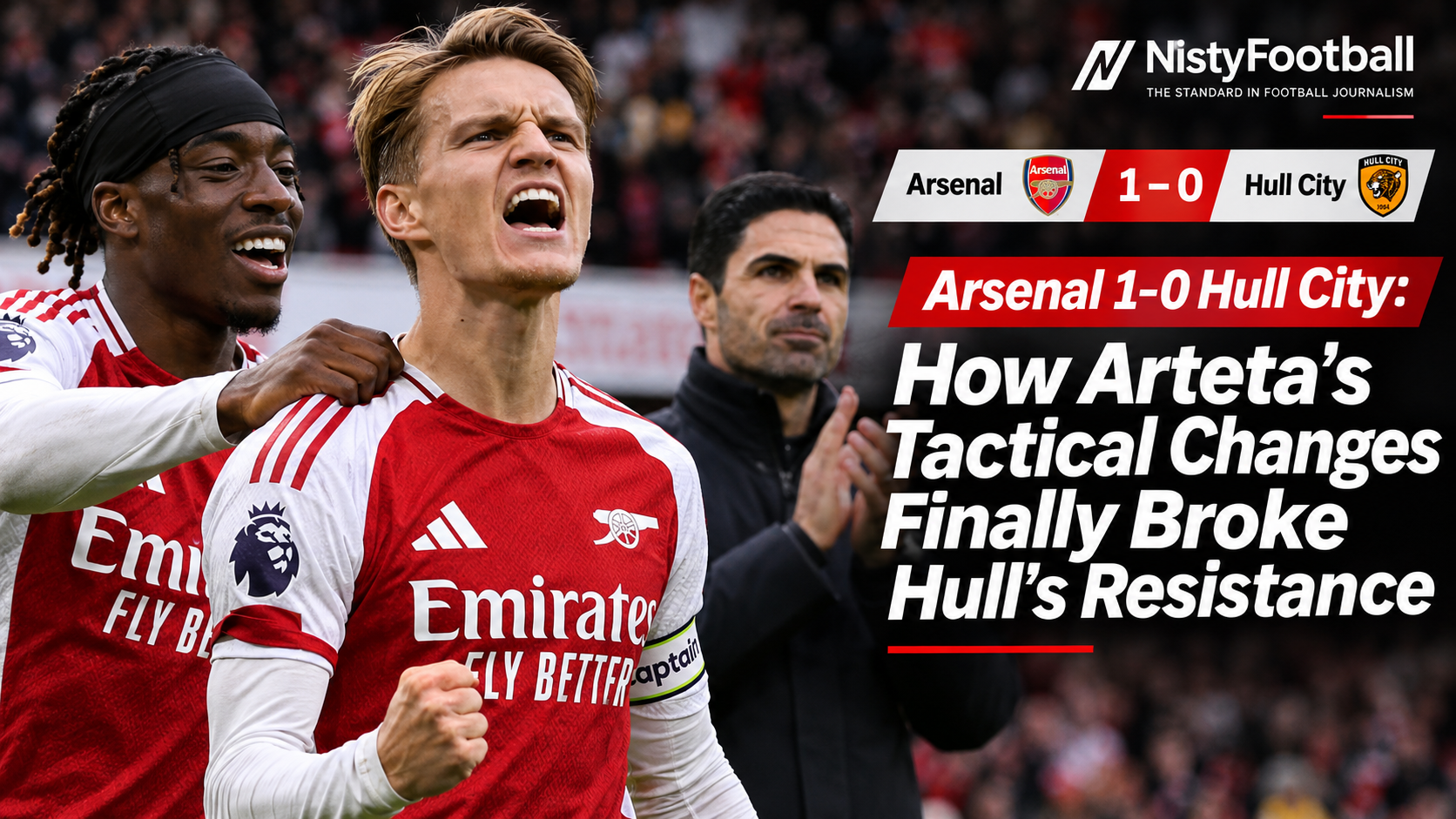
Arsenal 1–0 Hull City: How Arteta's Tactical Changes Finally Broke Hull's Resistance
By Rossi
Arsenal had the ball. They had the territory. They had the shots. Yet, for more than an hour against Hull City, Mikel Arteta's side could not turn their dominance into a goal.
At the Emirates Stadium on Saturday, 7 November 2026, Arsenal eventually found their breakthrough through Martin Ødegaard in the 72nd minute. The captain reacted quickest after Noni Madueke's effort was parried by Hull goalkeeper Konstantinos Tzolakis, giving the Premier League champions a hard-fought 1–0 victory.
But the scoreline tells only part of the story.
This was a game about patience, defensive organisation and, most importantly, Arteta's ability to recognise when his team's approach was no longer producing the desired result. Arsenal had controlled possession for long periods, but controlling a football match and finding a way to win it are two different things.
Against a disciplined Hull side, the difference eventually came through a change in tempo, fresh attacking options and a greater willingness to approach the game differently.
Hull Made Arsenal's Possession Uncomfortable
Arsenal started in a 4-2-3-1 formation, looking to control the game through their possession and midfield structure. Hull, meanwhile, organised themselves defensively, keeping enough players behind the ball to make central penetration difficult.
However, Hull did not simply spend the entire first half sitting on the edge of their penalty area. They pressed at different moments and looked for opportunities to attack whenever Arsenal's structure left spaces available.
That created an interesting contrast.
Arsenal controlled the ball, but Hull were capable of making the game uncomfortable whenever they recovered possession. The visitors were not interested in competing with Arsenal's possession numbers. Their priority was to remain organised, frustrate the hosts and exploit opportunities when they appeared.
At the other end, Arsenal struggled to create consistently clear openings. Their possession was impressive, but moving the ball around Hull's defensive structure was not the same as finding a way through it.
That distinction became the central tactical battle of the afternoon.
Arsenal had enough control to dictate where much of the game was played, but they lacked the cutting edge to make that control count.
The Numbers Show Arsenal's Dominance – But Also Their Problem
The statistics from the match underline just how much Arsenal controlled the contest.
According to the match data, the Gunners finished with 67% possession, 21 shots to Hull's seven and 10 shots on target compared with the visitors' two. Arsenal also recorded 14 shots inside the box to Hull's six, 44 touches in the opposition penalty area to Hull's 17, and 569 passes compared with Hull's 272.
Hull goalkeeper Konstantinos Tzolakis made nine saves.
On the surface, these numbers suggest a match Arsenal dominated from beginning to end.
But there is another important detail beneath those figures.
Arsenal registered approximately 1.08 expected goals (xG) despite taking 21 shots. That tells us something about the quality of their attacking opportunities. The volume of attempts was impressive, but it did not always translate into clear-cut chances.
Arsenal were reaching attacking areas. They were shooting, circulating possession and putting Hull under pressure. Yet the visitors continued to make them work for every meaningful opening.
This was not simply a case of Arsenal needing to attack more.
They needed to attack differently.
Arteta's First Adjustment Was About Tempo
There were no half-time substitutions, but Arsenal returned for the second half with greater urgency.
Their circulation became quicker, particularly in tighter areas, forcing Hull to defend repeated attacks around their penalty area. Against a compact defensive structure, moving the ball faster can be just as important as moving it forward.
Defenders must constantly adjust their positions, close spaces and react to movements around them. The longer they are forced to shift from one side to another, the more difficult it becomes to maintain the same defensive organisation.
Arsenal began asking Hull different questions.
However, Arteta still needed something more. Greater urgency had improved the attacking pressure, but the breakthrough had not arrived.
With approximately half an hour remaining, the Arsenal manager turned to his bench.
The Substitutions Changed Arsenal's Attacking Profile
In the 63rd minute, Arteta introduced Mikel Merino for Declan Rice and Viktor Gyökeres for Kai Havertz.
Six minutes later, Piero Hincapié replaced Riccardo Calafiori, while Eberechi Eze came on for Christos Tzolis.
These were not simply four fresh pairs of legs. They gave Arsenal different attacking qualities and more options in how they could approach Hull's defensive structure.
Gyökeres provided a more direct presence up front, offering Arsenal another option through the middle and around the penalty area. His physicality and willingness to attack spaces gave Hull's defenders a different problem to manage.
Merino brought fresh energy into midfield and another player capable of moving forward rather than simply recycling possession. His introduction added another dimension to Arsenal's attempts to sustain pressure around the opposition penalty area.
Eze offered something different between the lines. His ability to carry the ball, take on opponents and create opportunities in tight spaces gave Arsenal another creative outlet.
Hincapié, meanwhile, refreshed the left side and provided fresh legs in an area where Arsenal wanted to maintain their attacking pressure.
The result was an Arsenal side with greater variation in how it could attack Hull.
And that is the important tactical point.
Arteta did not necessarily need his team to have more possession. Arsenal already had plenty of it.
He needed them to make that possession more threatening.
Madueke and Ødegaard Finally Found the Opening
The breakthrough arrived in the 72nd minute.
Noni Madueke drove at the Hull defence and unleashed an effort towards goal. Tzolakis managed to make the initial save, but he could not hold the ball.
Ødegaard reacted quicker than everyone else.
The Arsenal captain followed the play, reached the rebound and finished to make it 1–0.
It was a straightforward finish in its execution, but an important goal in the context of the match.
Arsenal had spent more than an hour searching for a clean route through Hull's defensive organisation. Eventually, it took directness, individual acceleration, a shot from a dangerous area and excellent anticipation from Ødegaard to break the resistance.
The substitutions had not magically created the goal, but they had helped Arsenal increase the variety and intensity of their attacking play.
Madueke's directness provided the immediate threat, while Ødegaard's awareness ensured that the goalkeeper's save did not become another wasted opportunity.
It was a reminder that attacking pressure only becomes meaningful when somebody is ready to take advantage of the opportunities it creates.
Hull's Goalkeeper Kept the Game Alive
While Arsenal's attacking adjustments deserve attention, Konstantinos Tzolakis also deserves considerable credit.
Nine saves is not simply a statistic to place at the bottom of a match report. It helps explain why Arsenal had to work so hard for their goal.
Hull's defensive organisation forced Arsenal into difficult attempts, while their goalkeeper repeatedly prevented those efforts from becoming goals.
His performance gave the visitors a chance of taking something from the Emirates, even as Arsenal continued to dominate possession and territory.
Even after conceding, Hull were not completely out of the contest.
Arsenal continued to create opportunities, including a late attacking move involving Eze, Ødegaard and Merino that released Madueke. The winger, however, could not finish the opportunity.
That sequence offered another example of how the attacking picture had changed.
Arsenal were now combining players in different areas, creating more variety in their movements and finding different ways to approach the opposition penalty area.
Hull had spent much of the afternoon dealing with Arsenal's possession. Now they also had to contend with a more unpredictable attacking approach.
Arsenal's Biggest Strength Was Their Response
There is an easy way to describe this match: Arsenal dominated Hull and eventually won.
But that would miss what actually made the contest interesting.
Arsenal's control was rarely in question. The real issue was whether they could turn that control into enough quality chances against a disciplined opponent.
For a long period, the answer was no.
Arteta responded first by increasing the tempo, then by changing the personnel and attacking profiles.
Gyökeres, Merino, Eze and Hincapié gave Arsenal fresh options. Madueke continued to provide penetration from the right, while Ødegaard's anticipation eventually turned one of those attacking moments into the winning goal.
The statistics underline the extent of Arsenal's dominance: 21 shots and 10 on target, compared with Hull's seven and two respectively. Their 44 touches in Hull's penalty area, against the visitors' 17, also demonstrate how frequently the Gunners reached dangerous attacking positions.
However, the 1.08 expected goals figure remains equally revealing.
Arsenal did not create 21 equally dangerous opportunities. Hull made sure of that.
But the Gunners continued to adjust until they eventually found a way through.
Arsenal did not win because every attack was dangerous. They won because they kept changing the questions they were asking Hull until eventually one of the answers was wrong.
That may be the most encouraging part of the performance for Arteta.
The champions did not produce their most fluid attacking display. Hull made sure of that. But when the original approach was not producing the breakthrough, Arsenal found another way.
And in a season where title races can be decided by narrow margins, the ability to win a difficult game without being at your best can be just as valuable as a spectacular victory.
Ødegaard supplied the finish. Arteta's adjustments helped create the conditions for it.
That was the real story of Arsenal's 1–0 victory over Hull City.
---
Statistics source: Sofascore and match statistics.
Article by Rossi | NistyFootball
Read next
Stories you should not miss

Related stories
More on Arsenal
Published Sunday, 8 November 2026. Published through the Nisty Football newsroom.
Enjoyed it? Tell us — and pass it on
The discussion
What do you think? (0)
Leave a comment
No account needed · 0 approved
0/1500 characters · comments are reviewed before publication
The Daily Kick-off
Football in your inbox, every morning at 7am
One email: the overnight transfer moves, the tactical story of the night, and every fixture that matters today. No noise, no clickbait.
More from Nisty Football
Related stories

Manchester United Keep Sacking Managers. But Is Football Media Part of the Problem?
Manchester United’s managerial crisis raises a difficult question: are the club’s hierarchy and football pundits making long-term success harder to achieve? From José Mourinho to Erik ten Hag, repeated managerial changes have failed to restore sustained dominance. While the board must answer for its decisions, relentless media pressure also deserves scrutiny. Arsenal’s patience with Mikel Arteta and Brighton’s backing of Fabian Hürzeler offer valuable lessons.
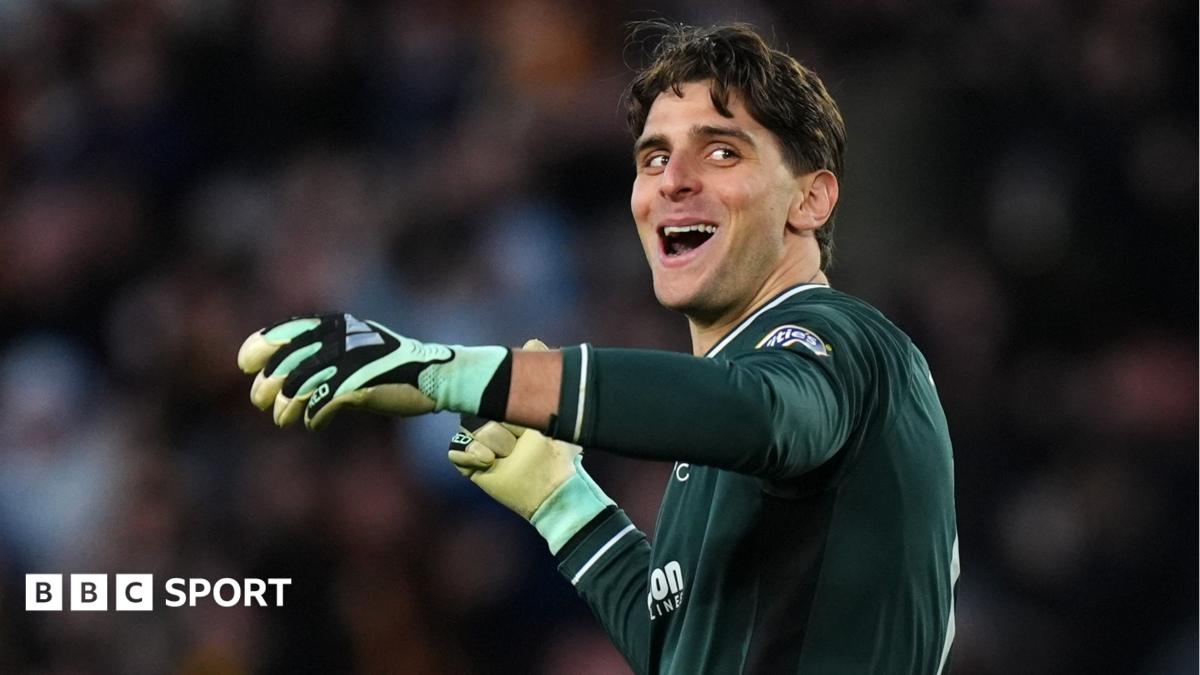
Tzolakis' Stunning Redemption
Hull goalkeeper Konstantinos Tzolakis bounced back from a 7-goal nightmare for Greece to produce a masterclass display against Brighton. What can young players learn from his remarkable redemption arc?
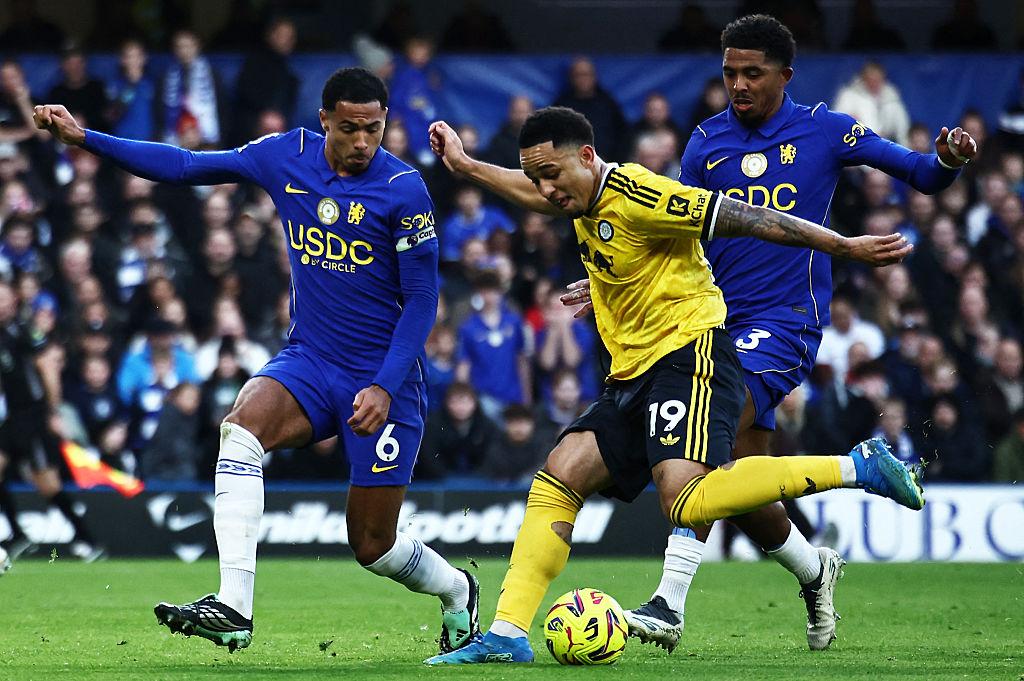
Chelsea Had the Ball, Leeds Had the Game: How Farke's Side Turned Possession Into a Nightmare
Chelsea enjoyed more possession but Leeds United dominated the decisive moments, producing a ruthless 4–1 victory at Stamford Bridge through intelligent transitions and clinical finishing.

How Newcastle’s Triple Substitution Turned Arsenal’s Advantage Around
Newcastle's second-half transformation against Arsenal demonstrated the importance of tactical flexibility, with Matthias Jaissle's triple substitution changing the momentum of an entertaining 2-2 encounter.