Real Madrid 5–1 PSV: The Half-Time Change That Turned a Warning Into a Rout
Inah Rossi Patrick examines how José Mourinho's half-time adjustments transformed Real Madrid's difficult Champions League encounter against PSV into a commanding 5–1 victory. From Bellingham's introduction to Madrid's devastating second-half attacking display, the tactical changes tell the real story.
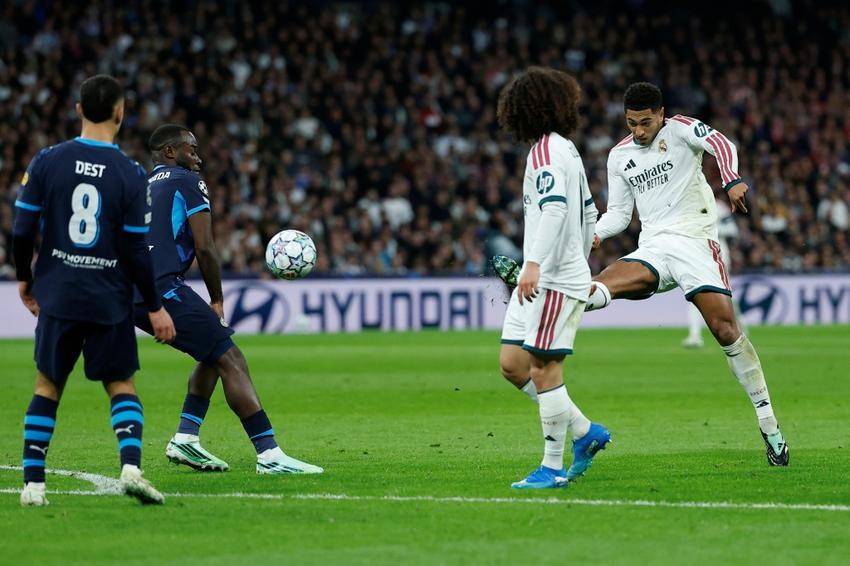
Real Madrid 5–1 PSV: The Half-Time Change That Turned a Warning Into a Rout
UEFA Champions League | Santiago Bernabéu | 24 November 2026
Real Madrid did not win this game in the first half.
At half-time, José Mourinho's side were trailing 1–0 to PSV. Forty-five minutes later, they had scored five goals and transformed a difficult Champions League evening into an emphatic victory.
That contrast tells the real story of the match.
The final score suggests a comfortable Real Madrid performance, but the first half was anything but comfortable. PSV found ways to exploit the spaces around Madrid's midfield and threaten whenever the home side lost its defensive balance.
Madrid finished with 62% possession, 24 shots and 4.79 expected goals (xG), compared with PSV's 10 shots and 1.69 xG. The numbers underline Madrid's attacking superiority, but they also demonstrate that PSV were far from passive participants.
The game changed because Madrid changed.
PSV's First-Half Plan Was About Exploiting the Space Around Madrid
PSV did not need to dominate possession to make Madrid uncomfortable. Their most dangerous moments came when they moved the ball quickly after Madrid's attacks broke down.
The problem for Madrid was not simply that space existed. It was how PSV exploited it.
When Madrid committed players forward, PSV looked to move beyond the first line of pressure and attack the spaces around midfield. This forced Madrid's defenders into difficult decisions about whether to step forward or protect the space behind them.
Ruben van Bommel came close to capitalising on that vulnerability early in the match when he found himself one-on-one with Thibaut Courtois. Madrid survived, but PSV continued to demonstrate that they could threaten without needing prolonged spells of possession.
The visitors eventually took the lead in the 32nd minute after VAR review awarded a penalty for Aurélien Tchouaméni's challenge on Sven Mijnans. Ivan Perišić converted from the spot.
Madrid entered the interval with a problem clearly exposed: they had possession and attacking quality, but PSV were finding ways to disrupt their defensive structure.
Mourinho's Half-Time Decision Changed the Geometry of the Match
The most important decision of the night came at half-time.
Mourinho introduced Jude Bellingham for Tchouaméni and made two defensive substitutions, bringing on Dean Huijsen and Ibrahima Konaté for Éder Militão and Antonio Rüdiger.
Bellingham's introduction was particularly significant because it gave Madrid another midfielder capable of carrying the ball forward, receiving between the lines and arriving late around the penalty area.
This changed more than the personnel.
Madrid now had a midfielder who could threaten PSV with and without the ball. Bellingham could move beyond the first line of pressure, while Federico Valverde continued to provide energy and forward movement from midfield.
PSV consequently found it harder to keep their midfield and defensive lines connected. Instead of repeatedly defending against a settled Madrid attack, they were increasingly forced to deal with movements arriving from different positions.
The effect became visible almost immediately after the restart.
Valverde's Equaliser Came From Movement, Not Luck
Madrid's equaliser in the 50th minute provided an excellent illustration of their improved attacking movement.
Yan Diomande found Arda Güler inside the penalty area. The Turkish midfielder spotted Valverde's run and used a clever backheel to release him. Valverde finished first time.
The importance of the goal went beyond the quality of the finish.
Güler's positioning attracted attention inside the penalty area, while Valverde attacked the space created by the movement around him. Madrid suddenly had another player arriving into dangerous areas at speed.
PSV had spent much of the first half making Madrid work hard for openings. Just five minutes into the second half, Madrid had already found a way to make their midfield movements more difficult to track.
The equaliser also removed the psychological advantage PSV had gained from scoring first.
Bellingham Turned Momentum Into Control
Ten minutes after Valverde's equaliser, Bellingham completed Madrid's comeback.
His goal was spectacular, but its significance extended beyond the finish. Madrid were now increasing their intensity, winning the ball higher up the pitch and attacking PSV before the visitors could reorganise defensively.
An earlier high recovery by Bernardo Silva in the 56th minute had already produced a dangerous opportunity, although Matej Kovář denied Bellingham's attempt.
Four minutes later, Bellingham produced the moment of brilliance that changed the scoreboard. Controlling the ball on the edge of the penalty area, he lifted it into the air and unleashed a remarkable volley with the outside of his boot.
It was a goal that combined technical quality with composure.
The statistics further illustrate Madrid's growing dominance. They finished with 24 shots to PSV's 10 and 53 touches in the opposition penalty area compared with PSV's 17.
These numbers were not simply evidence of Madrid attacking more frequently. They demonstrated how consistently the home side were getting the ball into dangerous areas and forcing PSV to defend facing their own goal.
Once Bellingham made it 2–1, PSV had a completely different problem. They could no longer protect the draw or defend patiently. They needed to take risks.
Güler and Mbappé Punished the Spaces PSV Left Behind
PSV's need to get back into the game created the conditions Madrid wanted.
Four minutes after Bellingham's goal, Madrid recovered possession in the opposition half. Güler drove into the penalty area and found Kylian Mbappé, who finished calmly to make it 3–1.
This was not simply a case of Mbappé being in the right place.
The important detail was where Madrid recovered the ball. PSV had little time to rebuild their defensive lines, allowing Güler to attack immediately and Mbappé to position himself for the final pass.
The difference from the first half was clear. Madrid were now attacking a PSV defence that was moving backwards and struggling to maintain its organisation.
Brahim's Cameo Demonstrated Madrid's Attacking Depth
Güler was replaced by Eduardo Camavinga in the 70th minute, while Brahim Díaz came on for Yan Diomande in the 80th.
Brahim needed only a few minutes to make his presence felt.
In the 84th minute, he provided the assist for Mbappé's second goal, taking Madrid from 3–1 to 4–1.
The move provided another example of Madrid exploiting a PSV defence that had lost its compactness.
At that stage, the question was no longer whether PSV could contain Madrid. It was how much further damage the visitors would suffer.
Brahim's contribution deserves recognition because it demonstrated the attacking depth available to Mourinho. Even after making changes, Madrid retained players capable of creating decisive moments in the final third.
Vinícius' Final Goal Summed Up the Second Half
Vinícius Júnior completed the scoring in the 87th minute, with Bellingham providing the assist.
By then, PSV's defensive structure had been stretched considerably.
The final score of 5–1 was not the product of one tactical adjustment alone. It was the result of a chain reaction: Madrid changed their midfield profile, increased the speed of their attacks, improved their ball recoveries in advanced areas, forced PSV deeper and punished the spaces created when the visitors had to chase the game.
That is why PSV's second-half collapse should not simply be described as the visitors switching off.
Madrid made it increasingly difficult for them to remain organised.
What the 5–1 Really Tells Us About Real Madrid
The obvious conclusion is that Real Madrid were simply too good for PSV.
That is true, but it misses the more interesting story.
Madrid's first-half performance exposed a vulnerability: possession does not automatically translate into control. PSV had just 38% possession but still managed 10 shots and 1.69 xG.
Madrid had to change the way they approached the game before their superiority became decisive.
Bellingham's introduction helped transform the relationship between midfield and attack. Madrid could now threaten PSV from more positions, while their improved pressure and higher recoveries gave the visitors less time to organise.
The result was a huge difference in attacking output. Madrid finished with 24 shots, nine on target and 4.79 xG, compared with PSV's 10 shots, one on target and 1.69 xG.
The 5–1 victory should therefore not be remembered simply as a night when Real Madrid scored five goals.
It was a night when Madrid identified why PSV were making them uncomfortable, changed the structure of the game and then ruthlessly attacked the consequences.
That is the part that should worry Madrid's next Champions League opponent.
Because the most dangerous version of this team is not necessarily the one that starts perfectly.
It may be the one that understands the problem before the final whistle — and has enough quality to punish it once the solution is found.
Read next
Stories you should not miss
Champions League
Hansi Flick’s High-Wire Act: How Barcelona’s Aggressive Press Dominates La Liga—And Risks the Champions League
Champions League
Unstoppable Dynasty? Why PSG Is Positioned to Claim an Unprecedented Champions League Three-Peat

Breaking
Ballon d’Or Betting Scandal: Mysterious Accounts Win Nearly $200,000 as Organisers Pursue Legal Action
Related stories

Published Wednesday, 25 November 2026. Published through the Nisty Football newsroom.
Enjoyed it? Tell us — and pass it on
The discussion
What do you think? (0)
Leave a comment
No account needed · 0 approved
0/1500 characters · comments are reviewed before publication
The Daily Kick-off
Football in your inbox, every morning at 7am
One email: the overnight transfer moves, the tactical story of the night, and every fixture that matters today. No noise, no clickbait.
More from Nisty Football
Related stories

The Apex of Individual Perfection: Why Cristiano Ronaldo’s 2008 Season Was Voted the Ballon d’Or of All Time
Edging out Lionel Messi’s record-breaking 91-goal calendar year in 2012 and his own European-dominating 2017 campaign with Real Madrid, Cristiano Ronaldo’s immortal 2007/08 season with Manchester United was voted the Ballon d’Or of All Time
Silenced? Martínez's Apology Smells Like a Club in Damage Control, and INEOS Has Questions to Answer
Players do not walk back the most honest interview of their season by accident. The club got to him.

Licha Drops the Mask: Martínez Exposes United's Rotten Core, But the Dressing Room Isn't Innocent
"You keep changing managers but what about other areas?" That is not a throwaway remark. It is a defender looking past the touchline and pointing at the people upstairs.
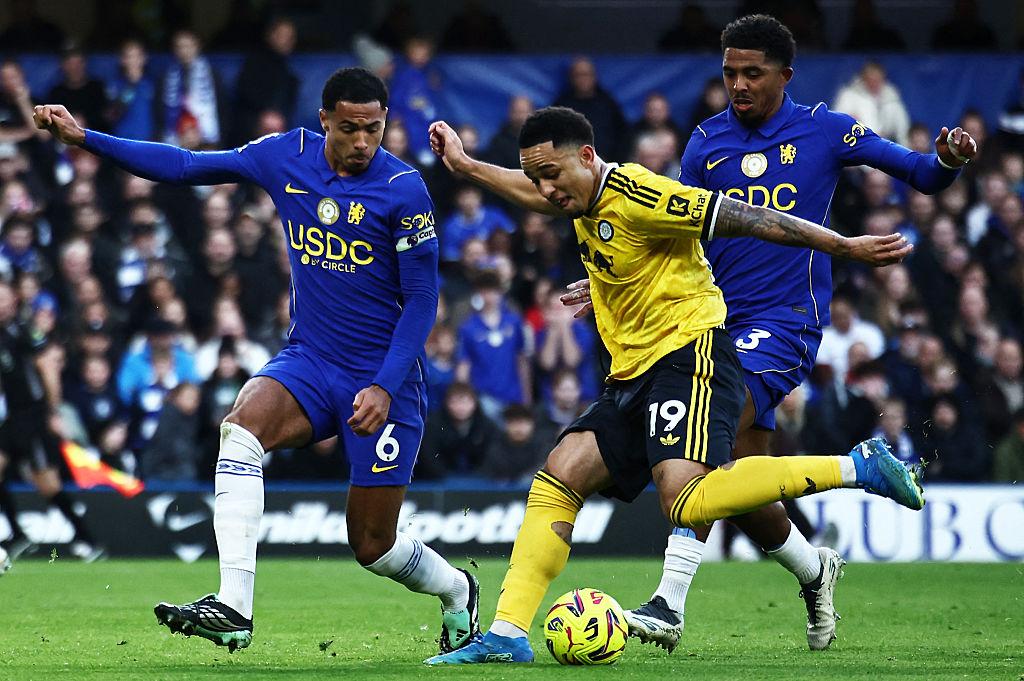
Chelsea Had the Ball, Leeds Had the Game: How Farke's Side Turned Possession Into a Nightmare
Chelsea enjoyed more possession but Leeds United dominated the decisive moments, producing a ruthless 4–1 victory at Stamford Bridge through intelligent transitions and clinical finishing.