Pep Guardiola Admits Italy Regret: Is International Management Next?
Pep Guardiola has confessed to feeling 'embarrassed' about turning down the Italy job, opening the door to international management as his next career step.
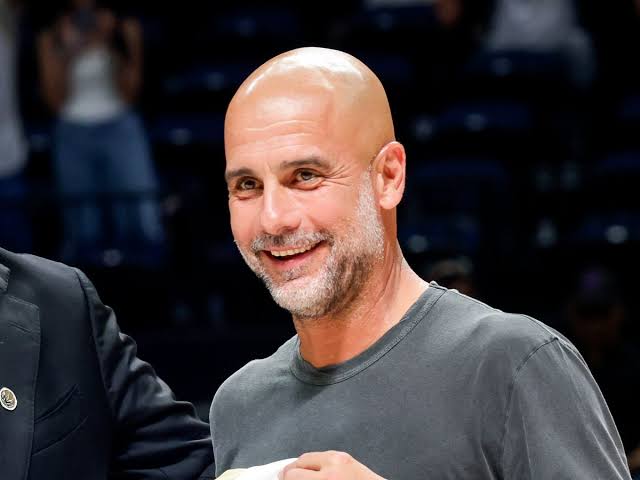
There are moments in football journalism when a passing comment from a giant of the game fundamentally shifts the tactical horizon. When Pep Guardiola speaks, the football world listens, but his recent admission regarding the Italy national team carries a seismic weight that stretches far beyond club football. The Former Manchester City boss confessed that he felt 'embarrassed' to turn down the head coaching position with the Azzurri. More intriguingly, he hinted heavily that a national team post is firmly on his radar as his next career step.
The Weight of the Azzurri Rejection
For any coach, let alone one of the most decorated minds in football history, turning down a footballing powerhouse like Italy is no minor administrative decision. The Azzurri represent four World Cups, immense tactical heritage, and an unyielding pressure that devours ordinary managers whole. Guardiola's revelation that he felt 'embarrassed' by the snub speaks volumes about his respect for the institution. It is rare for a tactician of his stature to show vulnerability or openly express regret over a professional path not taken.
In our view at Nisty Football, this confession reveals a deeper narrative about Guardiola’s internal clock. Having conquered domestic and continental football with Barcelona, Bayern Munich, and Manchester City, the daily grind of club management offers fewer uncharted frontiers. The prestige of the Italy job, coupled with the unique cultural demands of Italian football, clearly held a genuine allure for a manager whose tactical evolution owes a massive debt to his playing days in Serie A. The Italian game has always prized tactical chess matches, making it a natural spiritual home for a purist of positional play.
Why International Management Fits the Next Chapter
Club football is a relentless, 365-day marathon of squad rotation, transfer windows, and tactical firefighting. For a perfectionist like Guardiola, who demands absolute immersion from his players, the physical and mental toll is immense. International football, by contrast, operates on a different rhythm. It offers a compressed tactical environment where a brilliant mind can orchestrate structural dominance without the weekly noise of club boardrooms and media circuses.
Guardiola explicitly noted that if he were to return to coaching in the future, he would like to do it with a national team. This is not merely a vague retirement thought; it is a calculated career trajectory. The prospect of taking a nation—whether it is Italy or another ambitious footballing power—and instilling his distinct positional play blueprint on the international stage is a mouth-watering proposition for purists and tacticians alike. It represents the final frontier for a manager who has won virtually everything else available in the club game.
What a Guardiola-Led Italy Would Look Like
Imagine the traditional defensive solidity, tactical discipline, and cynical nous of Italian football infused with Guardiola’s obsessive build-up patterns, inverted full-backs, and suffocating counter-pressing. It would be a fascinating collision of footballing philosophies. Historically, the Azzurri thrive on pragmatism, structure, and emotional resilience. Guardiola demands spatial awareness, calculated risk, and complete technical mastery from every single player on the pitch, including the goalkeeper.
In our opinion, adapting this complex methodology to a national team pool, where training time is notoriously scarce, would be the ultimate test of his managerial genius. International teams rarely play with the fluid automation of a club side that trains daily for years. If anyone could bridge that gap and revolutionize international tournament play, however, it is the Catalan maestro.
The Nisty Verdict
Football is cyclical, and eras eventually draw to a natural close. While Guardiola remains fully focused on his current club duties, his open flirtation with international management signals that the final act of his legendary career is being mapped out. Whether Italy gets another chance to land him or another federation beats them to the punch, the landscape of international football is bracing for a massive paradigm shift. When Pep finally takes the plunge into the international arena, the tactical rulebook will have to be rewritten entirely.
Could an international team truly replicate the hypnotic, suffocating club dominance we have seen from Guardiola over the past decade, or will the constraints of national team football prove too rigid even for him?
Read next
Stories you should not miss
Related stories
Published Thursday, 26 November 2026. Published through the Nisty Football newsroom.
Enjoyed it? Tell us — and pass it on
The discussion
What do you think? (0)
Leave a comment
No account needed · 0 approved
0/1500 characters · comments are reviewed before publication
The Daily Kick-off
Football in your inbox, every morning at 7am
One email: the overnight transfer moves, the tactical story of the night, and every fixture that matters today. No noise, no clickbait.
More from Nisty Football
Related stories
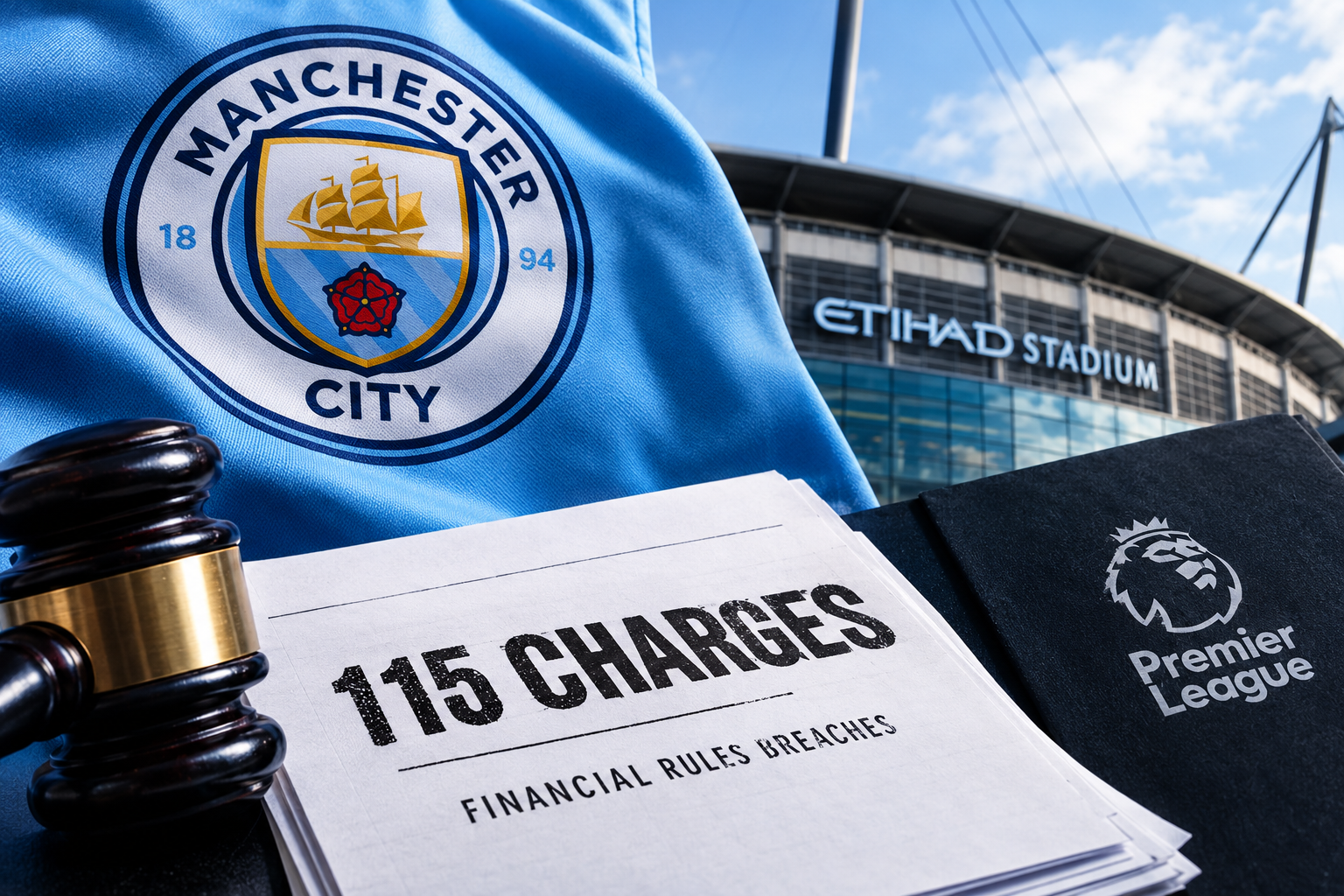
Are Premier League Rules Only for the Clubs Without Billionaire Owners?
Manchester City’s 115 charges and the prolonged wait for resolution raise serious questions about financial fairness, accountability, and the Premier League’s credibility.
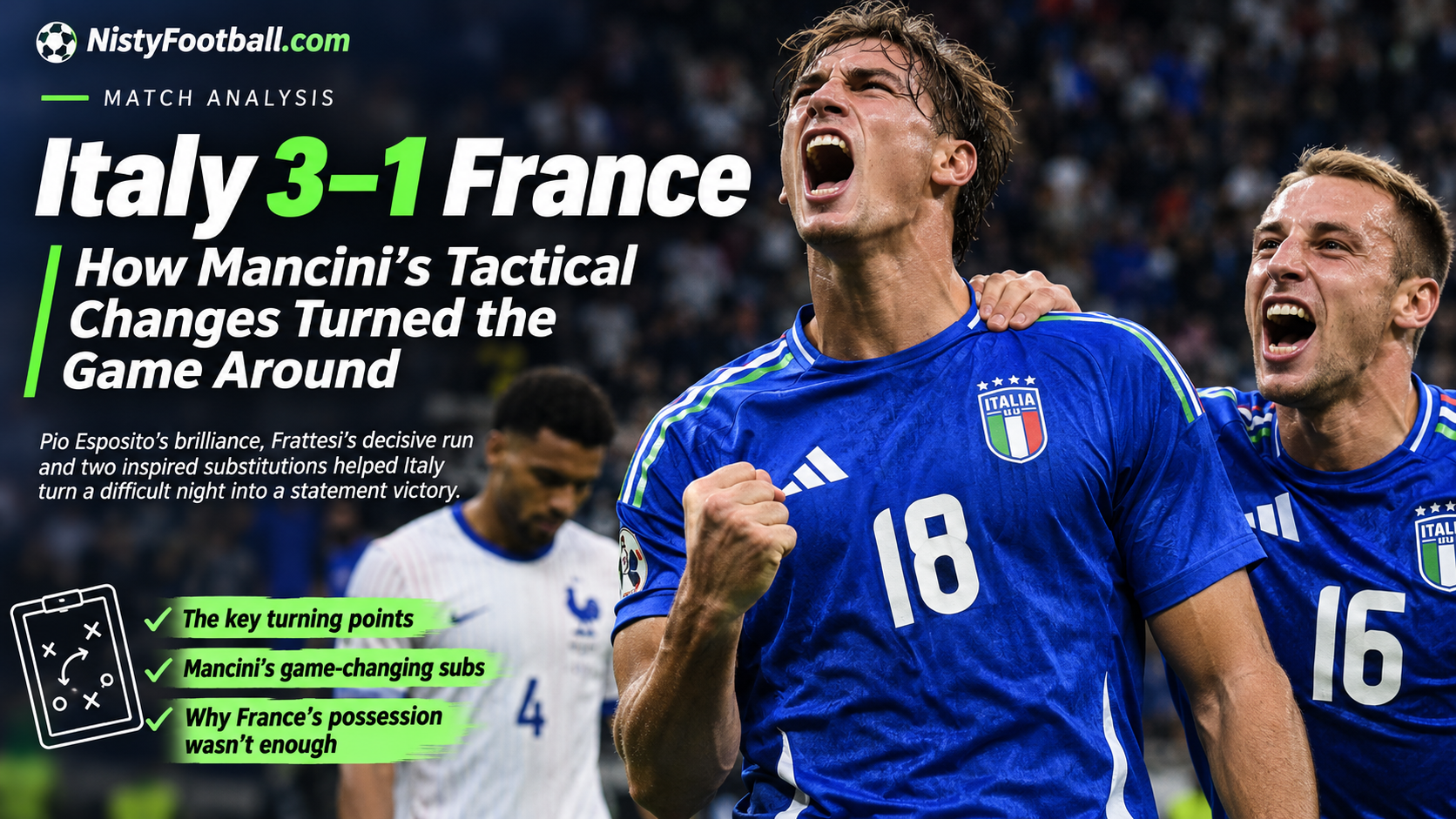
Italy 3–1 France: How Mancini's Tactical Changes Turned the Game Around
France dominated possession, but Italy dominated the decisive moments. Pio Esposito's brace, Frattesi's clinical finish and Mancini's inspired substitutions delivered a remarkable 3-1 comeback victory at San Siro.

Paranoia in the Premier League: Arteta and Iraola Sound Alarm Over Drones and FPL Leaks
From Fantasy Premier League inadvertent clues to tactical drones hovering over training grounds, Premier League managers are fighting a bizarre new era of digital espionage.
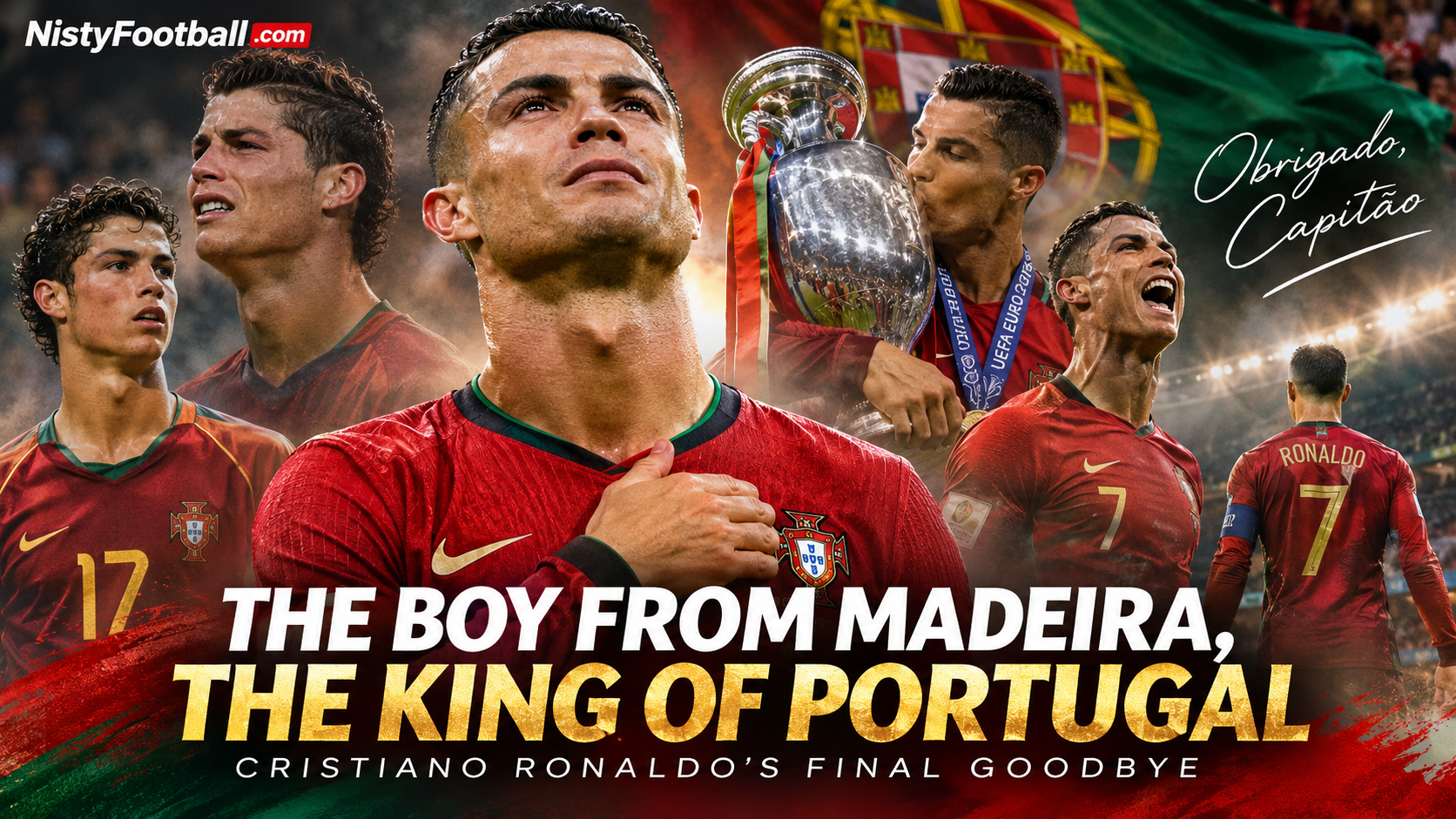
THE BOY FROM MADEIRA, THE KING OF PORTUGAL: CRISTIANO RONALDO'S FINAL GOODBYE TO THE SHIRT THAT MADE HIM IMMORTAL
From a teenage dream in Madeira to becoming Portugal's greatest footballing icon, Cristiano Ronaldo's 23-year international journey has been one of extraordinary ambition, heartbreak, triumph and immortality. As he bids farewell to the national team, we celebrate the man who made the famous No. 7 shirt legendary.