Two Years, Three Windows: Inside INEOS’ Methodical Rebuild of Manchester United
How Sir Jim Ratcliffe traded quick fixes for a phased plan
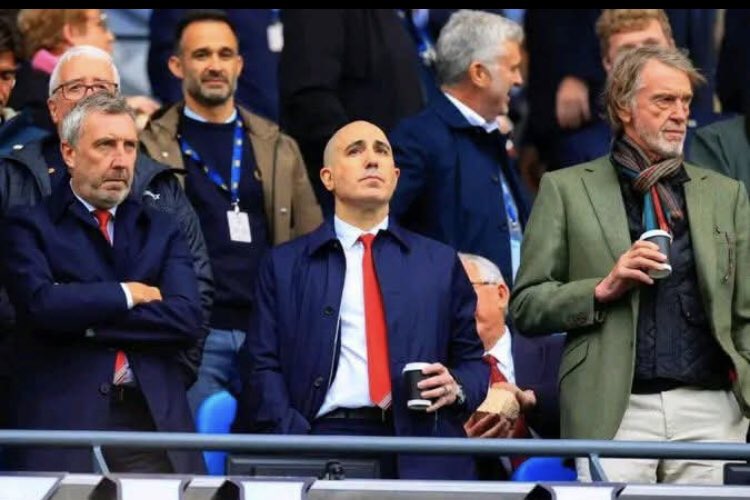
Two Years, Three Windows: Inside INEOS’ Methodical Rebuild of Manchester United How Sir Jim Ratcliffe traded quick fixes for a phased plan — and why the real test still lies ahead When Sir Jim Ratcliffe completed his purchase of a 27.7% stake in Manchester United in February 2024, he made a promise that sounded, at the time, like standard boardroom rhetoric. Restoring United to the top of English and European football, he said, “wasn’t going to be like flipping a light switch.” It would take two or three seasons. It was not, he stressed, a ten-year plan. Nearly two and a half years on, that promise has become the framework against which everything INEOS does at Old Trafford is measured. And unlike so many grand ownership pledges in modern football, this one has held up remarkably well as a description of what actually happened. Three transfer windows in, a clear pattern has emerged: fix the infrastructure first, rebuild the attack, then the midfield, and save the defence for last — not because it’s been neglected, but because it’s been deliberately delayed until it can be done properly rather than urgently. This is the story of how that plan has unfolded, position by position, window by window — and why United’s own hierarchy believes they are on track to be genuine title challengers by the start of the 2027/28 season. Fixing the Foundations First Before a single marquee signing, INEOS turned its attention to the building United actually trained in every day. Standards at Carrington, the club’s training headquarters, had fallen behind those of United’s direct rivals — an uncomfortable finding that came out of an early review conducted under the new regime. The response was a £50 million redevelopment of the men’s senior team’s training centre, led by the globally renowned architecture firm Foster + Partners. Work began in June 2024 and ran through the entirety of the 2024/25 season, with temporary arrangements in place for players and staff throughout. The finished facility wasn’t ready until August 2025, when the first-team squad finally moved into the revamped building — a project that took over a year to complete but was treated as non-negotiable groundwork rather than a nice-to-have. It’s a detail that says a lot about how INEOS have approached this rebuild more broadly. Long before addressing who plays for Manchester United, they addressed the environment those players train in every single day. The logic is straightforward: you cannot build a winning culture inside a facility that has fallen below the standard of your competitors. That same instinct now extends to Old Trafford itself, where the club continues to balance short-term maintenance needs against far bigger ambitions — chiefly, a proposed 100,000-seat stadium that the club hopes to have completed by 2030. It’s a project that captures the essential tension running through the entire Ratcliffe era: manage the here-and-now responsibly, while building toward something much larger over the horizon. Summer 2024: A Foundation, Not a Statement INEOS’ first transfer window as custodians of football operations was notable for what it wasn’t — a headline-grabbing spending spree built around a marquee attacker. Instead, it was a window designed around balance and squad structure. The context mattered. Erik ten Hag had just led United to an eighth-placed Premier League finish in his second season in charge — statistically one of the club’s worst campaigns in the Premier League era — but had also won the FA Cup, beating Manchester City in the final. That trophy, combined with faith in his project, was enough to earn ten Hag a new three-year contract just weeks after many inside and outside the club expected him to be dismissed. With that vote of confidence delivered, INEOS built a squad around him. In came Leny Yoro and Matthijs De Ligt, two centre-backs signed to reshape the defence for the years ahead; Noussair Mazraoui, a right-back reunited with his former Ajax manager; Joshua Zirkzee, a striker signed to solve United’s long-standing lack of a focal point up front; Manuel Ugarte, a defensive midfielder recruited to add steel in front of the back four; and teenage prospect Sekou Kone, brought in as one for the future. It was a window that touched almost every area of the pitch except the attacking positions in behind the striker — sensible, unspectacular business that suggested a club trying to fix structural weaknesses rather than chase headlines. What nobody could have predicted was how quickly that stability would unravel. The Collapse — and a Managerial Change Just nine games into the 2024/25 season, with United sitting 14th in the Premier League following a 2-1 defeat at West Ham, the club moved to sack Erik ten Hag. The decision, announced on 28 October 2024, ended his two-and-a-half-year tenure less than four months after he had been handed a new contract. Ruud van Nistelrooy, ten Hag’s assistant and a former United striker adored by the club’s supporters, stepped in as interim head coach while the search for a permanent successor got underway. That search concluded the following month with the appointment of Ruben Amorim, who left Sporting CP to take charge at Old Trafford. Amorim’s first half-season in England was brutal by any measure. United limped to a 15th-place finish in the Premier League — statistically their worst finish in the Premier League era, and a club-record 18 defeats across the campaign. Their only route back into European football came via the Europa League, where United reached the final in Bilbao only to lose 1-0 to fellow strugglers Tottenham Hotspur, a result that closed the door on Champions League qualification for the following season. It was, by any measure, a season to forget. But rather than panic, INEOS stuck to their original framework. If restoring United to the summit was always going to take two or three seasons rather than one, a difficult first campaign under a new head coach was, painfully, part of the plan rather than proof it had failed. Summer 2025: Rebuilding the Attack If the 2024 window was about squad balance, the second INEOS window was about intent. With the Europa League final defeat still fresh, United used the summer of 2025 to overhaul their attacking options, bringing in Bryan Mbeumo, Benjamin Šeško, and Matheus Cunha in a coordinated rebuild of the front line. The gamble paid off. Each of the new arrivals scored ten or more goals across all competitions in their debut campaign, giving Amorim’s side the attacking cutting edge that had been so conspicuously missing the previous season. The upgrade was significant enough to fire United back into the Champions League — a striking turnaround from a club that had finished 15th and missed out on Europe entirely just months earlier. It was proof of concept for the INEOS method: identify the position group most urgently holding the team back, solve it decisively in a single window, and trust the rest of the squad to catch up around it. Summer 2026: The Midfield Overhaul With the attack sorted and Casemiro’s departure creating an obvious void at the base of midfield, most expected United to move for a single like-for-like defensive midfielder. Instead, INEOS did what they’d already done with the forward line a year earlier — they rebuilt the entire midfield unit in one window. Three new midfielders arrived: 22-year-old Brazilian Andrey Santos from Chelsea, 29-year-old Belgian international and captain Youri Tielemans, and 22-year-old Cameroon international Carlos Baleba. Alongside homegrown academy graduate Kobbie Mainoo (21), captain Bruno Fernandes, and Mason Mount, United now possess a midfield that blends proven Premier League know-how, international experience, and academy pedigree with genuine physical presence. It’s a group built with layers in mind — Tielemans offering leadership and composure, Baleba and Santos bringing energy and defensive bite, Mainoo and Fernandes supplying the creative spark. On paper, at least, the midfield rebuild that began with Ugarte’s arrival in 2024 finally looks complete. The Position United Chose Not to Fix — On Purpose Not every United fan has been satisfied with the summer’s business. The most obvious gap left unaddressed was at left-back, where injury-prone incumbent Luke Shaw remains without a like-for-like successor. Newcastle’s Lewis Hall was United’s preferred target, but the Magpies made their position clear early: Hall wasn’t for sale. United explored alternatives, most notably Barcelona’s Alejandro Balde and Manchester City’s Rico-linked target Rayan Aït-Nouri, but neither deal materialised. Rather than force through a stopgap, INEOS chose to wait. The logic mirrors everything else about this rebuild: why solve a problem temporarily when you can solve it permanently twelve months later? Sources close to the club indicate the defence — left-back included — is now earmarked as the focus of a fourth transfer window in the summer of 2027, continuing the same one-position-at-a-time approach that has defined every previous window under Ratcliffe’s ownership. A Plan Still on Schedule Zoom out, and the picture that emerges is one of unusual discipline for a football club of Manchester United’s size and expectation. Facilities first. Attack second. Midfield third. Defence, deliberately, last — not neglected, but sequenced. The club’s internal target is to have a squad capable of genuinely challenging for the Premier League title by the start of the 2027/28 season — roughly the three-season timeline Ratcliffe himself set out back in February 2024. Given where United stood eighteen months ago, sitting 15th and without European football, the progress made since is hard to dismiss. Whether that translates into silverware remains the only question that ultimately matters at a club with United’s history. But if the plan really was never about flipping a switch, then the evidence so far — a rebuilt training ground, a Champions League return, and a midfield overhaul completed almost exactly on schedule — suggests INEOS have, at the very least, kept their word.
Read next
Stories you should not miss
Breaking
Silenced? Martínez's Apology Smells Like a Club in Damage Control, and INEOS Has Questions to Answer
Breaking
Licha Drops the Mask: Martínez Exposes United's Rotten Core, But the Dressing Room Isn't Innocent
Breaking
A Man Up, a Goal Ahead, Yet No Victory: Has Michael Carrick Run Out of Answers at Manchester United?
Published Wednesday, 2 September 2026. Published through the Nisty Football newsroom.
Fan reaction
Comments (0)
Leave a comment
No account needed · 0 approved
0/1500 characters · comments are reviewed before publication
More from Nisty Football
Related stories
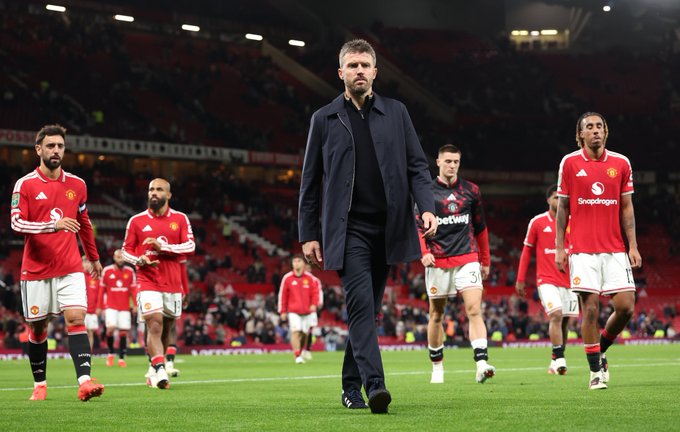
EXCLUSIVE: THE CARRICK FORMULA — WHY MANCHESTER UNITED’S NEXT CHAPTER MAY DEMAND A LITTLE MORE ‘FERGUSON’
There is a difference between managing Manchester United and managing Manchester United successfully.
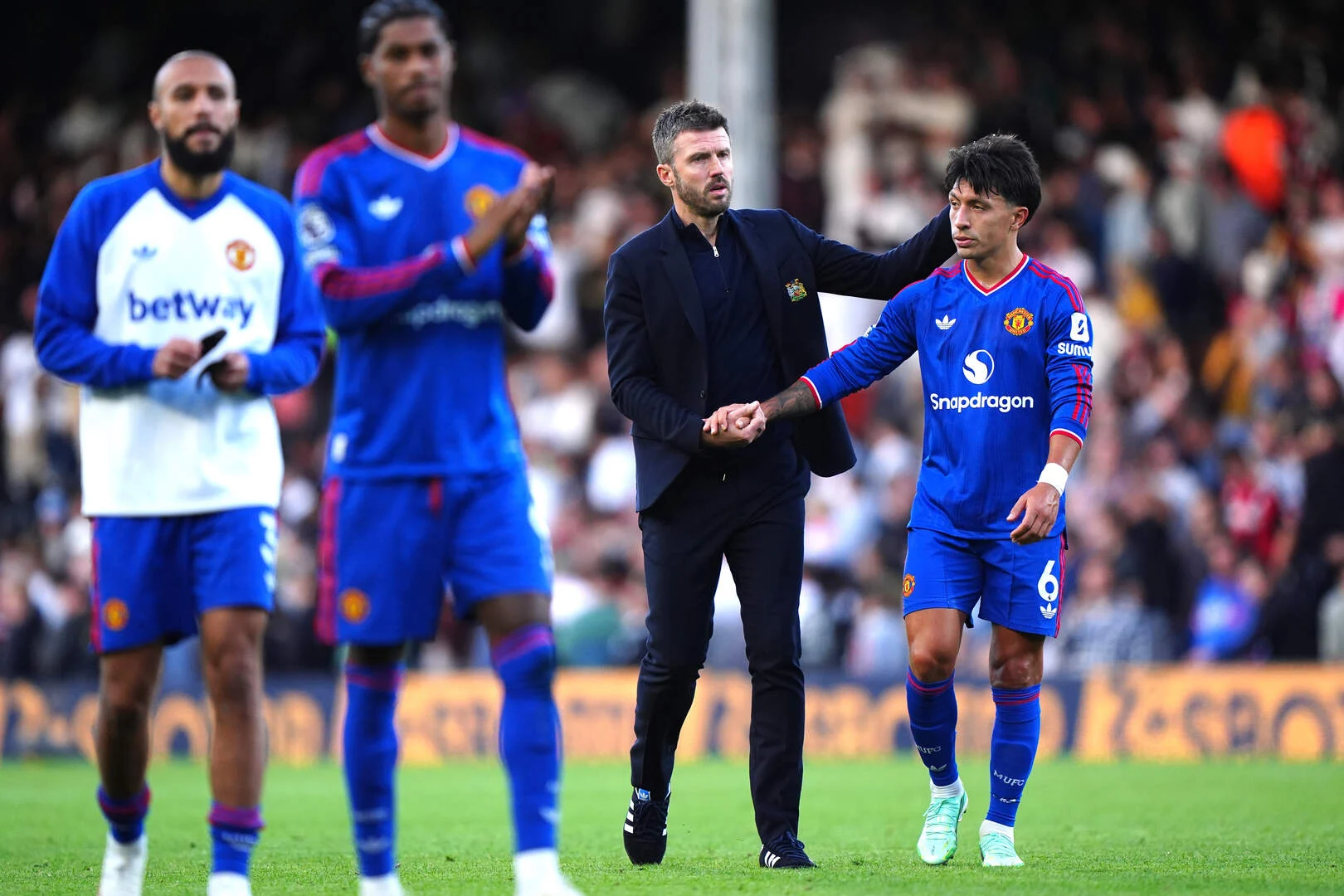
UNITED DON’T RUN. THEY DON’T WIN. SO WHAT EXACTLY IS CARRICK’S PLAN?
Manchester United rank near the bottom of the Premier League for sprints and high-speed running. But is that a deliberate tactical choice or evidence that Carrick’s system is failing to demand enough from his players?
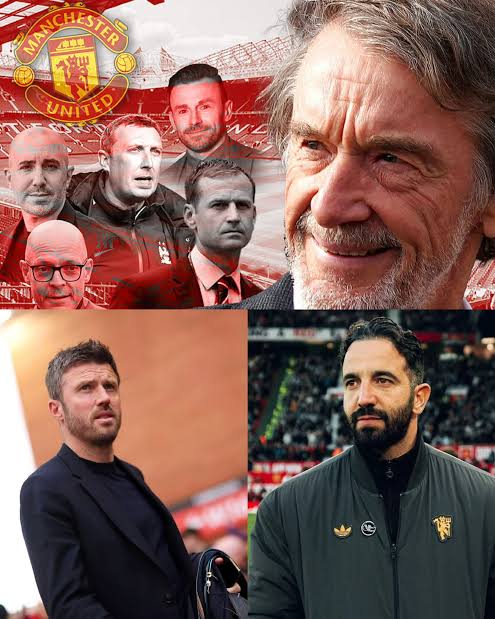
THE INEOS PATTERN: Nine years. Three clubs. One broken method.
INEOS came to Old Trafford promising the end of Manchester United's chaos era but INEOS hasn't ended anyone's chaos. It is the chaos — just with better PR and a bigger budget.
Carrick Says His Future Is ‘Not on the Radar’ But Manchester United Need Answers
And although he insists his job security is irrelevant to his immediate thinking, the simplest answer to managerial pressure remains the same: RESULTS.