How a Dog helped save Manchester United from Extinction.
Before the trophies, the legends and the Theatre of Dreams, there was a bankrupt football club, there was A DOG and one extraordinary twist of fate.
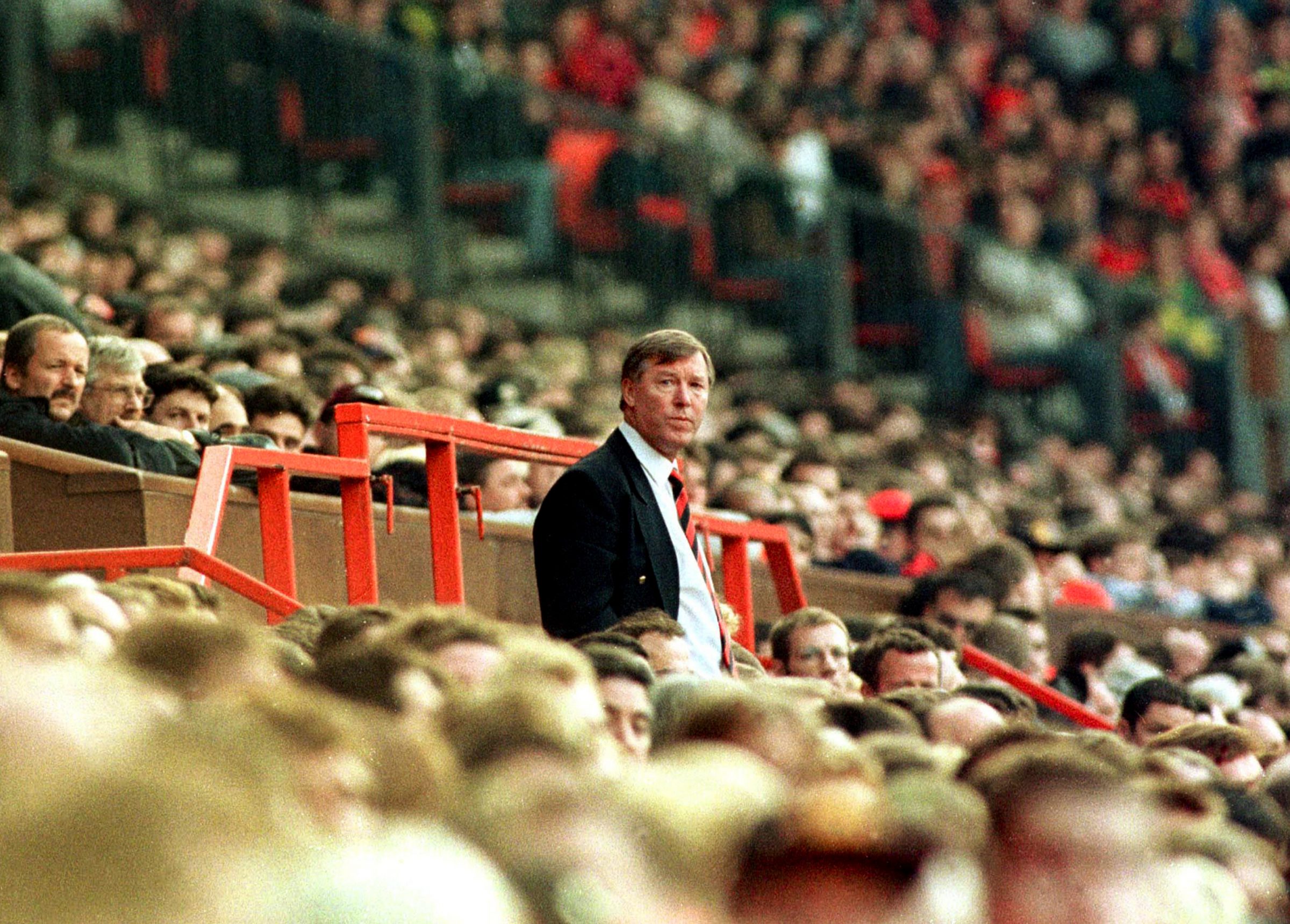
Before the trophies, the legends and the Theatre of Dreams, there was a bankrupt football club, a giant St Bernard called Major — and one extraordinary twist of fate.
There are football stories that sound too strange to be true.
And then there is Major.
A giant St Bernard who wandered away from a fundraising event in Manchester more than 120 years ago may have played an unlikely role in the survival of the club that would eventually become Manchester United.
Yes — a dog.
Not a billionaire investor. Not a superstar footballer. Not a visionary manager.
A dog.
And if the story is accepted as football folklore, then one of the most famous clubs in sporting history may owe a small but fascinating part of its existence to a runaway St Bernard.
Before Manchester United, there was Newton Heath
Long before the red shirts, Old Trafford and European nights, Manchester United was known as Newton Heath LYR Football Club.
Founded in 1878 by railway workers, Newton Heath had become a serious football club by the turn of the century.
But behind the football was a financial disaster.
The club was drowning in debt. Money was running out. Players were struggling to receive their wages, and by January 1902, a winding-up order had been issued.
Newton Heath wasn’t simply having a bad season.
It was facing extinction.
The club needed money — and it needed it quickly.
Enter Major.
Meet Major: Newton Heath’s four-legged fundraiser
Major belonged to Newton Heath captain Harry Stafford.
The enormous St Bernard had become something of a local celebrity and was even used to help raise money for the struggling club.
On matchdays, Major would reportedly stroll around the ground carrying a collection box, with supporters dropping money into it.
It was an unusual fundraising strategy.
But Newton Heath was desperate.
Then came an event that would take the story from unusual to downright bizarre.
The bazaar, the missing dog and the millionaire
Newton Heath organised a four-day fundraising bazaar at St James’s Hall in Manchester, hoping to raise enough money to keep the club alive.
Major was part of the fundraising effort.
And then…
He disappeared.
The giant St Bernard somehow ended up in the possession of John Henry Davies, a wealthy local brewery owner.
Davies’ young daughter, Elsie, reportedly became attached to Major and wanted to keep him.
But Davies eventually traced the dog back to his owner.
That owner was Harry Stafford.
And that meeting would have consequences far beyond the fate of one missing dog.
Davies wanted the dog. He discovered a dying football club instead.
Davies initially wanted to buy Major for his daughter.
Stafford refused to sell.
But during their conversation, Davies discovered something that changed the entire direction of the encounter.
Stafford wasn’t just the owner of a remarkable dog.
He was the captain of a football club that was on the verge of financial collapse.
Newton Heath was reportedly carrying debts of around £2,670 — a huge problem for a club desperately searching for a way to survive.
Davies was interested.
But not in buying Major anymore.
He was interested in saving the football club.
The rescue of Newton Heath
In March 1902, Davies and several other local businessmen agreed to provide financial backing to Newton Heath.
The contemporary account describes five people pledging £200 each, giving the dying club a desperately needed financial lifeline.
Davies subsequently became president.
But the rescue wasn’t simply about clearing debts.
Newton Heath was about to undergo something even more significant.
A rebirth.
Goodbye Newton Heath. Hello Manchester United.
With the club’s future secured, a new identity was considered.
Several names were reportedly discussed, including Manchester Central and Manchester Celtic.
Eventually, one name won out.
Manchester United.
The name change was formally made in April 1902.
And just like that, Newton Heath — the struggling railway-workers’ club that had been staring into the abyss — embarked on a new chapter.
The rest, as they say, is football history.
Think about that chain of events
This is where the story becomes almost impossible to ignore.
A dog disappears.
↓
A wealthy businessman ends up with the dog.
↓
He traces the dog to Harry Stafford.
↓
He discovers Stafford is captain of a financially dying football club.
↓
Davies becomes involved.
↓
Money is invested.
↓
Newton Heath survives.
↓
Newton Heath becomes Manchester United.
And that is how Major became immortalised in one of football’s strangest stories:
The dog that saved Manchester United.
But did a dog REALLY save Manchester United?
Here’s where we need to separate history from folklore.
It would be too simplistic to say that Major single-handedly saved Manchester United.
He didn’t walk into a bank, sign a cheque and pay Newton Heath’s debts.
The actual rescue came through John Henry Davies and the businessmen who invested in the club.
What makes the story extraordinary is the alleged chain of events that brought Davies and Stafford together in the first place.
Without Major, perhaps their meeting never happens.
Without that meeting, perhaps Davies never discovers Newton Heath’s desperate situation.
And without Davies’ involvement, the club’s future could have been very different.
So perhaps the most accurate way to tell it is this:
Major didn’t save Manchester United by himself. But he may have helped put the right people in the same room at exactly the right time.
And sometimes, football history turns on the strangest of moments.
From a collection box to the Theatre of Dreams
Think about what Manchester United would eventually become.
League titles.
European Cups.
Treble-winning teams.
Legendary players.
Sir Matt Busby.
Sir Alex Ferguson.
Old Trafford.
The Theatre of Dreams.
Millions of supporters around the world.
And somewhere at the beginning of that extraordinary journey was a struggling 19th-century football club…
…and a massive St Bernard carrying a collection box.
That’s what makes the Major story so irresistible.
Because football history isn’t always written by the people holding trophies.
Sometimes, it begins with a dog that simply…
ran away.
NISTYFOOTBALL VERDICT
The next time someone tells you football history is predictable, tell them about Major.
Because somewhere in Manchester more than a century ago, a runaway dog crossed paths with a wealthy brewer and that bizarre encounter helped set in motion the transformation of Newton Heath into Manchester United.
One dog. One football captain. One businessman. One desperate club.
And eventually…
One of the biggest football clubs on Earth.
Major didn’t score a goal.
He didn’t win a trophy.
But he may have helped change football history.
Gallery
More from this story
Read next
Stories you should not miss

Breaking
Silenced? Martínez's Apology Smells Like a Club in Damage Control, and INEOS Has Questions to Answer
Breaking
Licha Drops the Mask: Martínez Exposes United's Rotten Core, But the Dressing Room Isn't Innocent
Breaking
A Man Up, a Goal Ahead, Yet No Victory: Has Michael Carrick Run Out of Answers at Manchester United?
Published Friday, 11 September 2026. Published through the Nisty Football newsroom.
Fan reaction
Comments (0)
Leave a comment
No account needed · 0 approved
0/1500 characters · comments are reviewed before publication
More from Nisty Football
Related stories
EXCLUSIVE: THE CARRICK FORMULA — WHY MANCHESTER UNITED’S NEXT CHAPTER MAY DEMAND A LITTLE MORE ‘FERGUSON’
There is a difference between managing Manchester United and managing Manchester United successfully.
UNITED DON’T RUN. THEY DON’T WIN. SO WHAT EXACTLY IS CARRICK’S PLAN?
Manchester United rank near the bottom of the Premier League for sprints and high-speed running. But is that a deliberate tactical choice or evidence that Carrick’s system is failing to demand enough from his players?
THE INEOS PATTERN: Nine years. Three clubs. One broken method.
INEOS came to Old Trafford promising the end of Manchester United's chaos era but INEOS hasn't ended anyone's chaos. It is the chaos — just with better PR and a bigger budget.
Carrick Says His Future Is ‘Not on the Radar’ But Manchester United Need Answers
And although he insists his job security is irrelevant to his immediate thinking, the simplest answer to managerial pressure remains the same: RESULTS.